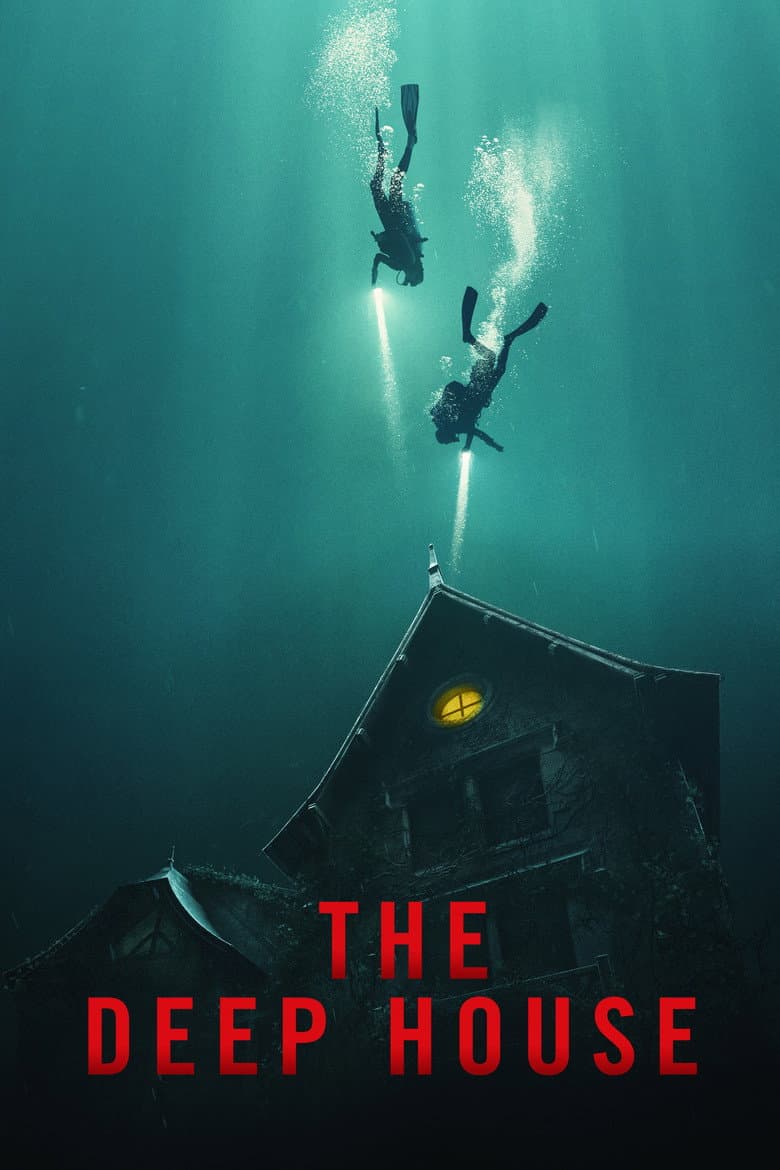
The Deep House follows Ben and Tina, an engaged New York couple who make online videos about abandoned and haunted places. Ben wants a new record for his channel, so he brings Tina to a remote lake in southwest France. They dive about 50 meters and find a house that was left under the water after a village was flooded. Their air runs low as the rooms turn into a trap, and the film keeps a dark, tight horror mood.
The film is mainly about fear, greed, and the danger of chasing views. Ben keeps pushing past Tina’s limits because he wants better footage, while Tina tries to stay alive and get them both out. The house hides a family that kidnapped children for satanic rituals, and the dead family attacks the divers. The story uses the couple’s online fame as a reason for the cameras and drone, but it does not turn their hobby into a modern political or identity message. The main focus stays on ghosts, family crimes, survival, and underwater tension.
Community feedback
Was our 2% Woke rating accurate?
Breakdown
These are the editorial factors and ratings behind our score for The Deep House.
Woke representation / casting
Not present. The two leads are a white male-female couple, and the main supporting roles fit the American and French setting. The casting does not show a clear identity-focused pattern.
0%
Woke political dialogue
Not present. The characters talk about diving, filming, fear, and escape. The film has no clear speech about current politics, identity politics, or activist causes.
0%
Identity-driven story themes
Not present. The story centers on a haunted house, a murderous family, and survival underwater. It does not build its conflict around race, sex, sexuality, or another identity issue.
0%
Western institutional / cultural critique
Not present. Ben’s hunger for online views creates personal danger, but the film does not make a modern attack on Western institutions, family life, religion, or traditional social rules.
0%
Woke character or canon changes
Not relevant. The film is an original haunted-house story rather than an adaptation of a known character, canon, or historical event.
0%
Anti-woke backlash and complaints
Not present. The supplied X research found no anti-woke or boycott reaction. Web reviews and audience posts focused on scares, underwater filming, pacing, and acting rather than woke or DEI issues.
0%
Creator track record context
The cached context gives both writers scores of 1/100. Frédéric Fiore’s stored record mentions Wild Indian, which focuses on native American identity and violence, and Pleasure, which follows a young woman entering pornography. Those past credits give only weak context because no matching activist message appears in this film.
8%
Production
Movie · 2016
A stranger arrives in a little village and soon after a mysterious sickness starts spreading. A policeman is drawn into the incident and is forced to solve the mystery in order to…

Movie · 2020
Inside the halls of an elite arts academy, a timid music student begins to outshine her more accomplished and outgoing twin sister when she discovers a mysterious notebook…

Movie · 2022
After witnessing a bizarre, traumatic incident involving a patient, Dr. Rose Cotter starts experiencing frightening occurrences that she can't explain.

Movie · 2018
After suspecting that their police officer neighbor is a serial killer, a group of teenage friends spend their summer spying on him and gathering evidence, but as they get closer…
Movie · 2021
In an effort to reconnect and mend their relationship, a troubled couple and their preteen daughter seek an idyllic getaway to a remote mansion in rural Louisiana.

Movie · 2016
A group of archaeologists working in Northern Canada uncover a strange structure dating over ten thousand years before the present.

Movie · 2016
A determined young woman and a damaged occultist risk their lives and souls to perform a dangerous ritual that will grant them what they want.

Movie · 2020
A man providing overnight watch to a deceased member of his former Orthodox Jewish community finds himself opposite a malevolent entity.
