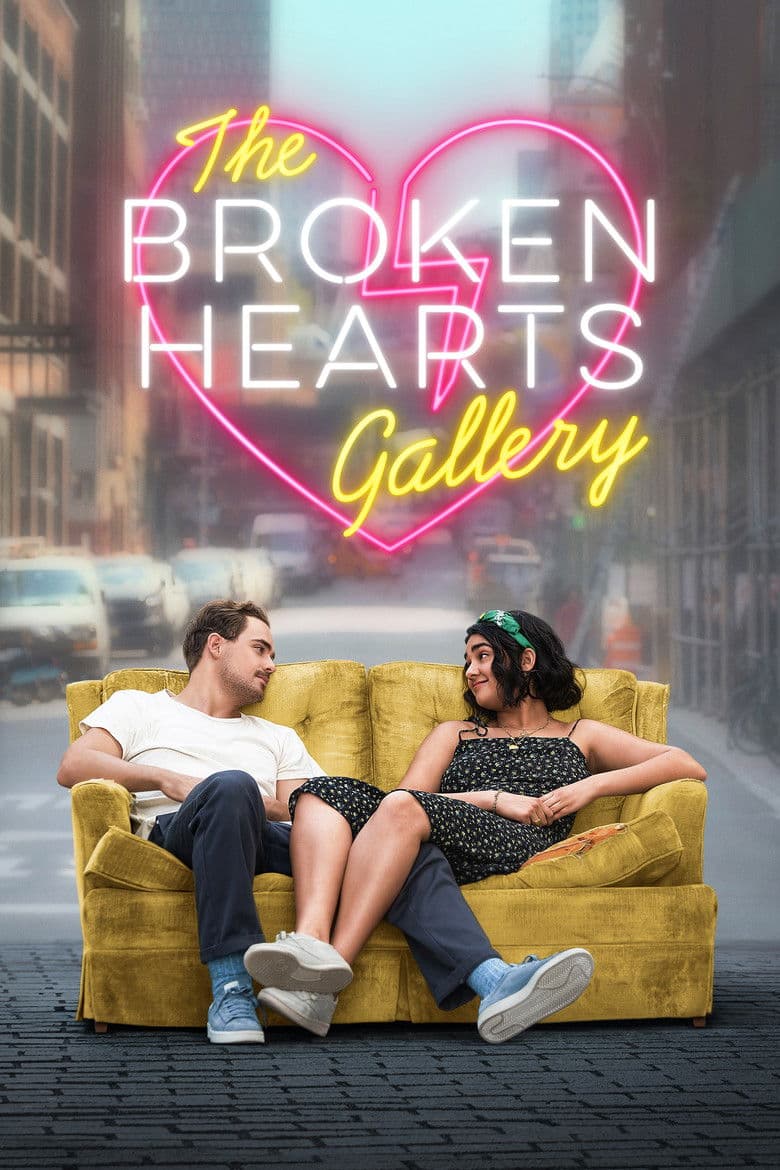
Lucy Gulliver works at an art gallery in New York and keeps small objects from every past relationship. After her boyfriend dumps her and her boss fires her, she meets Nick, a man restoring an old building into a hotel. Lucy turns part of the building into a place where strangers can leave behind objects tied to lost love. The film is a bright romantic comedy about heartbreak, friendship, and starting over.
The film gives Lucy a clear path from depending on men to trusting her own ideas and building a life of her own. Her two female roommates support her, and one roommate, Nadine, is openly lesbian, but that identity stays on the side of the main romance. Lucy and Nick share the hotel project, yet the story often makes Lucy the stronger dreamer while Nick mainly supports her plans. A few jokes and lines use women's empowerment, gender expectations, and sexual freedom, but the film stays focused on romance and personal growth.
Community feedback
Was our 51% Woke rating accurate?
Breakdown
These are the editorial factors and ratings behind our score for The Broken Hearts Gallery.
Woke representation / casting
The film places Lucy, played by Indian and Swiss actor Geraldine Viswanathan, at the center of the romance. It gives major roles to actors from South Asian, East Asian, Latino, and Black backgrounds, plus an openly lesbian roommate. The modern New York setting can support a mixed cast, but production coverage openly presents the diversity as an intentional choice. The film does not make race or sexuality central to the plot, which keeps this as a moderate casting signal.
45%
Woke political dialogue
Lucy and Harvard discuss a gender studies class and say Lucy may be lowering herself to support Max. Lucy later jokes that women live in a world where nobody believes them. Lucy also uses a direct line about empowering women. These lines make modern gender language visible, but the film does not build its main plot around politics.
32%
Identity-driven story themes
Lucy starts by putting men and old romances at the center of her life. The story rewards her when she builds a public project, trusts her own ideas, and chooses her own future. Female friendship, self-love, sexual freedom, and a lesbian friend add a modern identity layer. The film does not make activism or identity politics the main conflict.
44%
Western institutional / cultural critique
The film says women may not be believed and shows Lucy rejecting a boyfriend who benefits from her support. The film treats Max as a selfish ex, not as proof that all men or institutions are bad. It does not attack religion, family, capitalism, or Western institutions. The critique stays inside a dating story.
22%
Woke character or canon changes
Not relevant. The film is an original modern romance with no established characters, source story, or historical figures that it changes.
0%
Anti-woke backlash and complaints
One small X account called the film a shallow girlboss feminist SJW story. The post had no likes or follow-up, and no large account or news story made the same complaint. The available backlash is fringe and limited to a gender-empowerment reading.
8%
Creator track record context
Natalie Krinsky's cached score is 50/100 and reflects intentional diverse casting, LGBTQ inclusion, and a full spectrum of love. Selena Gomez and Mandy Teefey have cached scores of 46/100 and 52/100, with records tied to representation or social-impact work. Erik Nyhuus and most other listed producers have low or zero cached scores. This creates a moderate creator-context signal, not proof that the movie itself is activist.
43%
Production
Movie · 2019
Two young people arrive in New York to spend a weekend, but once they arrive they're met with bad weather and a series of adventures.
Movie · 2023
Two twenty-somethings, both reeling from bad break-ups, connect over the course of an eventful day in South London – helping each other deal with their nightmare exes, and…
Movie · 2019
A struggling musician realizes he's the only person on Earth who can remember The Beatles after waking up in an alternate reality where the group was forgotten.
Movie · 2024
Fran likes to think about dying. It brings sensation to her quiet life. When she makes the new guy at work laugh, it leads to more: a date, a slice of pie, a conversation, a…
Movie · 2016
The story of a young man who arrives in Hollywood during the 1930s hoping to work in the film industry, falls in love, and finds himself swept up in the vibrant café society that…

Movie · 2018
A quirky couple spends their three-year dating anniversary looking back at their relationship and contemplating whether they should break up.
Movie · 2020
An on-the-lam punk rocker and a young woman obsessed with a local band go on an unexpected and epic journey together through the decaying suburbs of the American Midwest.
Movie · 2026
Poppy's a free spirit. Alex loves a plan. After years of summer vacations, these polar-opposite pals wonder if they could be a perfect romantic match.
