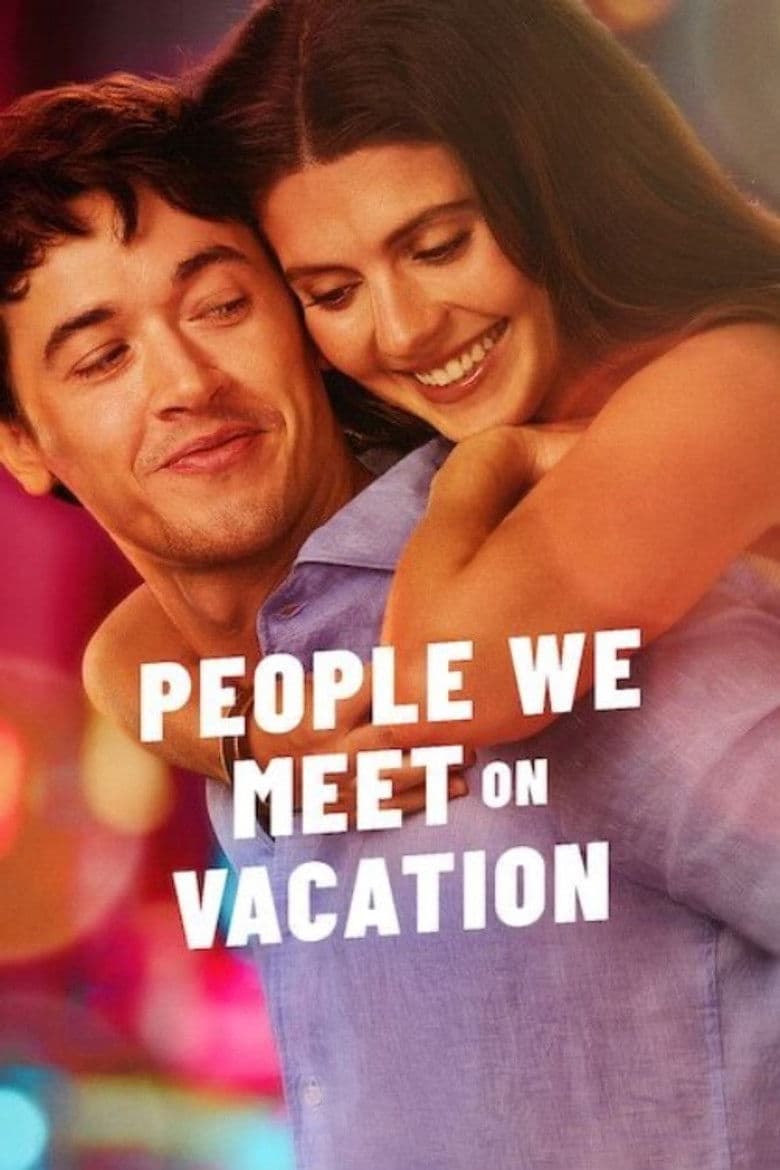
Poppy Wright is a lively travel writer who feels lonely and unsure about the life she has built in New York. Alex Nilsen is her careful, quiet college friend, a teacher who prefers books, plans, and his Ohio home. For twelve years, the two meet for one week each summer in places such as Canada, New Orleans, Tuscany, and Spain. After a painful break and two years apart, they meet again at Alex's brother's wedding and must decide whether their friendship can become love.
The film uses a gender-swapped romance pattern that changes the usual roles. Poppy takes the bold, restless role that the story links with the usual male rom-com lead, while Alex is the anxious, home-loving partner who waits for stability. The movie also includes a loving wedding between Alex's brother David and Nam, plus a mixed group of friends and love interests. These elements are visible but stay beside the central straight romance, which mainly says that people should accept their messy selves and choose a life that feels like home.
Community feedback
Was our 23% Woke rating accurate?
Breakdown
These are the editorial factors and ratings behind our score for People We Meet on Vacation.
Woke representation / casting
The film keeps white actors as Poppy and Alex but gives important supporting roles to black and Asian-heritage actors. Alex's brother David marries Nam, so a same-sex couple is visible at a major wedding. The story takes place in modern cities and vacation spots, so the wider cast feels ordinary rather than engineered. The film does not market the casting as a diversity statement.
15%
Woke political dialogue
Not present. The characters discuss love, work, travel, sex, and home. The film contains no clear speeches about race, activism, political parties, social systems, or identity politics.
0%
Identity-driven story themes
Poppy takes the bold, restless role that many older rom-coms give to the man. Alex takes the careful, romantic role and needs to choose between a settled life and Poppy. Poppy's ending says she should stop hiding herself and that she is not too much. David and Nam's loving wedding adds ordinary gay representation, but it is not the film's main conflict.
24%
Western institutional / cultural critique
Not present. The movie does not attack men, marriage, family, religion, capitalism, or Western institutions. Poppy and Alex simply have opposite personalities, and the gender role reversal is played for romance rather than as a critique of traditional social rules.
0%
Woke character or canon changes
Not relevant. The movie changes trips, partners, and the ending from Emily Henry's book. Those are normal screen adaptation choices, and the film does not make identity-driven changes to established characters or canon.
0%
Anti-woke backlash and complaints
One small account praised the movie as charming “amid all the woke nonsense.” The post treated the movie as a rare non-woke exception, not as a film that pushes woke ideas. No clear anti-woke complaints about race, forced diversity, female dominance, anti-male writing, or LGBT focus appeared. No coordinated campaign, review-bombing push, or boycott discourse was reported.
5%
Creator track record context
Yulin Kuang has a record of stories about Asian American women and work with the DGA Asian American Committee. Brett Haley has supported a mixed-race character and a queer romance in an earlier project. Mary Vernieu has spoken about diverse role models in film. Emily Henry often writes about women's emotional agency and friendship. Other listed writers and producers have little public activist record, so the context gives this film a mild supporting signal.
30%
Production
Movie · 2020
While trying to make his sister's wedding day go smoothly, Jack finds himself juggling an angry ex-girlfriend, an uninvited guest with a secret, a misplaced sleep sedative, and…
Movie · 2021
Senior year of high school takes center stage as Lara Jean returns from a family trip to Korea and considers her college plans — with and without Peter.
Movie · 2025
When her mother sends her on a quest to complete a teenage bucket list, a young woman uncovers family secrets, finds romance — and rediscovers herself.
Movie · 2016
Mia, an aspiring actress, serves lattes to movie stars in between auditions and Sebastian, a jazz musician, scrapes by playing cocktail party gigs in dingy bars, but as success…
Movie · 2016
The story of a young man who arrives in Hollywood during the 1930s hoping to work in the film industry, falls in love, and finds himself swept up in the vibrant café society that…
Movie · 2023
Mira Ray, dealing with the loss of her fiancé, John, sends a series of romantic texts to his old cell phone number… not realizing the number was reassigned to Rob Burns' new work…

Movie · 2018
A quirky couple spends their three-year dating anniversary looking back at their relationship and contemplating whether they should break up.
Movie · 2019
Standing on the precipice of adulthood, a group of friends navigate new relationships, while reexamining others, during their final summer before college.
