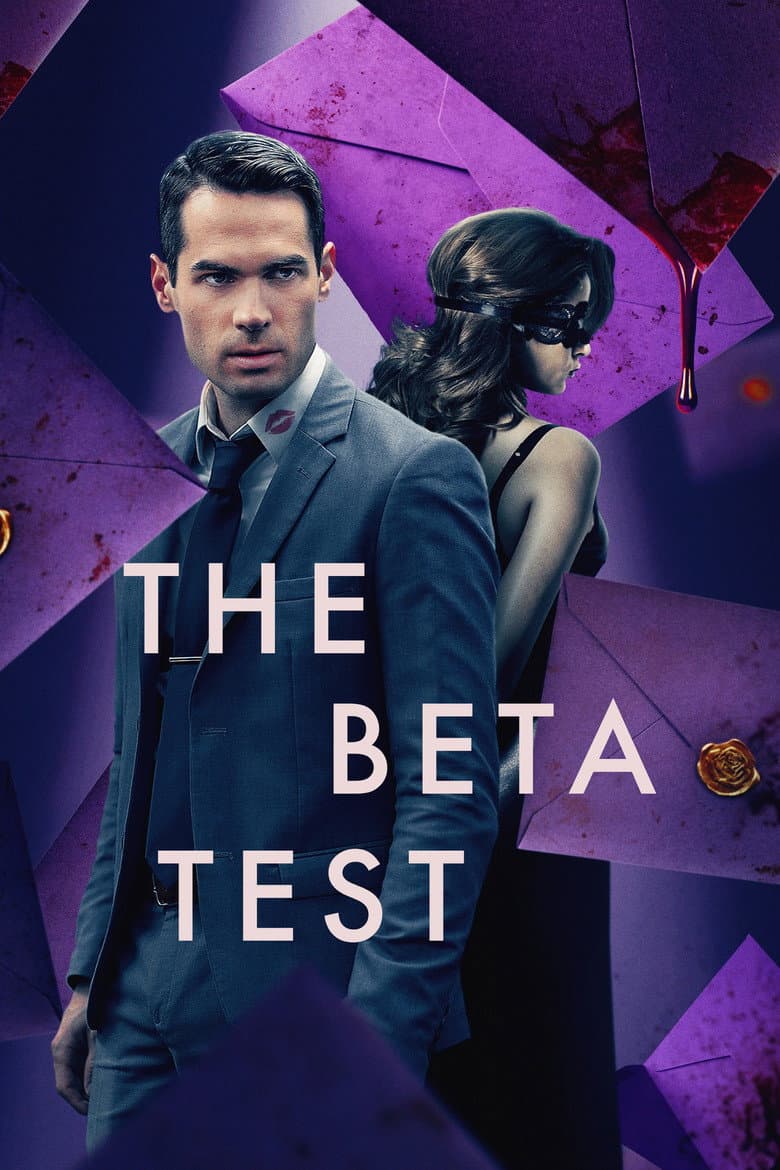
Jordan Hines is a successful Los Angeles talent agent who is six days from marrying Caroline. A purple letter offers him anonymous sex, and he accepts even though he is already distracted by other women. He then hunts for the stranger while murders, lies, and stolen online data pull him into a larger trap. The film mixes dark comedy, sex thriller tension, violent horror, and a portrait of a man losing control.
The story repeatedly shows Jordan using charm, money, and male status to get his way at work and at home. He humiliates his young female assistant, treats women as sexual targets, and treats Caroline as part of his public image. The film connects his behavior to a workplace culture that rewards aggressive men and lets them silence weaker workers. It also warns that social media can turn private desires into data that strangers can use. A brief subplot shows Raymond meeting another man through the same scheme, but the film treats it as part of the affair plot rather than an identity story.
Community feedback
Was our 46% Woke rating accurate?
Breakdown
These are the editorial factors and ratings behind our score for The Beta Test.
Woke representation / casting
Not present. The modern Los Angeles cast includes several backgrounds, but the film does not make diversity or identity a casting message. No prominent role is presented as a representation milestone.
0%
Woke political dialogue
Jordan talks about the writers' guild fight and the agency's fear of losing money. PJ gives a long explanation of how social media companies collect personal data and sell it to advertisers. Jordan later connects an unwanted sexual touch to a workplace that ignored it. These ideas appear in a few scenes but do not dominate the dialogue.
28%
Identity-driven story themes
Jordan's collapse comes from his belief that status and male power let him lie, cheat, and use people. The film repeatedly shows him humiliating his young female assistant, treating women as sexual targets, and treating Caroline as part of his public image. The agency culture around him rewards aggressive men and lets powerful clients escape consequences. Jordan finally admits that he is a fraud and fears losing the power that made Caroline love him. The film makes male entitlement a major theme, but it does not become a full identity-politics story.
45%
Western institutional / cultural critique
The agency scenes attack a workplace that uses false promises, pressure, and fear to control assistants and writers. Jordan shouts at Jaclyn, threatens her job, and uses his status to force help from workers who cannot push back. The film also links Hollywood's money system to the writers' guild fight and shows social media turning private life into a product for advertisers. Jordan's cheating and treatment of women make the attack on male entitlement part of the larger critique. The film targets Hollywood and digital business more than Western society as a whole.
54%
Woke character or canon changes
Not relevant. The film is an original story rather than an adaptation. It does not change an established character or real historical figure.
0%
Anti-woke backlash and complaints
Not present. The separate X check found no anti-woke posts or boycott talk. Web searches and audience discussions found no clear complaints that the film pushes DEI, identity politics, or left-wing messaging.
0%
Creator track record context
Jim Cummings has no clear public record of political or representation-focused activism. PJ McCabe has a mild identity-related signal from The Screener, which centers a queer Muslim filmmaker. Natalie Metzger has supported LGBTQ and queer projects, while most other producers have no strong public activist profile. The team adds a mild context signal but not a strong shared identity-first brand.
22%
Production

Movie · 2025
After escaping from a mental hospital, a violent sociopath named Paul begins a dangerous rampage targeting Sofia, a world-famous pop star.
Movie · 2023
Emily Young, a senior, wants to be elected as her sorority's president. She adopts a cute sloth, thinking it can become the new mascot and help her win, until a string of…
Movie · 2017
In downtown Madrid, a series of mysterious gunshots trap a motley assortment of people in a decrepit bar.

Movie · 2016
Horror junkie Joe Foster gets to live out his ultimate scary movie fantasy courtesy of Fear Inc., a company that specializes in giving you the fright of your life.
Movie · 2024
A family's vacation to a remote getaway takes an unexpected turn when they discover the present-day implications of the island's cannibalistic past.

Movie · 2025
Four years after defeating The Grabber, Finney Blake is struggling with life after captivity. When his younger sister Gwen begins receiving calls in her dreams from the Black…
Movie · 2016
Ronnie runs a Disco walking tour with his son, Brayden. When a sexy woman takes the tour, it begins a competition between father and son for her love.
Movie · 2022
A college reunion goes awry when Pete suspects his friends may be out to get him... As their weekend getaway grows more and more uncomfortable, should Pete be worried about his…
