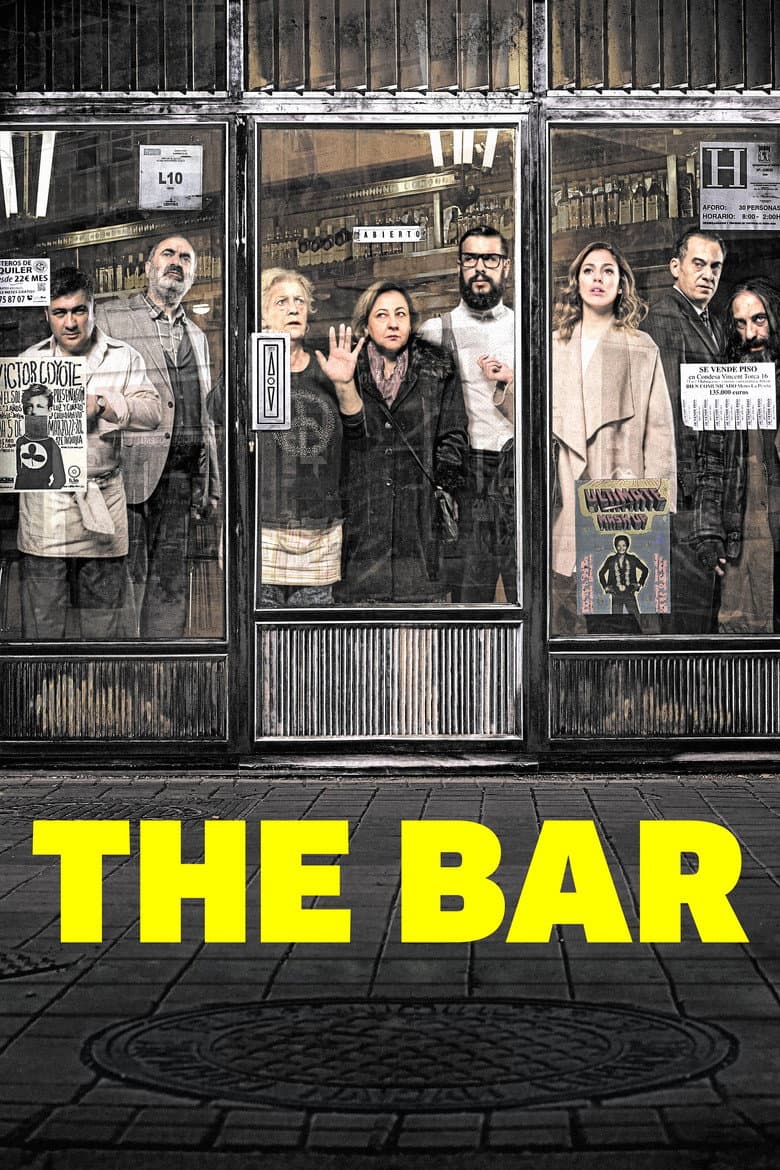
Elena enters a worn bar in central Madrid to charge her phone. A gunman kills people who step outside, so she and several strangers are trapped inside. A sick man adds the fear of a deadly disease, while smoke and armed men suggest that officials are hiding the truth. The mood shifts from black comedy to grim survival horror as the group turns on itself.
The film presents the customers as a small picture of society, with a rich young woman, a hipster ad worker, a gambling woman, a bar owner, a waiter, office workers, and a homeless man. Their class, money, and social habits shape how they treat one another, and fear brings out insults about outsiders, the poor, and suspected migrants. Elena often drives the group with clever lies, while Nacho changes from a coward into someone willing to sacrifice himself. The story finally argues that selfishness, fear, and cruelty come from ordinary people, not from one group or identity.
Community feedback
Was our 20% Woke rating accurate?
Breakdown
These are the editorial factors and ratings behind our score for The Bar.
Woke representation / casting
Not present. The main cast is mostly Spanish and Argentine actors in ordinary Madrid roles. Elena is a prominent woman, but the film does not frame her casting as a diversity or empowerment statement.
0%
Woke political dialogue
Not present. The characters discuss terrorism, quarantine, the news, and a possible state cover-up. These lines build the thriller and do not push modern identity, gender-role, or DEI ideas.
0%
Identity-driven story themes
The film uses a mixed group of Madrid customers as a small picture of society. Fear brings out class contempt, insults about outsiders and foreigners, and talk about suspected migrants. The film exposes these attitudes as part of a wider human failure, rather than building a clear identity-politics message. These ideas recur through the arguments but remain secondary to the survival plot.
28%
Western institutional / cultural critique
The film shows officials hiding a deadly event and stopping people from leaving. The trapped characters distrust the news and the state, and they feel that ordinary people can be sacrificed. This gives the story a mild modern anti-system message. The film does not attack family, religion, or gender roles through an activist frame.
20%
Woke character or canon changes
Not relevant. The film uses original characters in a new story. No established characters, canon, or historical figures are changed for identity reasons.
0%
Anti-woke backlash and complaints
Not present. No sustained anti-woke or anti-DEI complaint campaign appears in the available coverage. X evidence showed no anti-woke complaints, while user reactions focused on gore, tension, pacing, and the ending.
0%
Creator track record context
Álex de la Iglesia is known for dark comedy, horror, and satire rather than identity politics. Jorge Guerricaechevarría has a genre-focused career without a strong public DEI or activist record. The listed producers and casting director have no documented identity-driven public profile. The film matches that genre focus.
5%
Production

Movie · 2019
Columbus, Tallahassee, Wichita, and Little Rock move to the American heartland as they face off against evolved zombies, fellow survivors, and the growing pains of the snarky…

Movie · 2022
Legendary rock band Foo Fighters move into an Encino mansion steeped in grisly rock and roll history to record their much anticipated 10th album.

Movie · 2019
When a huge hurricane hits her hometown in Florida, Haley ignores evacuation orders to look for her father. After finding him badly wounded, both are trapped by the flood.
Movie · 2025
When twin brothers find a mysterious wind-up monkey, a series of outrageous deaths tear their family apart. Twenty-five years later, the monkey begins a new killing spree forcing…

Movie · 2025
A collection of Halloween-themed videotapes unleashes a series of twisted, blood-soaked tales, turning trick-or-treat into a struggle for survival.

Movie · 2024
A grieving woman in a secluded forest encounters a killer who injects her with a paralytic drug. As her body shuts down, her fight for survival begins.

Movie · 2024
Nothing is what it seems when a twisted one-night stand spirals into a serial killer’s vicious murder spree.
Movie · 2024
A family's vacation to a remote getaway takes an unexpected turn when they discover the present-day implications of the island's cannibalistic past.
