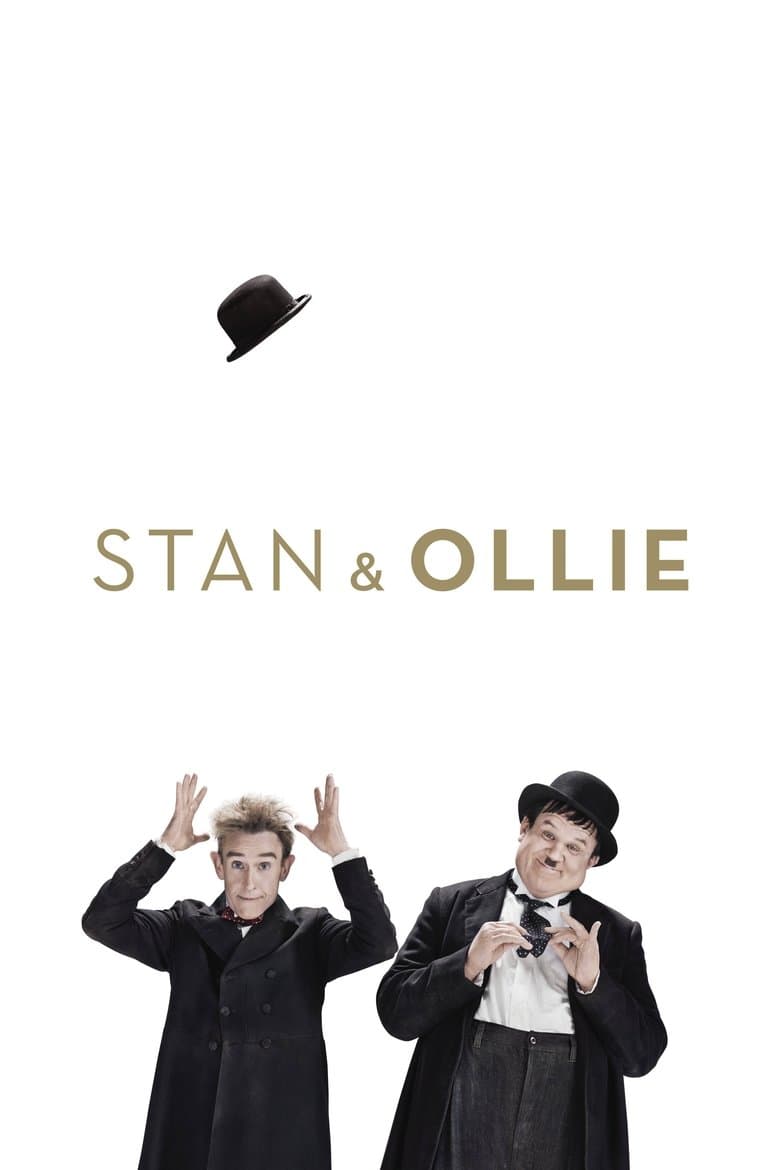
Stan Laurel and Oliver Hardy return to Britain and Ireland in 1953 after their best film years have ended. The old friends perform in small halls while Stan tries to keep a new Robin Hood movie alive. Ollie’s weak heart, money troubles, and years of hurt put their act under strain. The tour starts with poor crowds, then grows when a clever manager uses their old fame to draw the public back. The film keeps a gentle comic tone, but its jokes sit beside sadness about age, work, and time.
Stan lives to invent jokes, while Ollie wants a quieter life and fears that his body cannot keep up. Their wives Lucille and Ida join the tour and form a sharp second comedy pair with very different tempers. Lucille worries about Ollie’s health, while Ida pushes Stan to face the uncertain plans for his promised film. The men face their old anger during a public fight, then learn how much they still need each other. The story ends as a warm picture of loyalty, shared work, and friendship that survives failure and illness.
Community feedback
Was our 4% Woke rating accurate?
Breakdown
These are the editorial factors and ratings behind our score for Stan & Ollie.
Woke representation / casting
Not present. The main roles are white historical figures, and the wives are white historical figures too. The film does not present its casting as a diversity or identity statement.
0%
Woke political dialogue
Not present. The film has a brief anti-Mussolini line and a joke about communism. Those lines are period humor and do not build a current political message.
0%
Identity-driven story themes
Not present. The story centers on friendship, work, aging, illness, and loyalty. Its strong wives and close male friendship are not presented as a modern identity campaign.
0%
Western institutional / cultural critique
Not present. The film shows unfair contracts, low pay, and pressure from a studio boss. The conflict stays about this pair’s work and money and does not become a modern critique of Western institutions or family norms.
0%
Woke character or canon changes
Not relevant. The film changes dates and private events to make a tighter drama. The changes are not identity-driven.
0%
Anti-woke backlash and complaints
Not present. The separate X research found no anti-woke posts about the film. Wider coverage found no meaningful complaint that it pushes DEI, identity politics, or left-wing messaging.
0%
Creator track record context
The director and writers have low recorded woke scores and no strong identity-focused pattern. Andy Pryor has a record of inclusive casting work, while Saurabh Kakkar and Faye Ward have stronger representation or underrepresented-talent links. Most other cached producers have low or mild scores. This gives some background context, but the film itself is not built around it.
22%
Production

Movie · 2016
Set against the backdrop of a beautiful garden in the heart of London, this contemporary fairy tale revolves around the unlikely friendship between a reclusive young woman and a…
Movie · 2023
Two large, ignorant bullies ruthlessly pursue a small, brilliant boy in this young adult Roald Dahl short story.
Movie · 2019
A headstrong Chinese-American woman returns to China when her beloved grandmother is given a terminal diagnosis.
Movie · 2022
An endearing outlier, Brian lives alone in a Welsh valley, inventing oddball contraptions that seldom work. After finding a discarded mannequin head, Brian gets an idea.
Movie · 2024
The Herdman kids are undeniably the worst kids in the history of the world. They lie, steal, cheat, bully and overall terrorize their small community.
Movie · 2024
Four tales unfold in Wes Anderson's anthology of short films adapted from Roald Dahl's beloved stories, "The Wonderful Story of Henry Sugar", "The Swan", "The Rat Catcher", and…

Movie · 2017
The film follows a man with an unwanted gift for healing who meets a teenager with cancer who helps him to find himself.
Movie · 2019
Following a group of friends from university as they progress into middle-age life and go their own separate ways.
