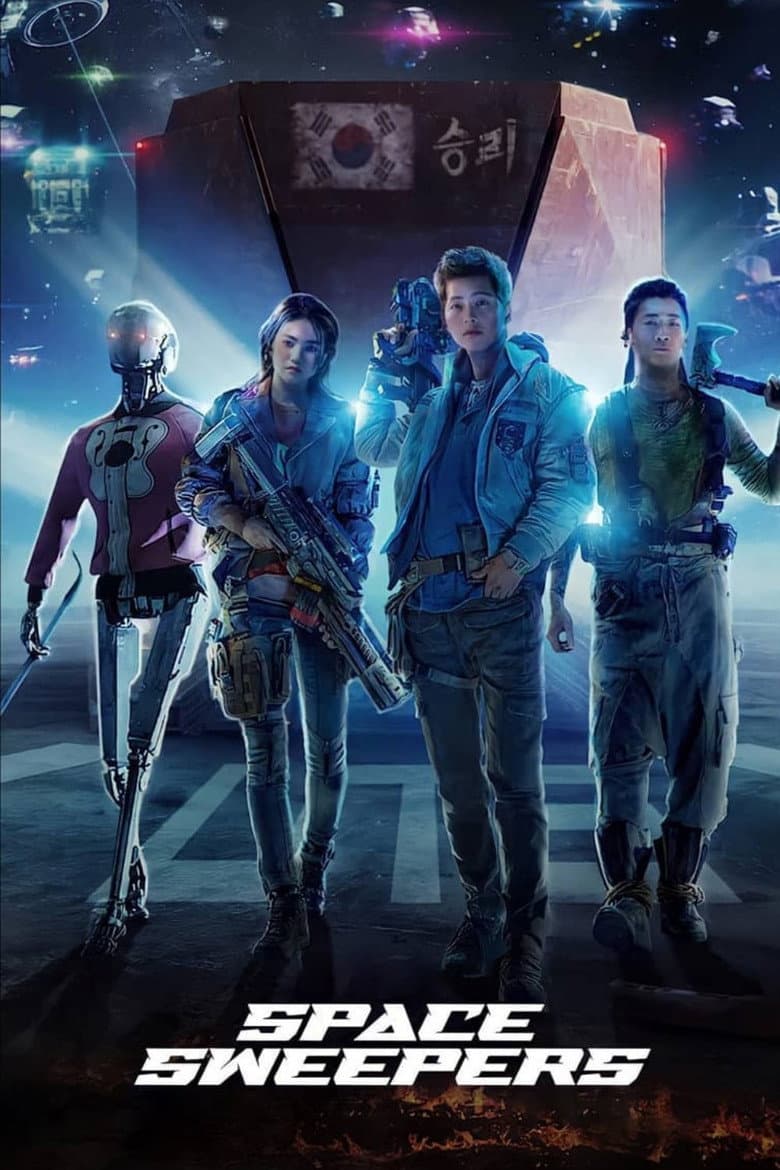
Space Sweepers follows Tae-ho, a broke pilot who works with Captain Jang, Tiger Park, and the robot Bubs on the junk ship Victory. In 2092, Earth is close to ruined, and most people survive under the rules of the wealthy UTS space company. The crew finds Dorothy, a child said to be a dangerous robot, and plans to sell her for money. The fast, colorful movie mixes space chases, jokes, grief, and a found-family story.
The movie gives Bubs a clear female identity even though a man provides her deep voice. Bubs saves for a full body change, feels happy when Dorothy calls her a big sister, and ends with a female body while keeping her old voice. Captain Jang is a tough, brilliant leader, while Tae-ho and the other men share much of the child care. The story also presents UTS as a rich company that uses poor workers, brands environmental rebels as terrorists, and treats people and Earth as disposable.
Community feedback
Was our 56% Woke rating accurate?
Breakdown
These are the editorial factors and ratings behind our score for Space Sweepers.
Woke representation / casting
The film puts a prominent female captain in charge and gives a female robot a deep male voice. The station also includes people from many countries, but that fits the future space setting. The film does not present the cast as a diversity program or use a repeated one-of-each pattern.
15%
Woke political dialogue
The crew repeatedly talks about non-citizen taxes, crushing debt, and the cost of survival. The Black Foxes say they were an environmental group and accuse UTS of hiding the truth about Earth and Mars. The film links company power to pollution, poverty, and the treatment of workers as disposable. These lines support the plot but do not become long speeches.
28%
Identity-driven story themes
Bubs has a recurring story about being seen as female despite a deep male voice and a machine body. The film shows her saving money for a full body change, fearing mockery, and feeling joy when a child calls her a big sister. Captain Jang remains the hard, smart leader, while the men often handle care work around the child. These themes matter to the crew’s bond, but Bubs’s identity is a subplot inside an action adventure.
48%
Western institutional / cultural critique
UTS divides people into rich citizens in safe space and poor workers who live with debt, taxes, and dangerous jobs. The company controls the guards and calls environmental activists terrorists. The CEO treats rich people as more worthy and plans to sacrifice Earth to protect his chosen group. The crew answers with solidarity among workers, former criminals, and outsiders, so the critique shapes the central conflict.
66%
Woke character or canon changes
Not relevant. The movie is a made-up story with no established characters or historical figures being changed.
0%
Anti-woke backlash and complaints
A few small posts called the movie a little woke or read Bubs as a transgender message. One Reddit comment also complained about environmental moralizing and identity politics. The complaints had no clear reach, campaign, boycott, or major news pickup, while other right-leaning posts praised the movie as not woke.
12%
Creator track record context
Jo Sung-hee’s known work includes outsiders, debt, environmental collapse, and class pressure. His recorded score is low at 18/100, and there is no strong record of party politics or DEI activism. The other listed writers and producers have scores from 0 to 5 and no clear identity-driven public pattern.
12%
Production
Movie · 2025
In this extraordinary story of an ordinary man, Charles 'Chuck' Krantz experiences the wonder of love, the heartbreak of loss, and the multitudes contained in all of us.
Movie · 2021
In the near future, Cameron Turner is diagnosed with a terminal illness. Presented with an experimental solution to shield his wife and son from grief, he grapples with altering…
Movie · 2017
Thirty years after the events of the first film, a new blade runner, LAPD Officer K, unearths a long-buried secret that has the potential to plunge what's left of society into…
Movie · 2021
A bureaucrat interviews five souls to decide which of them will be given a life on Earth. But he soon faces an existential challenge of his own.
Movie · 2017
Sophia, a new high school student, tries to make friends with Barbara, who tells her that “she kills giants,” protecting this way her hometown and its inhabitants, who do not…
Movie · 2020
At the height of the Cold War, a Soviet spacecraft crash lands after a mission gone awry, leaving the commander as its only survivor.
Movie · 2022
Known as America’s Poet, Henry Wadsworth Longfellow leads an idyllic life – until the day his world is shattered by tragedy.
Movie · 2024
In 1985, the murder of a government-sponsored superhero draws his outlawed colleagues out of retirement and into a mystery that threatens to upend their personal lives and the…
