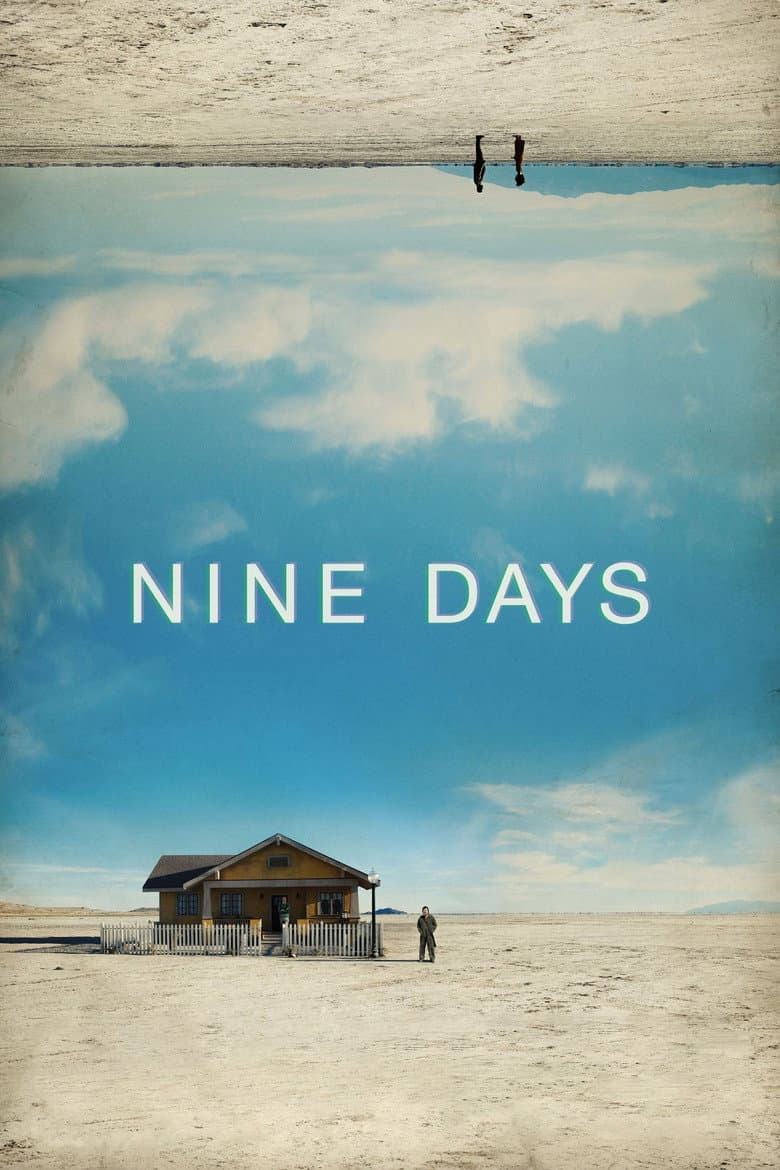
Will lives alone in a strange desert house. His job is to watch lives on old TVs and interview new souls who want to be born on Earth. When a young woman he once chose dies by suicide, he is shaken. Over nine days he tests a new group of souls and must pick only one. The mood is quiet, sad, and full of big questions about what makes a life worth living.
A normal viewer mostly sees a deep, emotional story about life, death, guilt, and kindness. The film does put a clear multi-race cast in the main roles, and the director said he wanted the group to “represent the world.” A company known for stories about people of color also helped make it. Those choices are easy to notice on screen. The plot itself is not about race fights, gender politics, or activist lectures. It stays on mental pain, empathy, and the gift of small beautiful moments. For most people, the “woke” side is the casting and production choices, not a heavy message in the story.
Community feedback
Was our 24% Woke rating accurate?
Breakdown
These are the editorial factors and ratings behind our score for Nine Days.
Woke representation / casting
Main roles are clearly multi-ethnic by design: black lead Will, Beetz as key soul Emma, Wong as helper Kyo, plus white and Latina candidates. Oda said he wanted the cast to represent the world by race, age, and gender. MACRO, focused on multicultural stories, co-produced. Race is not the plot, but the diverse “who gets the big jobs” pattern is easy for viewers to see.
40%
Woke political dialogue
Talk is mostly moral tests, suffering, and life’s value. There are hard hypotheticals (violence, rape, murder) as character tests, not modern activist slogans about identity, DEI, or current party politics. Viewers hear philosophy more than politics.
0%
Identity-driven story themes
Core themes are suicide, guilt, empathy, toughness vs softness, and whether life is still worth it. Those are human themes, not race, gender, or queer identity storylines. A light social-awareness feel around mental pain may land for some, but the film does not sell modern identity politics as its main point.
5%
Western institutional / cultural critique
The “system” is a made-up soul interview office, not a hit on Western churches, families, capitalism, or “toxic men” as a modern activist target. Kane’s dark view of the world is a personality trait, not a lecture against the West.
0%
Woke character or canon changes
Not relevant. This is an original story, not a remake or rewrite of known characters, canon, or history for identity reasons.
0%
Anti-woke backlash and complaints
Searches of news and public talk did not turn up a real wave of anti-woke or right-leaning claims that the movie pushes woke, DEI, or identity politics. Praise and “deep film” talk dominate.
0%
Creator track record context
Cached key names are mostly 0/100. Vilaro’s MACRO / people-of-color development background and MACRO’s role as co-producer add a mild identity-focused production signal. That is supporting context, not proof the script is activist propaganda.
14%
Production
Movie · 2022
Known as America’s Poet, Henry Wadsworth Longfellow leads an idyllic life – until the day his world is shattered by tragedy.
Movie · 2024
A mother and her teenage daughter must confront Death when it arrives in the form of an astonishing talking bird.
Movie · 2021
An Icelandic couple live with their herd of sheep on a beautiful but remote farm. When they discover a mysterious newborn on their land, they decide to keep it and raise it as…
Movie · 2017
A supernatural love story that centers on two parents whose life together falls apart after their son dies. The man, now a successful lawyer, and the woman, now married and an…
Movie · 2024
Harriet finds art imitating life when she discovers certain songs can transport her back in time – literally.
Movie · 2016
Lucinda Price is sent to a reform academy under the assumption that she has killed a boy. There, she meets two mysterious boys, Cam and Daniel, to whom she feels drawn to both.
Movie · 2020
Tanjiro Kamado, joined with Inosuke Hashibira, a boy raised by boars who wears a boar's head, and Zenitsu Agatsuma, a scared boy who reveals his true power when he sleeps, boards…
Movie · 2025
Sarah and David are single strangers who meet at a mutual friend’s wedding and soon, through a surprising twist of fate, find themselves on a funny, fantastical, sweeping…
