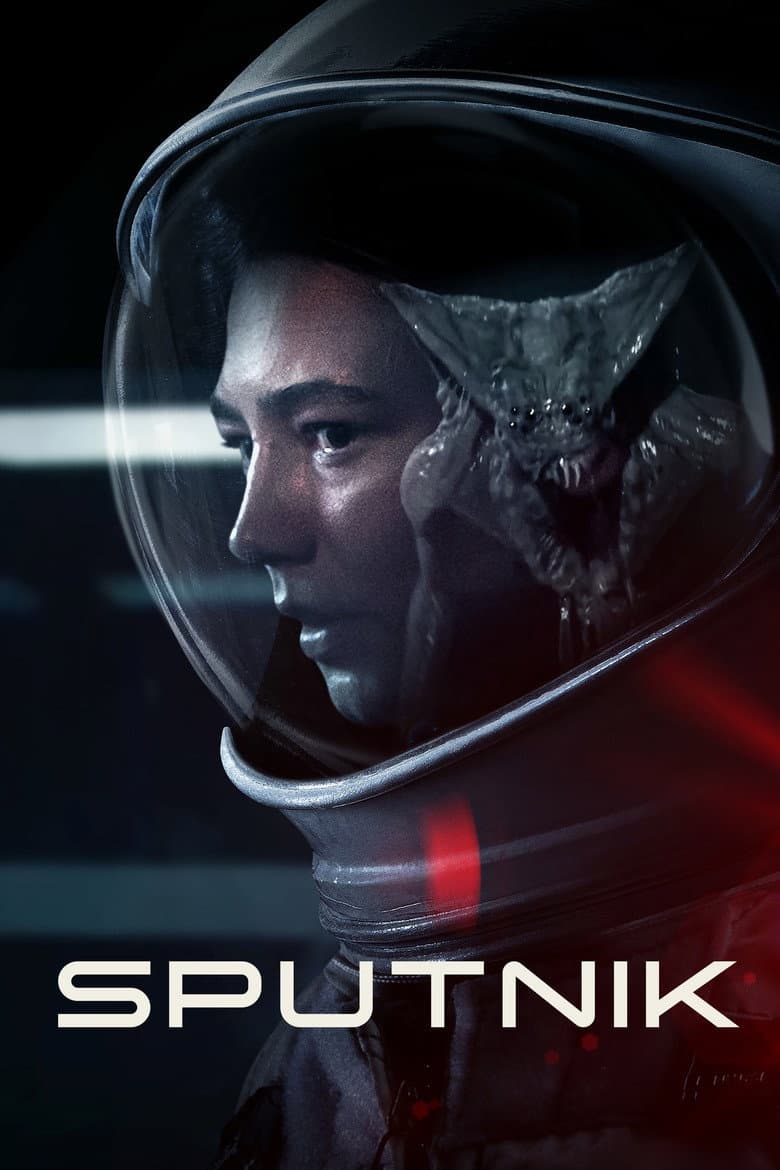
Sputnik follows Tatyana Klimova, a sharp but troubled doctor who studies the brain and is sent to a hidden Soviet military base. The year is 1983, and the Cold War space program is hiding a terrible secret. Cosmonaut Konstantin Veshnyakov survives a crash, but an alien creature lives inside him and comes out while he sleeps. Tatyana must learn what the creature wants, decide whether Konstantin can be saved, and face officers who want to use the discovery. The movie mixes a slow science fiction mystery with grim body horror and tense military suspense.
The story gives Tatyana the central problem-solving role, and she uses medical knowledge and risky methods to challenge the men running the base. Her strength comes from her training, hard past, and concern for patients. The main themes are fear, loyalty, hidden guilt, human cruelty, and the danger of treating a person as a tool. The Soviet system hides deaths, tests people without consent, and builds a public hero, while Tatyana tries to protect the patient in front of her. The alien threat and the moral choices around Konstantin stay more important than any social message.
Community feedback
Was our 1% Woke rating accurate?
Breakdown
These are the editorial factors and ratings behind our score for Sputnik.
Woke representation / casting
Not present. The cast presents a Russian Soviet military and science world. Tatyana is a female doctor, but the film uses her medical role to solve the case rather than making her identity a diversity message.
0%
Woke political dialogue
Not present. The characters discuss the crash, the creature, medical tests, military secrets, and survival. No one gives modern speeches about gender, race, sexuality, DEI, or activism.
0%
Identity-driven story themes
Not present. Tatyana is a tough and skilled doctor, but the plot does not make gender identity or group politics part of her goal. The story follows fear, loyalty, guilt, and the fight to save a patient.
0%
Western institutional / cultural critique
Not present. The movie criticizes a secret Soviet military program and its abuse of power. It does not direct a modern activist message at Western culture, Christianity, capitalism, family life, or traditional gender roles.
0%
Woke character or canon changes
Not relevant. Sputnik expands Abramenko’s short film The Passenger, but no race, gender, sexuality, or identity change to an established character is reported.
0%
Anti-woke backlash and complaints
Not present. The provided X pass found no anti-woke complaints. Reviewed audience and news discussion centered on plot, horror, pacing, the Soviet setting, and the ending.
0%
Creator track record context
Ilya Stewart’s earlier producing credits include films about queer repression and Holocaust memory. Murad Osmann and Pavel Burya are linked to some socially serious projects, but their public profiles are mostly commercial. Abramenko and the writers have genre-focused profiles, and the interviews frame Sputnik around fear, science, and Soviet hero myths. The title has no clear identity or activist framing, so this context signal is small.
7%
Production

Movie · 2017
Thirty years after the events of the first film, a new blade runner, LAPD Officer K, unearths a long-buried secret that has the potential to plunge what's left of society into…
Movie · 2016
A young, lonely woman is consumed by her deepest and darkest desires after tragedy strikes her quiet country life.

Movie · 2022
In the wake of a young Jewish girl’s disappearance, the son of a Hasidic funeral director returns home with his pregnant wife in hopes of reconciling with his father.
Movie · 2016
A mother and her 10-year old daughter are trapped in a forest. There is something in this forest. Something unlike anything they have heard before.

Movie · 2022
A brilliant toy company roboticist uses artificial intelligence to develop M3GAN, a life-like doll programmed to emotionally bond with her newly orphaned niece.

Movie · 2023
Anna and Ryan have found true love together. It's been proven by a controversial test. There's just one problem: Anna still isn't sure. Then she meets Amir.
Movie · 2017
In a small town in Maine, seven children known as The Losers Club come face to face with life problems, bullies and a monster that takes the shape of a clown called Pennywise.
Movie · 2026
When a mutating, highly contagious fungus escapes a sealed facility, two employees – joined by a grizzled bioterror operative – must survive the wildest night shift ever to save…
