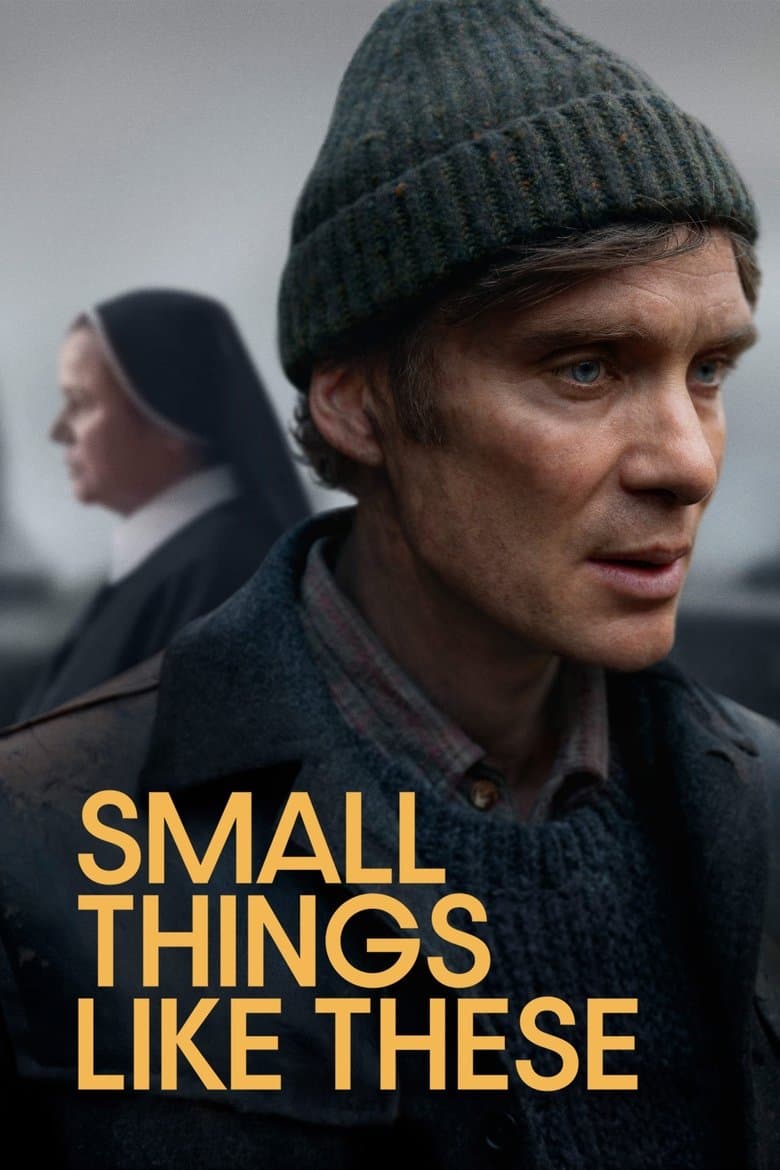
In 1985, Bill Furlong sells coal in a small Irish town and works hard to support his wife and five daughters. During a Christmas delivery, he enters the local convent and sees a frightened young girl asking for help. The convent runs a Magdalene laundry where girls and young mothers are locked away, forced to work, and separated from their babies. Bill’s discovery brings back painful memories of his own childhood and makes him choose between safety and doing what he knows is right. The film has a cold, quiet, and heavy mood, with tension built through silence and small acts.
The film’s clearest audience-visible message is that the Catholic Church held too much power over ordinary life and used shame to control vulnerable women. The convent’s abuse is shown as part of a wider town silence, because families and neighbors fear losing work, respect, or access to schools. Bill chooses to protect a girl, but the story does not turn him into a loud hero or a modern political speaker. Bill’s wife, his daughters, the nuns, and the girls all shape the conflict, while the film stays focused on guilt, family, courage, and the cost of looking away. The film criticizes the old church system, but it keeps that message inside this Irish historical story.
Community feedback
Was our 28% Woke rating accurate?
Breakdown
These are the editorial factors and ratings behind our score for Small Things Like These.
Woke representation / casting
Not present. The film uses a mostly white Irish cast that fits the 1985 setting. The women’s roles serve the family and convent story, not a diversity message.
0%
Woke political dialogue
Not present. The characters do not use modern activist or party-political language. Bill faces a moral choice through action and silence rather than speeches.
0%
Identity-driven story themes
The film centers young women who are shamed, confined, forced to work, and separated from their babies. The convent treats female sexuality and unmarried motherhood as reasons for punishment. Bill’s family history ties him to the women’s pain and drives his choice to help one girl. The story stays inside a 1980s Irish abuse case and does not add present-day race, sexuality, or DEI politics.
28%
Western institutional / cultural critique
The film shows the Catholic Church and the convent controlling much of the town. The nuns hide abuse and pressure Bill, his wife, and neighbors to stay quiet. The story condemns that past system of church power and public silence. The criticism stays tied to 1985 Ireland and does not become a broad attack on modern Western society.
28%
Woke character or canon changes
Not relevant. The film closely adapts Claire Keegan’s novella. No identity-driven change to an established character or historical event is shown.
0%
Anti-woke backlash and complaints
A right-leaning Gript Media column called the film’s promotion progressive myth-making that attacks old Catholic Ireland. A follow-up post called its picture of Ireland before liberal reforms poisonous. One small account joked that the movie was anti-Catholic propaganda. The supplied X pass found fringe reach and no coordinated boycott, review-bombing drive, or large-scale debate.
15%
Creator track record context
Claire Keegan’s writing often examines women’s limited choices and abuse by institutions, but her public work is literary rather than activist. Tim Mielants and Enda Walsh have low cached scores, and their work mainly covers historical, personal, or institutional stories. Cillian Murphy’s title-related comments stress shame, secrecy, and Ireland facing its past. Matt Damon, Ben Affleck, and Drew Vinton add some inclusion-policy context through Artists Equity, but no evidence ties that policy to this film’s story or cast.
22%
Production
Movie · 2022
A quiet, neglected girl is sent away from her dysfunctional family to live with relatives for the summer. She blossoms in their care, but in this house where there are meant to be…
Movie · 2020
A man refuses all assistance from his daughter as he ages and, as he tries to make sense of his changing circumstances, he begins to doubt his loved ones, his own mind and even…
Movie · 2023
The story of J. Robert Oppenheimer's role in the development of the atomic bomb during World War II.
Movie · 2023
American ballet dancer Joy Womack is accepted into Moscow's infamously tough Bolshoi Ballet Academy, with the dream of becoming a great ballerina.

Movie · 2024
On the brink of the Second World War, a young Norwegian man's drive to resist the Nazis sets a new course for his future – and the future of his country.
Movie · 2025
A logger leads a life of quiet grace as he experiences love and loss during an era of monumental change in early 20th-century America.
Movie · 2022
Based on a true tragedy, the emotionally triggering film sheds light on the plight of Kashmiri Pandits (Hindus), a religious minority in the 1990s Kashmir valley, who were…

Movie · 2023
The true story of the inseparable Von Erich brothers, who made history in the intensely competitive world of professional wrestling in the early 1980s.
