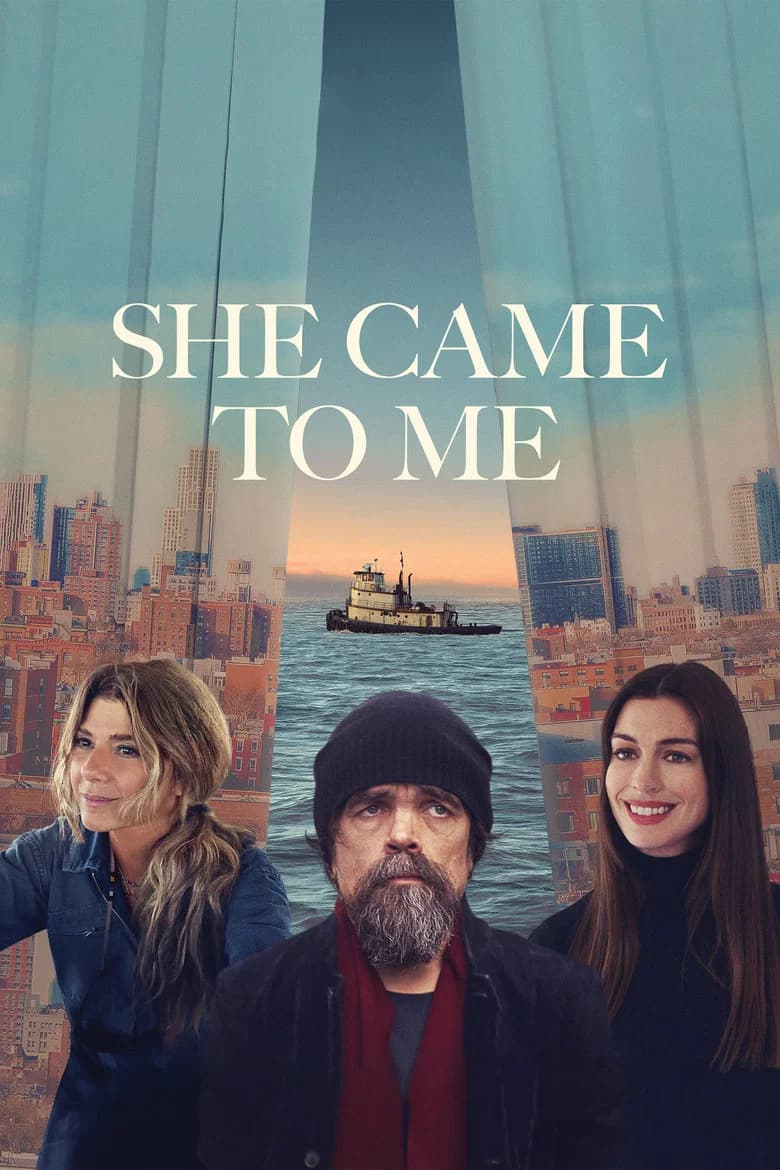
She Came to Me follows Steven Lauddem, a gifted New York opera composer who cannot finish his comeback work. His therapist wife, Patricia, tells him to walk until he finds fresh ideas, and he meets Katrina, a tugboat captain who pulls him into a risky affair. The story then joins Steven's marriage to a teenage romance between Julian and Tereza, whose parents clash over sex, race, and family control. The film moves between screwball comedy, adult drama, opera, mental illness, and a warm but strange search for love.
The strongest audience-visible woke element is the teen subplot, where a biracial boy and a white girl face a stepfather who reacts with racial dislike and threatens a life-changing rape charge. The film treats the young couple as sincere and their escape as a fight against prejudice, class barriers, and harsh adult control. It also gives central women unusual jobs and choices, including a tugboat captain, a psychiatrist, and a mother who helps protect the teens. These ideas recur in one important subplot, but the whole movie remains focused on love, artistic inspiration, faith, mental health, and messy personal freedom rather than an activist campaign.
Community feedback
Was our 43% Woke rating accurate?
Breakdown
These are the editorial factors and ratings behind our score for She Came to Me.
Woke representation / casting
The film puts a biracial teenage boy in a central interracial romance with a white girl. The film also gives major women jobs as a therapist and tugboat captain. These choices fit a modern New York story and are not sold as a diversity campaign. The film does not build its cast around a repeated identity message.
12%
Woke political dialogue
The film has direct talk about a teenage sex case and the danger of putting Julian on a sex offender list. Trey ties his anger to Julian's race and uses the law to control Tereza's relationship. The young couple and their allies present that threat as cruel and unfair. The political material is concentrated in the teen plot rather than spread through the whole movie.
30%
Identity-driven story themes
The film makes the teen romance a story about race, class, immigration, and family power. The biracial Julian and white Tereza are treated as a sincere couple while Tereza's immigrant mother works as a cleaner. The film also presents Katrina's sexual choices and Patricia's hidden needs as parts of women's struggle to live honestly. The identity material matters to one large subplot, but romance, art, mental health, and faith carry most of the movie.
34%
Western institutional / cultural critique
The film presents Trey as a conservative stepfather who uses family authority and the law against an interracial couple. The film links his racial dislike to strict family rules and old-fashioned ideas about respect. The young lovers receive help from adults who reject his plan, and their future is tied to environmental work. The critique recurs through the teen story but does not define every storyline.
38%
Woke character or canon changes
Not relevant. The film is an original story expanded from Rebecca Miller's short story. It does not change a known franchise character, canon, or historical figure for identity reasons.
0%
Anti-woke backlash and complaints
Not present. Searches found no clear boycott, review campaign, or right-leaning complaint that the film pushes woke, DEI, or identity politics. Public discussion was mostly about the film's odd structure, romance, and tone.
0%
Creator track record context
Rebecca Miller has a recorded score of 28/100, with a mild record of women-centered stories and comments about female filmmakers. Anne Hathaway has a recorded score of 34/100, with public work for gender equality and LGBTQ+ rights. Christine Vachon and Pamela Koffler have recorded scores of 71/100 and 62/100 because of their long record of queer and social-justice films. That context is noticeable, but the film itself is not a queer-centered project.
48%
Production

Movie · 2016
Maggie's plan to have a baby on her own with a sperm donor is derailed when she falls in love with John, an older married professor, destroying his volatile marriage to the…
Movie · 2021
The story of Gary Valentine and Alana Kane growing up, running around and going through the treacherous navigation of first love in the San Fernando Valley, 1973.

Movie · 2016
A sex therapist goes through puberty after the successful removal of a benign tumor resting against his pituitary gland.

Movie · 2016
A week in the life of Paterson, a poet bus driver, and his wife Laura, a very creative artist, who live in Paterson, New Jersey, hometown of many famous poets and artists.

Movie · 2020
A teenager lives out the hilarious and often tragic consequences of being lethally attractive, until he meets a girl with a congenital defect.
Movie · 2023
Highly intelligent computer major Zoey Miller is uninterested in romantic love, but her life is turned upside down when Zack, the school's soccer star, gets amnesia and mistakes…

Movie · 2023
College freshman Abby tries to distance herself from her dark past while resisting her attraction to bad boy Travis.
Movie · 2016
A young woman struggles to move on with her life after the death of her husband, an acclaimed folk singer, when a brash New York writer forces her to confront her loss and the…
