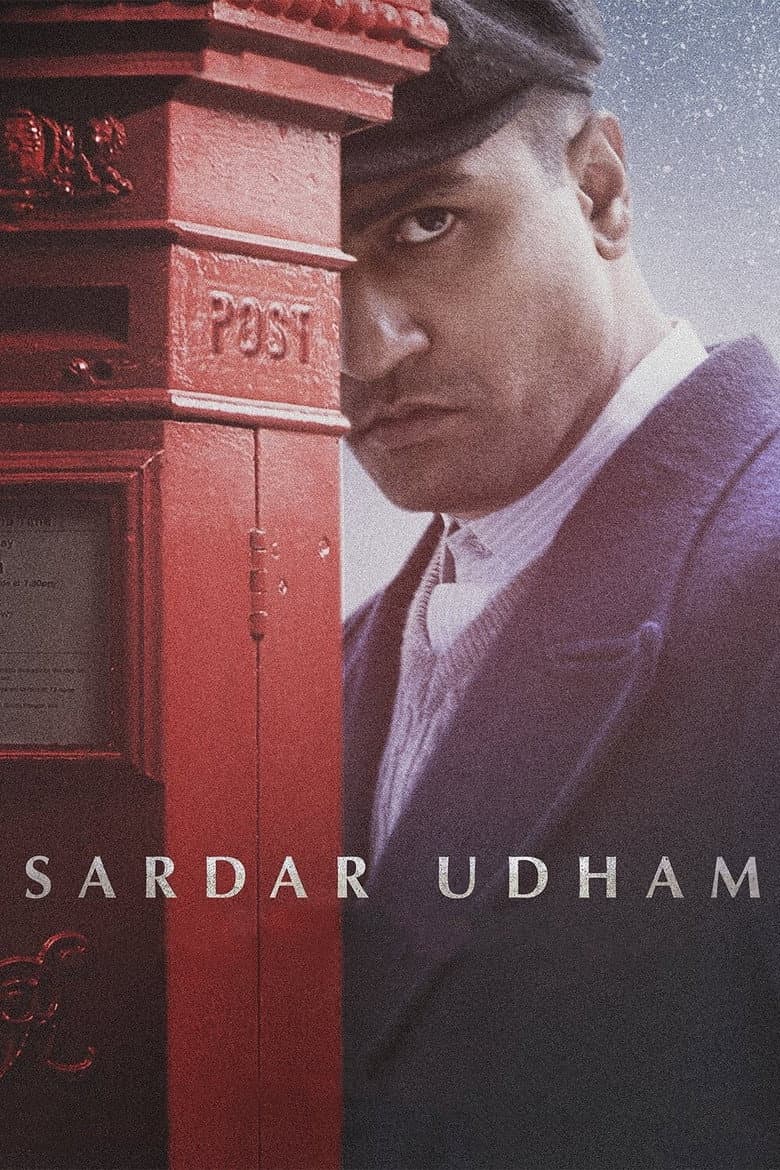
Sardar Udham follows Udham Singh, a young Punjabi revolutionary who carries the memory of the 1919 Jallianwala Bagh massacre for more than twenty years. The story moves between Punjab, Afghanistan, the Soviet Union, and Britain before reaching London in 1940. Udham takes new names, works small jobs, and waits for a chance to confront Michael O’Dwyer, the former Punjab leader he blames for the killings. The film has a slow, grim tone, with long quiet stretches, tense police scenes, and a very graphic account of the massacre.
The film gives a clear place to Bhagat Singh’s belief in social and economic equality. Bhagat rejects caste and communal prejudice and speaks about freedom for farmers, workers, and students. Udham’s chosen name, Ram Mohammad Singh Azad, joins Hindu, Muslim, and Sikh names and presents religious unity as part of the freedom struggle. These ideas support the film’s message against empire and shape Udham’s view of his mission, but the main story remains a historical revenge drama about one massacre and one killing.
Community feedback
Was our 48% Woke rating accurate?
Breakdown
These are the editorial factors and ratings behind our score for Sardar Udham.
Woke representation / casting
Not present. The main Indian roles are filled by Indian actors, and the British officials are presented in their British setting. The brief deaf and mute role is a small story detail, not a repeated casting message.
0%
Woke political dialogue
Bhagat Singh says a revolution must reject prejudice, communal hatred, and caste. He calls for social and economic equality and freedom for farmers, workers, and students. Udham says people are treated like slaves and attacks British imperial rule in court. These ideas appear in several scenes and help explain why the revolutionaries act.
46%
Identity-driven story themes
The film repeatedly presents equality as part of freedom, not just as a private belief. Bhagat Singh rejects caste and communal division, while Udham uses the name Ram Mohammad Singh Azad to join Hindu, Muslim, and Sikh identities. The story also links the freedom struggle with workers and people across national borders. These ideas shape Udham’s politics, but his main drive remains revenge for the massacre.
42%
Western institutional / cultural critique
Not present. The film shows British colonial violence and a short scene about workers being controlled by managers and owners. The story keeps these conflicts inside its 1919 to 1940 setting and does not turn them into a modern attack on Western family life, religion, gender roles, or current institutions.
0%
Woke character or canon changes
Not relevant. The film uses creative liberty in its version of Udham’s time at Jallianwala Bagh and his relationship with Reshma. Those changes affect the biography, but they do not change a character’s race, gender, sexuality, or hero role.
0%
Anti-woke backlash and complaints
A handful of small X accounts called the film communist or socialist agenda filmmaking. A right-leaning outlet also accused it of adding a Marxist twist and changing history. The claims stayed fringe and did not produce a boycott, review bomb, or lasting campaign. The Oscar-entry dispute received wider coverage, but its reported reasons were length and anti-British feeling rather than a broad DEI or identity complaint.
20%
Creator track record context
Shoojit Sircar has a repeated record of films about social issues, political violence, consent, and colonial rule. Ritesh Shah and Shubendu Bhattacharya have written stories about women’s rights, conflict, and political history. Ronnie Lahiri and Sheel Kumar have backed several films built around social issues alongside ordinary dramas. Shakyra Dowling has a clear diversity focus in casting, while most other listed crew have little public activist record.
50%
Production
Movie · 1994
Imprisoned in the 1940s for the double murder of his wife and her lover, upstanding banker Andy Dufresne begins a new life at the Shawshank prison, where he puts his accounting…
Movie · 2016
Nate Foster, a young, idealistic FBI agent, goes undercover to take down a radical white supremacy terrorist group.
Movie · 2018
Earl Stone, a man in his eighties, is broke, alone, and facing foreclosure of his business when he is offered a job that simply requires him to drive.

Movie · 2017
After seven months have passed without a culprit in her daughter's murder case, Mildred Hayes makes a bold move, painting three signs leading into her town with a controversial…
Movie · 2019
In the wake of his dramatic escape from captivity, Jesse Pinkman must come to terms with his past in order to forge some kind of future.
Movie · 2017
A traumatized veteran, unafraid of violence, tracks down missing girls for a living. When a job spins out of control, his nightmares begin to overtake him, and a conspiracy is…
Movie · 2017
A look behind the scenes at Bernie Madoff's massive Ponzi scheme, how it was perpetrated on the public and the trail of destruction it left in its wake, both for the victims and…
Movie · 2017
The true story of pilot Barry Seal, who transported contraband for the CIA and the Medellin cartel in the 1980s.
