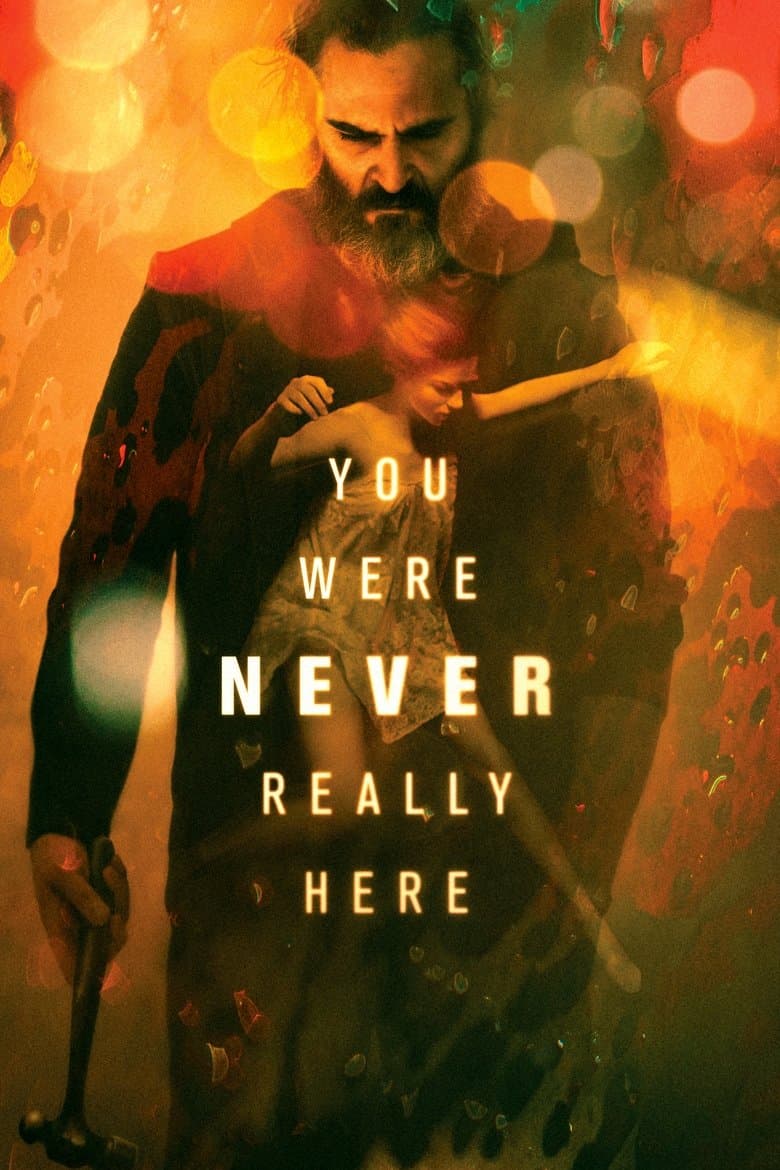
Joe is a former soldier who lives in New York and cares for his sick mother. He earns money by finding girls who have been taken and using extreme violence against the men who hold them. A job to bring home Nina, the teenage daughter of a senator, leads him into a network of corrupt officials and killers. His war memories, childhood abuse, drug use, and wish to die blur what is real, so the film feels dark, tense, and dreamlike.
The film turns the usual male rescue story around by letting Nina help save herself while Joe fails to become a perfect hero. Nina has more control over her fate than the helpless victim in a standard thriller. This creates a small identity-driven theme about changing the usual male protector and helpless girl roles. The larger story stays focused on trauma, guilt, family love, brutal revenge, and the cost of violence instead of a broad political message.
Community feedback
Was our 17% Woke rating accurate?
Breakdown
These are the editorial factors and ratings behind our score for You Were Never Really Here.
Woke representation / casting
Not present. Casting centers on Joaquin Phoenix as the white male veteran protagonist and Ekaterina Samsonov as the young female victim in a contemporary New York thriller; choices align naturally with the premise and source material with zero forced diversity or signaling.
0%
Woke political dialogue
Not present in this title.
0%
Identity-driven story themes
The story turns the usual male rescuer role around by giving Nina a part in her own survival. Joe fails to become a perfect hero, while Nina helps pull him back from his wish to die. Ramsay said that Joe does not save Nina and that Nina saves herself. This is a small identity-driven theme, but the film stays focused on trauma and the crime plot.
18%
Western institutional / cultural critique
The film places politicians and wealthy clients inside a system that buys and abuses girls. It links male power to sexual violence and shows Joe as a failed tough-guy rescuer. Ramsay’s interviews describe this as a break from the usual male-savior pattern. The film does not add speeches about patriarchy, capitalism, or Western culture, so this signal remains small.
15%
Woke character or canon changes
Not present in this title.
0%
Anti-woke backlash and complaints
Not present. No social media posts, news coverage, or audience reaction accuses the film of pushing woke, activist, identity-political, or left-wing messaging of any kind.
0%
Creator track record context
Lynne Ramsay has a score of 16/100, and Jonathan Ames has 10/100. Their work includes dark stories that question gender roles, but it is not strongly activist. Producer Rebecca O’Brien has the strongest socialist background among the producers, while James Wilson and Jacques Audiard have lighter left or identity-related signals. Most other crew members show little public activist history, so this remains limited background.
20%
Production
Movie · 2021
A cold and mysterious new security guard for a Los Angeles cash truck company surprises his co-workers when he unleashes precision skills during a heist.

Movie · 2021
Deputy Sheriff Joe "Deke" Deacon joins forces with Sgt. Jim Baxter to search for a serial killer who's terrorizing Los Angeles.
Movie · 2019
A charismatic New York City jeweler always on the lookout for the next big score makes a series of high-stakes bets that could lead to the windfall of a lifetime.

Movie · 2019
A young agent is tasked with investigating a tangled web of corruption and fraud in New York.
Movie · 2021
When the aging Meyer Lansky is investigated one last time by the Feds who suspect he has stashed away millions of dollars over half a century, the retired gangster spins a…
Movie · 2018
John Gotti rises to the top of the New York underworld to become the boss of the Gambino crime family. His life takes a tumultuous turn as he faces tragedy, multiple trials and a…
Movie · 2021
When a man's only son goes missing, he travels to the town where his ex-wife lives in search of answers. [To play a man whose life is clouded by mystery, McAvoy will not be given…

Movie · 2019
During the 1980s, a failed stand-up comedian is driven insane and turns to a life of crime and chaos in Gotham City while becoming an infamous psychopathic crime figure.
