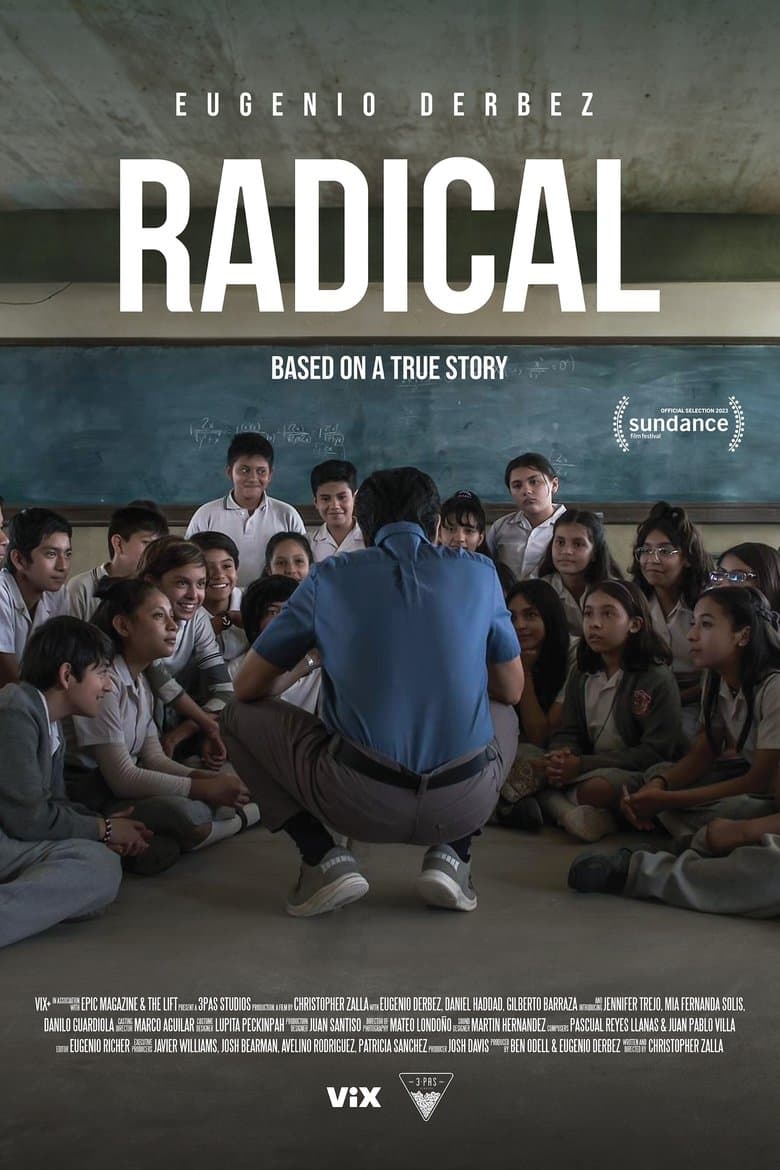
In a poor Mexican border town full of crime and broken schools, a teacher named Sergio starts a new job at a failing school. The kids have almost given up, and the other adults mostly care about test scores. Sergio tries wild, playful lessons that put the students in charge of their own questions. The tone is warm and hopeful, with hard moments of poverty and danger mixed in.
The story is mainly about curiosity, hard times, and one teacher who believes poor kids can be geniuses. Viewers will notice social themes: kids written off because they are poor, a girl pushed into caretaking instead of school, and a class talk about abortion and family size that gets Sergio in trouble. Outside the film, the release also pushed Latino student aid and “better Latino stories” messaging. There is no race-swap casting, no queer storyline, and no big anti-woke fight over the movie. A normal viewer will feel an uplifting teacher drama with clear class and fairness ideas more than a heavy identity-politics film.
Community feedback
Was our 30% Woke rating accurate?
Breakdown
These are the editorial factors and ratings behind our score for Radical.
Woke representation / casting
Mexican cast in a Mexican true story matches the real people and place. Paloma as a brilliant girl is based on a real top math student, not invented quota casting. Outside ads talk about Latino stories, but on-screen casting looks story-true, not race-swap or DEI window dressing.
0%
Woke political dialogue
Most talk is about learning, tests, and believing in kids. One clear scene has kids debate abortion, contraception, and family size, and an official scolds them. That progressive classroom talk is easy to notice, but it is not constant race or gender-politics preaching.
32%
Identity-driven story themes
Core drive is class and opportunity: poor kids ignored by a broken school can still be brilliant. Lupe’s path shows a girl stuck in caretaking while adults work. Fairness and “same chance” ideas show up, but race and queer identity are not the engine of the plot.
18%
Western institutional / cultural critique
The film attacks teaching only for tests, lazy adults, and writing off poor kids in a Mexican public school. That is local system critique, not a modern U.S. hit on whiteness, patriarchy, or Christianity. Mild note that rigid gender duties hurt a girl’s future.
20%
Woke character or canon changes
Not relevant. Changes from the Wired article (composite students, drama beats) read as normal movie shaping of a true story, not identity-driven rewrites of famous characters or history.
0%
Anti-woke backlash and complaints
No major news or social wave calling the film woke, DEI, or propaganda. Reception is mostly warm “feel-good teacher movie” talk. Anti-woke complaint evidence is effectively empty.
0%
Creator track record context
Director Zalla scores low for activism. Key producers Derbez, Odell, and Davis sit in the mid range for Latino/immigrant representation storytelling and impact framing, plus the film’s Latino education fund push. Overall moderate support context, not hard activist leadership.
32%
Production
Movie · 2022
A quiet, neglected girl is sent away from her dysfunctional family to live with relatives for the summer. She blossoms in their care, but in this house where there are meant to be…
Movie · 2020
A man refuses all assistance from his daughter as he ages and, as he tries to make sense of his changing circumstances, he begins to doubt his loved ones, his own mind and even…

Movie · 2026
While people across 1990s Iraq struggle to survive the war and food shortages, Saddam Hussein requires each school in the country to prepare a cake to celebrate his birthday.
Movie · 2017
In 1950, amidst the ravages of the Korean War, Sergeant Süleyman stumbles upon a a half-frozen little girl, with no parents and no help in sight and he risks his own life to save…
Movie · 2025
A logger leads a life of quiet grace as he experiences love and loss during an era of monumental change in early 20th-century America.

Movie · 2024
On the brink of the Second World War, a young Norwegian man's drive to resist the Nazis sets a new course for his future – and the future of his country.

Movie · 2023
The true story of the inseparable Von Erich brothers, who made history in the intensely competitive world of professional wrestling in the early 1980s.
Movie · 2017
Members of the Granite Mountain Hotshots battle deadly wildfires to save an Arizona town.
