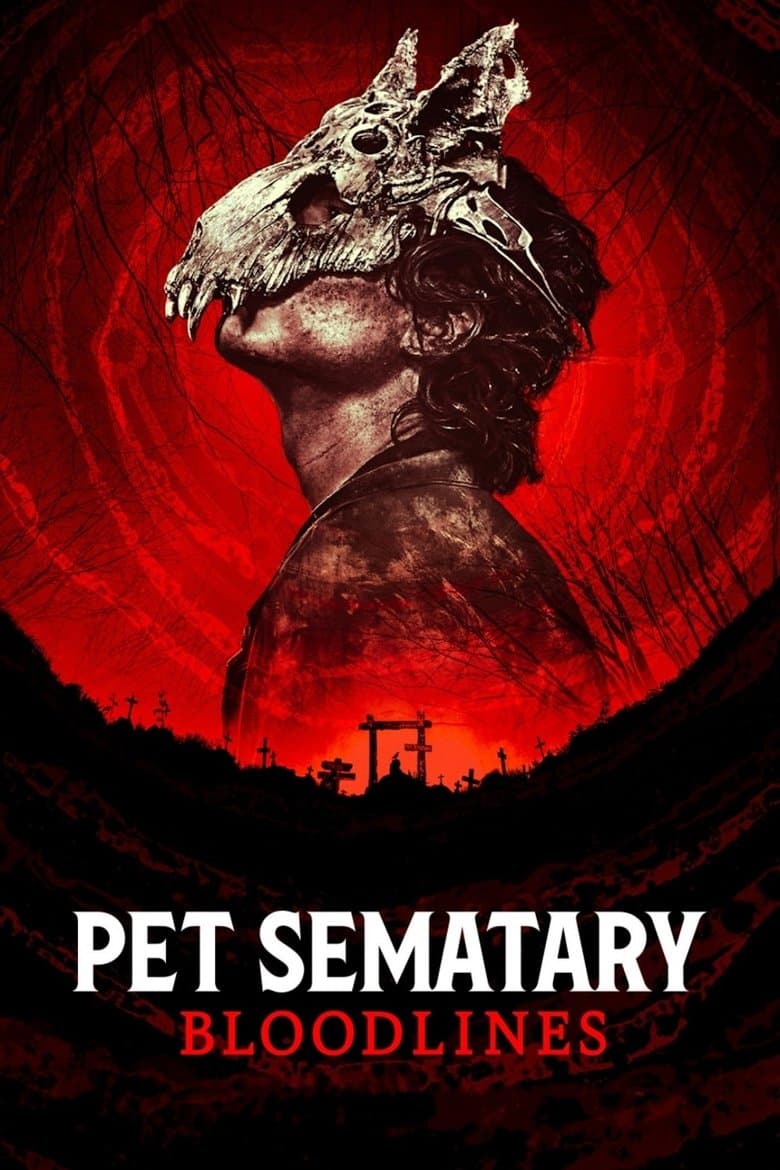
In 1969, Jud Crandall plans to leave Ludlow, Maine, with his girlfriend, Norma. His plan breaks when his old friend Timmy returns from the Vietnam War after his father brings him back from the dead. Jud, Manny, and the town’s older families uncover a burial ground that has shaped Ludlow for centuries. The movie uses blood, undead attacks, family secrets, and a grim warning about trying to defeat death.
The film gives Manny and his sister Donna, who are native, a direct link to the land’s old history. Manny stands beside Jud as a brave helper and survives as one of the people who defeats the evil. Donna has visions and becomes part of the supernatural threat, but her role is much shorter. The story also connects the horror to the Vietnam War, a protected draft escape, and the harm caused when settlers take control of the land. These identity and history ideas are important, but they remain secondary to the undead horror.
Community feedback
Was our 47% Woke rating accurate?
Breakdown
These are the editorial factors and ratings behind our score for Pet Sematary: Bloodlines.
Woke representation / casting
The film places native actors Forrest Goodluck and Isabella Star LaBlanc in prominent roles as Manny and Donna. Manny is a co-hero, and Donna has a major link to the supernatural mystery. The Native casting fits the story’s Mi’kmaq setting, so it is not just a random diversity choice. Beer still described the use of Indigenous actors as part of changing an old stereotype and giving those characters a point of view.
28%
Woke political dialogue
The film directly talks about racism when a customer complains about Manny and Donna. Donna mentions the American Indian Movement and the Alcatraz occupation. The story also returns to Vietnam, the draft, and Jud’s paid deferment. These political lines are clear but brief, and the movie stays focused on horror.
30%
Identity-driven story themes
The film gives Native siblings Manny and Donna a direct place in the land’s history. Manny becomes a co-hero and kills the undead Timmy, while Donna’s visions warn the group about the evil. The dialogue mentions racism, the American Indian Movement, and the Alcatraz occupation. Beer said she wanted to give these characters a point of view and move away from the old mystical-Indigenous trope. These identity-driven ideas recur through the story but remain secondary to the resurrection horror.
42%
Western institutional / cultural critique
The film says the town was named to remind settlers of their sins. It presents the Mi’kmaq as protectors of the land and the settlers as people who awakened the evil. Manny and Donna talk about racism, and their parents are linked to the American Indian Movement’s Alcatraz occupation. This creates a recurring Western institutional / cultural critique, although the movie does not focus on capitalism or patriarchy.
34%
Woke character or canon changes
The original story only briefly tells Timmy Baterman’s history. The movie expands it with Manny and Donna as native characters and gives Manny a heroic role. Beer said she changed the material to challenge the old mystical-Indigenous trope and give those characters a clear point of view. This is a clear identity-driven change, but it is limited to the prequel’s new backstory.
38%
Anti-woke backlash and complaints
Not present. Reviewed audience posts and news coverage focused on weak scares, editing, and canon. No clear anti-woke or DEI complaint was found.
0%
Creator track record context
Stephen King has a mild liberal public record, but his creative work is not centered on modern identity politics. Jeff Buhler has no documented public activist record. Lindsey Anderson Beer has no documented long-term woke track record. Her interviews about this film show a specific focus on native representation, but that is a title choice rather than a broad career pattern.
14%
Production
Movie · 2025
Following the death of their father, a brother and sister are sent to live with a foster mother, only to learn that she is hiding a terrifying secret.
Movie · 2016
Lorraine and Ed Warren travel to north London to help a single mother raising four children alone in a house plagued by malicious spirits.
Movie · 2026
After breaking the mysterious "One Wish Willow" to win his crush's heart, a hopeless romantic finds himself getting exactly what he asked for but soon discovers that some desires…

Movie · 2022
Trapped on her family’s isolated farm, Pearl must tend to her ailing father under the bitter and overbearing watch of her devout mother.
Movie · 2023
Still reeling from the tragic death of their mother, a teenage girl and her younger sister find themselves plagued by a sadistic presence in their house and struggle to get their…
Movie · 2023
Eight year old Peter is plagued by a mysterious, constant tapping from inside his bedroom wall—one that his parents insist is all in his imagination.
Movie · 2016
In 1630, a farmer relocates his family to a remote plot of land on the edge of a forest where strange, unsettling things happen.
Movie · 2017
Several years after the tragic death of their little girl, a doll maker and his wife welcome a nun and several girls from a shuttered orphanage into their home, soon becoming the…
