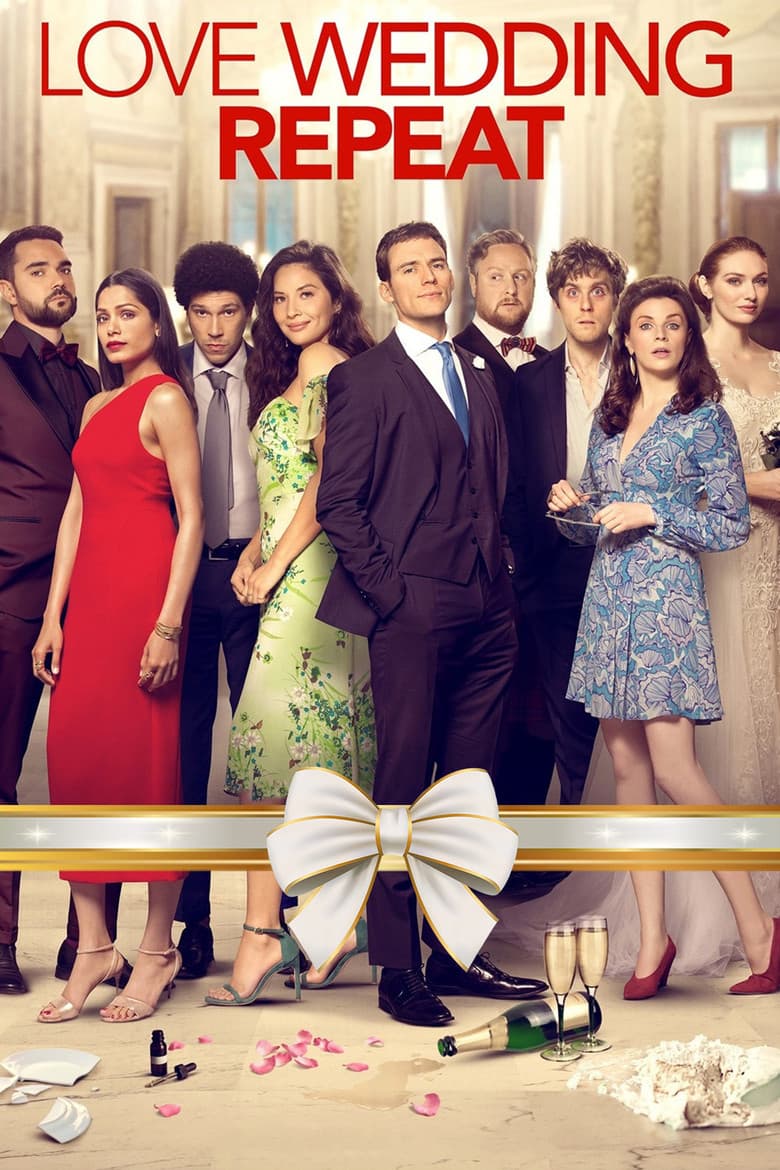
Jack travels to a villa near Rome for his sister Hayley’s wedding. He wants to protect her day while finally telling Dina, the woman he met years earlier, how he feels. An angry ex, a drugged guest, a secret affair, and mixed-up table cards turn the reception into a disaster. The film repeats parts of the day to show how tiny choices change the result. Its tone is a crude, busy romantic comedy built around awkward guests and bad luck.
The clearest identity-related element is Bryan, a male friend who serves as Hayley’s “man of honor” and jokes about replacing “maid of honor.” He later says that people should love each other for who they are, which gives the film a small message about accepting yourself. Dina is also shown as a working war correspondent, while the main cast includes different ethnic backgrounds. These points support mild representation and gender-role signals, but they stay in side jokes and character details. The central story still follows a man chasing a woman and fixing a wedding through chance, romance, and family loyalty.
Community feedback
Was our 18% Woke rating accurate?
Breakdown
These are the editorial factors and ratings behind our score for Love Wedding Repeat.
Woke representation / casting
The main cast includes Olivia Munn as Jack’s love interest and Freida Pinto as his ex. The film does not make either woman’s background part of the plot. Dean Craig also said in a title interview that Hollywood should become more culturally diverse. The casting gives a mild representation signal, but it is not the film’s main idea.
18%
Woke political dialogue
Bryan asks the group to call him “man of honor” instead of “maid of honor” because he is a man. Other characters repeat the “maid of honor” label during the wedding. The film plays this gender-role change as a joke, and it never grows into a political speech.
17%
Identity-driven story themes
Bryan serves in a wedding role usually given to a woman, and his small story ends with a speech about loving people as they are. Dina is shown as a working war correspondent, but her job is not used for a gender or identity message. These points create a mild identity-driven theme beside the main story about chance and romance.
14%
Western institutional / cultural critique
Not present. The film jokes about weddings, sex, money, and social embarrassment. It does not attack modern institutions, traditional family life, Christianity, or conservative ideas.
0%
Woke character or canon changes
Not relevant. The movie is a remake, but it does not make a clear race, gender, sexuality, or hero-role rewrite of an established character or real person. Bryan’s wedding role is a new comic choice, not a change to a known figure.
0%
Anti-woke backlash and complaints
Not present. Available reviews and audience posts complain about weak jokes, messy structure, and crude humor. No anti-woke or right-leaning complaint was found in the supplied X pass or in the other searched coverage.
0%
Creator track record context
Dean Craig has a low-to-mild creator record, with a score of 23/100. A past essay praised gay-rights activism, labor solidarity, and resistance to prejudice, but his wider work is mainly comedy. Christelle Raynal and Francis Nief have no clear public identity-politics record. The producers and casting director also have low recorded scores, and no key creator shows a sustained identity-politics pattern.
15%
Production
Movie · 2019
Standing on the precipice of adulthood, a group of friends navigate new relationships, while reexamining others, during their final summer before college.

Movie · 2019
No beau? No problem! To earn money for college, a high schooler creates a dating app that lets him act as a stand-in boyfriend.
Movie · 2020
A guy meets the woman of his dreams and invites her to his company's corporate retreat, but realizes he sent the invite to the wrong person.
Movie · 2019
Two young people arrive in New York to spend a weekend, but once they arrive they're met with bad weather and a series of adventures.
Movie · 2016
From Jane Austen’s novella, the beautiful and cunning Lady Susan Vernon visits the estate of her in-laws to wait out colorful rumors of her dalliances and to find husbands for…
Movie · 2018
When teenager Elle's first kiss leads to a forbidden romance with the hottest boy in high school, she risks her relationship with her best friend.

Movie · 2020
Fed up with being single on holidays, two strangers agree to be each other's platonic plus-ones all year long, only to catch real feelings along the way.
Movie · 2023
Michelle and Allen, who have reached the point in their relationship where they are considering next steps, decide to invite their parents to finally meet and to offer some…
