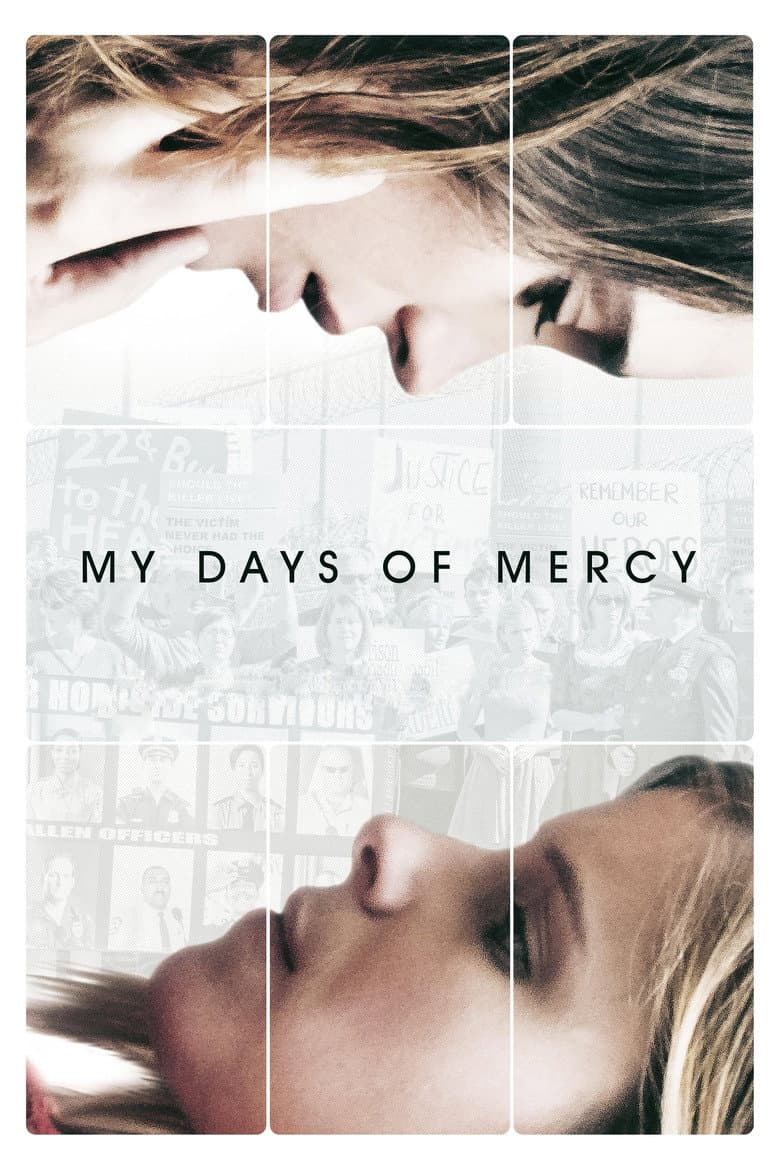
Lucy Morrow travels through the American Midwest with her sister Martha and young brother Benjamin. Their father waits on death row for allegedly killing their mother, and the family keeps protesting his planned execution. At one protest, Lucy meets Mercy Bromage, a young lawyer whose family supports the death penalty because the prisoner killed Mercy's father's police partner. The movie mixes a sad family drama with a tense romance and road trip moments.
Lucy and Mercy fall in love while they stand on opposite sides of the death penalty fight. The movie makes their lesbian relationship one of its two main stories. Lucy faces grief and hidden feelings, while Mercy hides the relationship from her family and keeps a boyfriend as she decides what she wants. The film treats queer love as a path toward honesty and healing while it presents anti-death-penalty protest as a serious moral cause.
Community feedback
Was our 70% Woke rating accurate?
Breakdown
These are the editorial factors and ratings behind our score for My Days of Mercy.
Woke representation / casting
The two lead roles are women in a same-sex romance, and the film keeps that identity choice visible in nearly every part of the story. Lucy, Mercy, and Martha carry most of the emotional and practical work, while the main male characters stay in supporting roles. Interviews and publicity also presented the film as a queer story set in the Midwest. The casting fits the plot, so this score comes from the clear identity focus rather than a race or setting mismatch.
43%
Woke political dialogue
Lucy and other protesters repeatedly argue against the death penalty. One early line says the government is going to kill a mentally disabled man. Lucy and Mercy trade insults about gas chambers and cop killers, then discuss whether new tests can save Lucy's father. The film gives both sides some voice, so the political talk is clear but not a constant lecture.
34%
Identity-driven story themes
Lucy and Mercy's lesbian relationship is one of the movie's two main story lines. Lucy is conflicted about her sexuality and slowly accepts love after years of grief and emotional numbness. Mercy hides the relationship from her family and keeps a boyfriend while she works out what she wants. The film links queer love with freedom, honesty, and healing, so the identity theme stays central from beginning to end.
84%
Western institutional / cultural critique
The movie shows the prison and death penalty system through protests, execution scenes, and a family seeking new evidence. Lucy calls the planned execution of a mentally disabled prisoner an act by the government. The story presents the death penalty as a cruel institution and shows its damage to both families. It also gives the pro-execution side a personal reason, so the critique stays focused rather than broad.
32%
Woke character or canon changes
Not relevant. The movie is an original story with no established characters or source material that it changes.
0%
Anti-woke backlash and complaints
Not present. No clear anti-woke complaint, boycott, or review-bombing was found in the researched coverage. The supplied X pass also found no such reaction.
0%
Creator track record context
Director Tali Shalom-Ezer often makes stories about female sexuality, abuse, and queer relationships. Producer Elliot Page has supported LGBTQ rights and helped make other queer projects. Producer Christine Vachon has a long record of backing films about queer lives and groups outside the mainstream. Writer Joe Barton and most other listed producers have no clear record of activist or identity-focused work, which keeps this context moderate.
47%
Production

Movie · 2018
German artist Kurt Barnert has escaped East Germany and now lives in West Germany, but is tormented by his childhood under the Nazis and the GDR regime.
Movie · 2018
The coming-of-age tale of 16-year-old Lina Vilkas who is deported to Siberia amid Stalin's reign of terror in the Baltic region during WWII.

Movie · 2019
After learning that his terminally ill wife has six months to live, a man welcomes the support of his best friend who moves into their home to help out.

Movie · 2016
Canadian folk artist Maud Lewis falls in love with a fishmonger while working for him as a live-in housekeeper.

Movie · 2017
Nothing is as it seems in this riveting World War 2 thriller as a wary soldier goes to investigate a mysterious German monarch at his secluded mansion, leading him into a web of…

Movie · 2019
An extraordinary look at the lives of a middle-aged couple in the midst of the wife's breast cancer diagnosis.

Movie · 2016
Meeting by chance when they return to their tiny California hometown, two former high-school sweethearts reflect on their shared past.
Movie · 2020
Lonely college freshman Alex has closed himself off from his peers, who all appear to have this whole "college thing" figured out.
