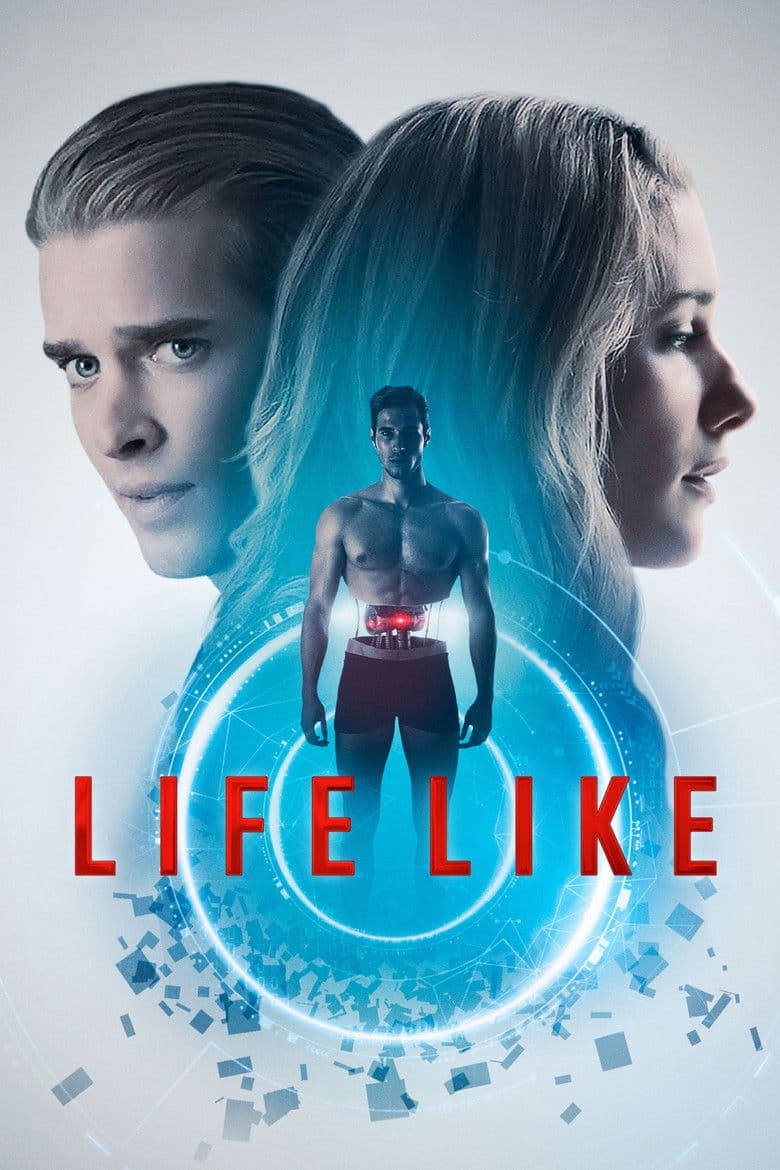
James inherits his father’s company and a huge house after his father dies. He and Sophie move from their small city home into a rich and lonely life, but they cannot agree on how to live there. Sophie fires the human staff because she sees the servants as trapped, while James buys Henry, a human-looking machine, to do the work. The quiet science-fiction thriller turns their home into a tense place where marriage, desire, control, and the meaning of being human collide.
Life Like gives its clearest social message through the servant story. Sophie calls firing the staff a form of freedom and says rich people should not act like masters, while James treats Henry as a tool until Henry shows fear and desire. The film also makes Henry part of a sexual triangle with Sophie and James, and James has to face attraction to another man. These ideas matter to the plot, but the film presents them through a strange marriage thriller about power and artificial people rather than a direct campaign about modern identity politics.
Community feedback
Was our 41% Woke rating accurate?
Breakdown
These are the editorial factors and ratings behind our score for Life Like.
Woke representation / casting
Not present. The main story centers on a small group of white-presenting American characters in a modern private home. The film does not build a diverse group or frame its casting as representation.
0%
Woke political dialogue
Sophie calls firing the staff “liberating” them and says rich owners should not be “overlords to indentured servants.” James and his adviser discuss a “green revolution” and whether environmental ideas can make business sense. The film also talks about masters, keepers, freedom, and a future without war. These lines appear in important scenes, but they do not drive every scene.
28%
Identity-driven story themes
Henry becomes an object of desire for Sophie and James, and the film includes a sexual encounter between the two men. James questions his sexuality after the encounter, while Sophie sees Henry as a perfect but false version of them. The story treats Henry’s feelings, attraction, and search for a self as key parts of the marriage conflict. The film presents these ideas through strange science fiction and erotic drama rather than a direct identity campaign.
45%
Western institutional / cultural critique
Sophie says rich people should not act like masters and treats firing the staff as moral freedom. The company debate contrasts environmental plans with profit and cost. James is shown as controlling when he treats Henry as property and attacks him, while Sophie is more open to Henry’s personhood. These ideas recur through the home and work plots, but the film does not attack Christianity or all Western institutions.
30%
Woke character or canon changes
Not relevant. Life Like is an original story about a couple and a made-up android company. It does not adapt established characters or real historical events.
0%
Anti-woke backlash and complaints
One Rotten Tomatoes audience review calls Sophie “woke” and says the film feminizes American manhood. A conservative review calls her environmental beliefs virtue-signaling and objects to her treatment of her husband and staff. The X research pass found no anti-woke reaction or named complaints. The evidence is small and scattered, so this is a low backlash score.
18%
Creator track record context
Josh Janowicz has a low cached score and no clear recurring activist pattern. Most producers also have low cached scores and no strong public record of identity-focused work. Martin Sprock is a higher context signal because he has backed projects about race and supported more roles for black actors. Casting director Jessica Sherman also publicly supports fresh and diverse talent. The context is mild because no title-specific identity campaign was found.
16%
Production

Movie · 2020
2038: George Almore is working on a true human-equivalent AI, and his latest prototype is almost ready. This sensitive phase is also the riskiest as he has a goal that must be…

Movie · 2017
Thirty years after the events of the first film, a new blade runner, LAPD Officer K, unearths a long-buried secret that has the potential to plunge what's left of society into…

Movie · 2018
A chief mechanic at a factory, haunted by apocalyptic nightmares, becomes a hero when Earth is invaded by a mysterious army bent on destruction.
Movie · 2021
After a sudden global event wipes out all electronics and takes away humankind’s ability to sleep, chaos quickly begins to consume the world.

Movie · 2020
A couple on a road trip through America encounter a terrifying dark force older than the country itself. An evil that transforms loved ones into someone terrifying, the entity has…

Movie · 2017
On a romantic getaway to Iceland, a young American couple wake up one morning to discover every person on Earth has disappeared.

Movie · 2017
A young street magician is left to take care of his little sister after his mother's passing and turns to drug dealing in the Los Angeles party scene to keep a roof over their…

Movie · 2019
A man becomes obsessed with facts and events that have been collectively misremembered by thousands of people.
