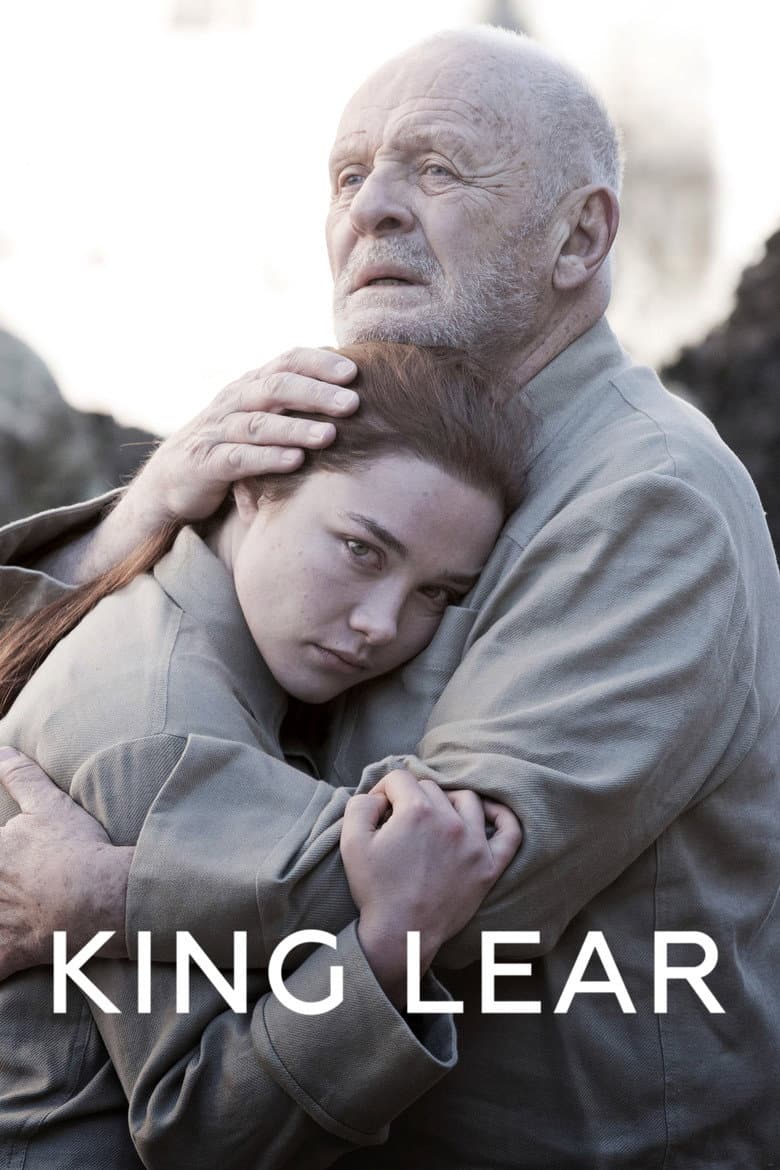
King Lear is an aging ruler who decides to divide his kingdom among his three daughters. He asks each daughter to prove her love, then banishes Cordelia when she refuses to flatter him. Lear keeps a small army and soon loses control as Goneril and Regan turn against him. The film places the tragedy in a harsh modern England filled with soldiers, bombed streets, a refugee camp, and bleak city spaces.
The story centers on a proud father, broken family ties, betrayal, madness, and death. The two older daughters are shown as women shaped by years of control and abuse, while Cordelia is direct and unwilling to play her father's game. Their power over large parts of the kingdom drives the war and the family collapse. The film also gives Edmund a major role as a rejected son who uses his outsider place to turn his father against Edgar. These choices add a clear gender and social edge, but the main message stays tied to family, power, and the cost of pride.
Community feedback
Was our 30% Woke rating accurate?
Breakdown
These are the editorial factors and ratings behind our score for King Lear.
Woke representation / casting
John Macmillan, a black actor, plays Edmund, a major role, and Chukwudi Iwuji plays the King of France. The film also uses black actors for a lieutenant and a castle officer in its modern military world. Eyre said Edmund's casting makes his different parentage and rejection more painful. The film does not frame the cast as a broad diversity campaign.
14%
Woke political dialogue
Not present. The film uses Shakespeare's lines about family, power, war, aging, and suffering. It has no clear modern speech about identity, DEI, gender politics, or activism.
0%
Identity-driven story themes
The film repeatedly shows Lear as a powerful father who controls and hurts his daughters. The film presents Goneril and Regan as damaged women whose anger grows from long abuse, and it presents Cordelia as a young woman who refuses to flatter him. Their gender-focused family struggle drives the main plot and the war. The story keeps its main focus on family, power, pride, and betrayal.
35%
Western institutional / cultural critique
The film places Lear's rule in a modern military state. It shows soldiers, bombed streets, a refugee camp, and people living rough after the fighting. These images connect the family's collapse to war, harsh rule, and social damage. The story does not keep returning to capitalism, religion, or another modern political system.
20%
Woke character or canon changes
Not relevant. The film cuts and reorders Shakespeare and moves the play to modern England with a military state. These changes reshape the setting and length but do not add an identity-based version of an established character.
0%
Anti-woke backlash and complaints
Not present. The supplied X search found no anti-woke reaction or named complaints. News reviews and audience posts discussed the cast, cuts, and modern setting, not DEI or identity politics.
0%
Creator track record context
Richard Eyre's stored score is 10/100, Nina Gold's is 45/100, and Sonia Friedman's is 72/100. Eyre has a humanist and mildly left-leaning record, Gold has supported diverse casting while stressing source material, and Friedman has a strong LGBTQ and minority-casting record. This raises context modestly, but the film's story is not built around those causes.
25%
Production
Movie · 2020
A man refuses all assistance from his daughter as he ages and, as he tries to make sense of his changing circumstances, he begins to doubt his loved ones, his own mind and even…
Movie · 2022
A quiet, neglected girl is sent away from her dysfunctional family to live with relatives for the summer. She blossoms in their care, but in this house where there are meant to be…
Movie · 2016
In a desolate war zone where screams of the innocent echo, on the very line between disaster and valor, 7 Maroon Berets will dance with death.
Movie · 2026
While people across 1990s Iraq struggle to survive the war and food shortages, Saddam Hussein requires each school in the country to prepare a cake to celebrate his birthday.
Movie · 2016
On 15 January 2009, the world witnessed the 'Miracle on the Hudson' when Captain 'Sully' Sullenberger glided his disabled plane onto the Hudson River, saving the lives of all 155…
Movie · 2017
Members of the Granite Mountain Hotshots battle deadly wildfires to save an Arizona town.
Movie · 2017
In 1950, amidst the ravages of the Korean War, Sergeant Süleyman stumbles upon a a half-frozen little girl, with no parents and no help in sight and he risks his own life to save…
Movie · 2023
The story of J. Robert Oppenheimer's role in the development of the atomic bomb during World War II.
