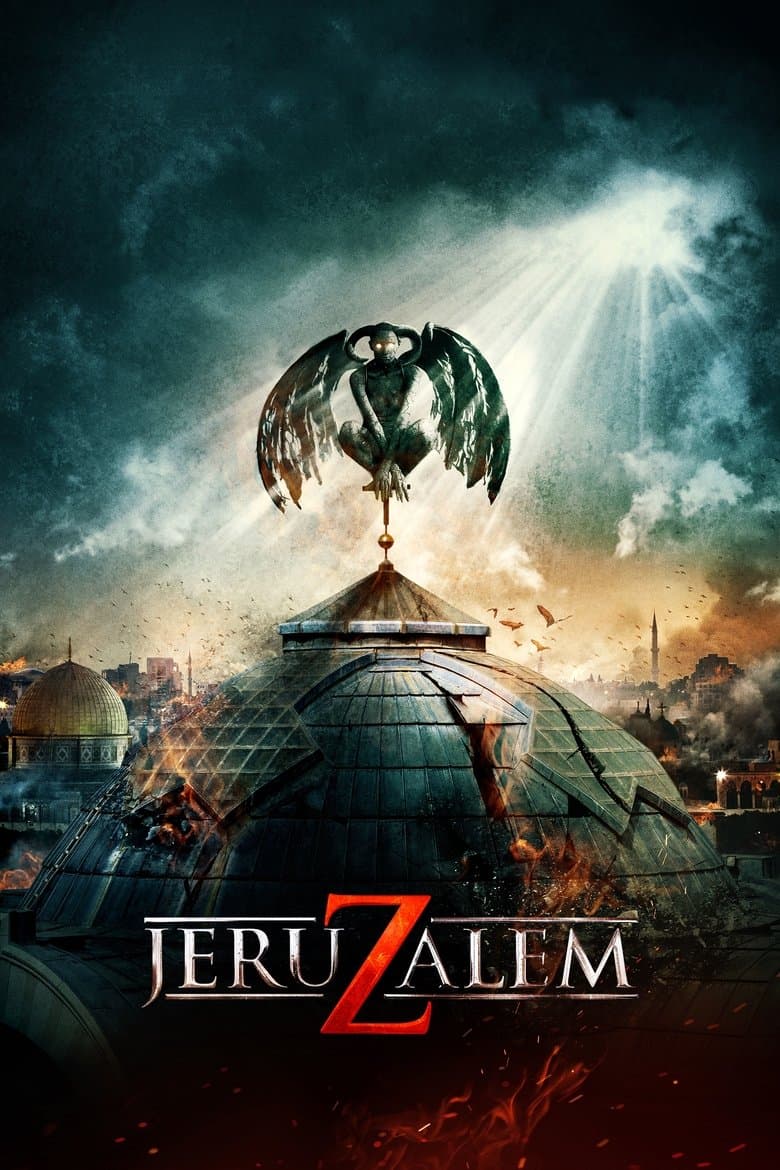
Jeruzalem follows Sarah Pullman, a young American woman who is still hurt by her brother's death. Sarah travels to Israel with her friend Rachel, but they leave their beach trip and enter Jerusalem with Kevin, a student who studies old religious stories. A holiday of clubs, sex, and sightseeing turns into a fight to escape winged demons when the gates of hell open during Yom Kippur. The film uses Sarah's smart glasses to show the city, the attacks, and her growing fear from her point of view.
The clearest woke signal is the choice to make two young women the main travelers and the people who show most of the danger through their eyes. The directors said they wanted to give women more power because horror films often place women in supporting roles. Rachel's relationship with Muslim Omar also crosses a traditional religious boundary, and some lines mock religious conflict and old religious rules. These ideas appear around the horror plot, but the film does not build its story around DEI, queer politics, or a modern activist cause.
Community feedback
Was our 28% Woke rating accurate?
Breakdown
These are the editorial factors and ratings behind our score for Jeruzalem.
Woke representation / casting
The film puts two young American women in the two main tourist roles and lets Sarah carry nearly every scene through her smart glasses. The directors said they chose women instead of men because they wanted to give women more power. The rest of the main group includes a Muslim man, an American male student, and Israeli soldiers, which fits the setting. The gender choice is a clear message, but the women are not expert fighters and the cast is not built as a broad diversity showcase.
32%
Woke political dialogue
Not present. The film has short lines about religious conflict, American tourists, and soldiers, but it does not push modern identity, DEI, or activist ideas in repeated dialogue.
0%
Identity-driven story themes
The film makes gender and religious identity part of the group’s daily life. Two women lead the trip, and Rachel has a sexual relationship with Omar that crosses a traditional religious boundary. The story also presents Jewish, Muslim, and Christian beliefs as different names for a shared dark force. These ideas support a mild identity-driven reading, but the main story stays focused on grief, demons, and escape.
28%
Western institutional / cultural critique
The film has a few lines that call religious teaching “bullshit” and joke about the city’s faiths hating each other. Rachel and Omar’s romance also steps outside traditional Jewish and Muslim rules. The story treats these points as part of the city’s tension and the horror setup. It does not turn them into a repeated attack on family, religion, or Western institutions.
12%
Woke character or canon changes
Not relevant. The film is an original horror story, not a remake or adaptation centered on established characters. Its use of biblical lore creates new demons instead of changing a known hero or historical figure.
0%
Anti-woke backlash and complaints
Not present. The provided X research found no anti-woke reaction. Web reviews and audience posts focus on shaky camera work, weak effects, plot holes, and the biblical horror idea rather than DEI or identity politics.
0%
Creator track record context
Doron and Yoav Paz have a low recorded woke score of 15/100 each. Their work often uses Jewish history, religious myth, persecution, and Holocaust memory, with some interest in strong female characters. Their public record does not show a broad activist, partisan, or DEI pattern. This film’s gender framing adds a small signal, but the creators remain mainly genre filmmakers.
15%
Production
Movie · 2022
Trapped on her family’s isolated farm, Pearl must tend to her ailing father under the bitter and overbearing watch of her devout mother.
Movie · 2024
A live broadcast of a late-night talk show in 1977 goes horribly wrong, unleashing evil into the nation's living rooms.
Movie · 2017
Several years after the tragic death of their little girl, a doll maker and his wife welcome a nun and several girls from a shuttered orphanage into their home, soon becoming the…
Movie · 2016
In 1630, a farmer relocates his family to a remote plot of land on the edge of a forest where strange, unsettling things happen.
Movie · 2026
After breaking the mysterious "One Wish Willow" to win his crush's heart, a hopeless romantic finds himself getting exactly what he asked for but soon discovers that some desires…
Movie · 2025
Following the death of their father, a brother and sister are sent to live with a foster mother, only to learn that she is hiding a terrifying secret.
Movie · 2024
Five years after surviving Art the Clown's Halloween massacre, Sienna and Jonathan are still struggling to rebuild their shattered lives.
Movie · 2016
Lorraine and Ed Warren travel to north London to help a single mother raising four children alone in a house plagued by malicious spirits.
