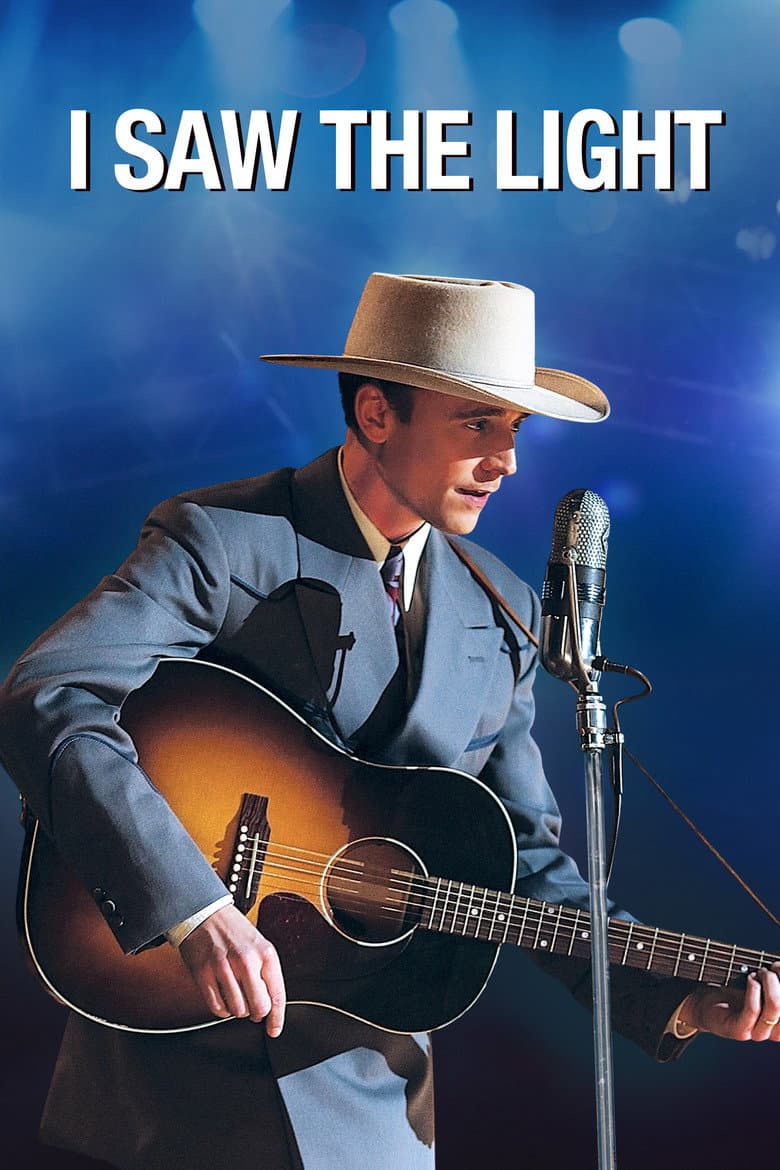
Hank Williams is a young country singer from Alabama who wants a place on the Grand Ole Opry. He writes songs that make him famous, but pain, alcohol, pills, and his own poor choices keep damaging his work. His marriage to Audrey Mae Williams becomes tense as both music and family life pull them apart. The film follows his short rise from local radio shows to national fame and his death at age 29. Its tone is sad, rough, and focused on a gifted man who cannot control himself.
The film gives Audrey a visible role as Hank’s wife, music partner, and manager, and it shows her wish to perform beside him. Their marriage becomes a fight over travel, money, drinking, and Hank’s affairs, while both parents try to care for their child. Hank’s mother, bandmates, managers, and later girlfriends add to the picture of a man whose talent grows beside his selfishness and addiction. The gospel song “I Saw the Light” links his private pain to a hope for redemption, but the ending leaves his success beside his early death.
Community feedback
Was our 10% Woke rating accurate?
Breakdown
These are the editorial factors and ratings behind our score for I Saw the Light.
Woke representation / casting
The film casts British actor Tom Hiddleston as Alabama-born Hank Williams. Hank Williams III questioned whether a non-Southern actor could carry the role’s local voice and culture. The choice is a small audience-visible mismatch, but the film does not frame it as a diversity or identity statement.
15%
Woke political dialogue
Not present. The dialogue centers on music, marriage, drinking, money, faith, and personal failure. It does not push modern identity, DEI, or activist ideas.
0%
Identity-driven story themes
Not present. The story follows a singer’s talent, addiction, adultery, family strain, and early death. Audrey’s wish to sing gives her a role in the plot, but it is not a modern identity or empowerment campaign.
0%
Western institutional / cultural critique
Not present. The film shows a bad marriage, a demanding music business, and Hank’s own harmful choices. It does not build a modern critique of men, family life, Christianity, or Western institutions.
0%
Woke character or canon changes
Not relevant. The film compresses years from Hank Williams’s life into a short biographical story. The changes concern timing and story structure, not race, gender, sexuality, or a hero role.
0%
Anti-woke backlash and complaints
Not present. Public complaints focused on Hiddleston’s accent, singing, age, and whether the film honored Hank Williams. No reliable report found an anti-woke complaint about DEI, identity politics, or activist content.
0%
Creator track record context
Aaron L. Gilbert has a supplied 42/100 score because of diversity and inclusion work on other films. Marc Abraham, the writers, and most other supplied crew scores are low or zero and show no strong activist pattern. No title-related creator statement frames this film around representation, empowerment, diversity, or queer themes.
12%
Production
Movie · 2020
A man refuses all assistance from his daughter as he ages and, as he tries to make sense of his changing circumstances, he begins to doubt his loved ones, his own mind and even…
Movie · 2016
On 15 January 2009, the world witnessed the 'Miracle on the Hudson' when Captain 'Sully' Sullenberger glided his disabled plane onto the Hudson River, saving the lives of all 155…

Movie · 2016
WWII American Army Medic Desmond T. Doss, who served during the Battle of Okinawa, refuses to kill people and becomes the first Conscientious Objector in American history to…

Movie · 2023
The story of J. Robert Oppenheimer's role in the development of the atomic bomb during World War II.
Movie · 2017
Members of the Granite Mountain Hotshots battle deadly wildfires to save an Arizona town.

Movie · 2023
The true story of the inseparable Von Erich brothers, who made history in the intensely competitive world of professional wrestling in the early 1980s.
Movie · 2025
Diagnosed with Tourette Syndrome at 15, John Davidson navigates his way against the odds through troubled teenage years and into adulthood, finding inspiration in the kindness of…
Movie · 2022
A quiet, neglected girl is sent away from her dysfunctional family to live with relatives for the summer. She blossoms in their care, but in this house where there are meant to be…
