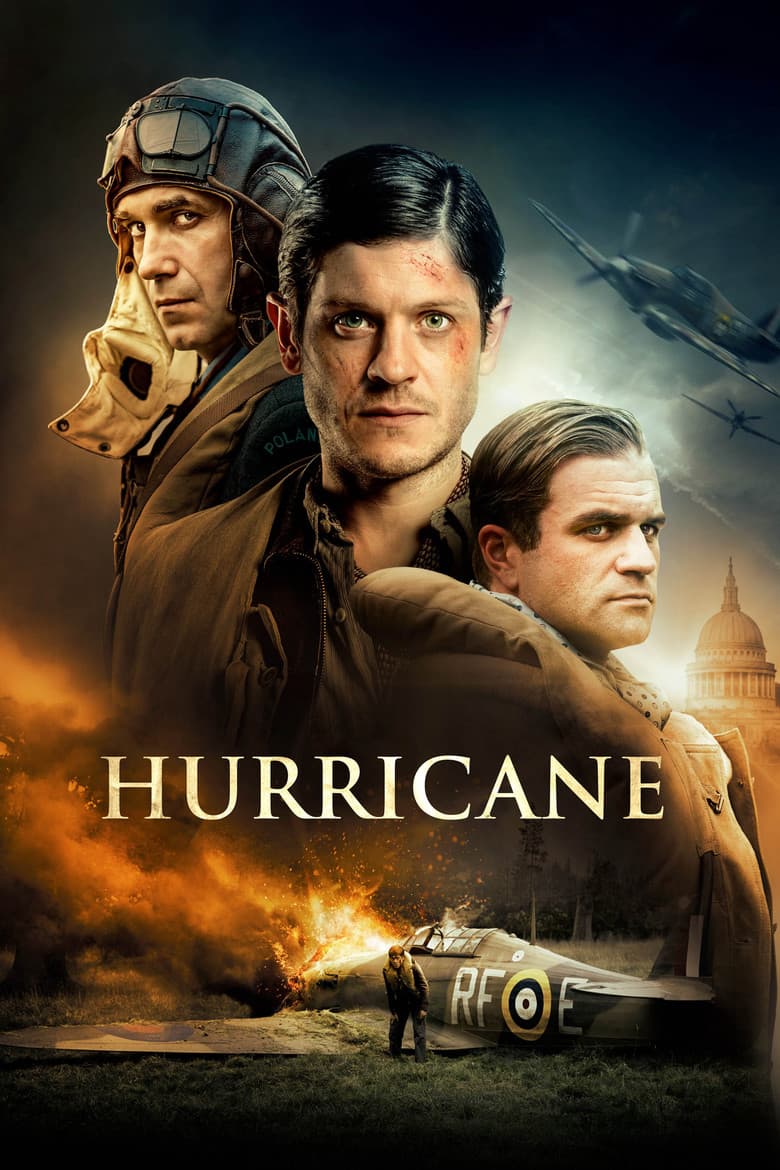
Hurricane follows Jan Zumbach and the Polish pilots of 303 Squadron in 1940. They escape a Europe overrun by Nazi Germany and join the Royal Air Force in Britain. British officers doubt them because they speak little English, use different flying methods, and have already lost Poland and France. The pilots train, fight the Luftwaffe, and face grief, anger, and fear while a romance grows between Zumbach and RAF worker Phyllis Lambert. The film has a serious war tone with rough humor, romance, and computer-made dogfights.
The clearest woke element is the repeated story of foreign allies facing British prejudice and later being pushed out after they have helped win the war. The film presents British officers as arrogant or sexist, while the Polish pilots prove their value and Phyllis is shown as a capable woman who can challenge men around her. Its final text says that 56 percent of the British public wanted the Polish pilots sent back, and the closing talk says Poland won the war but lost the peace. The ending gives the war story a noticeable warning against hatred of foreigners and against sending immigrants away. The main plot remains a traditional World War Two action story about courage, duty, friendship, and sacrifice.
Community feedback
Was our 38% Woke rating accurate?
Breakdown
These are the editorial factors and ratings behind our score for Hurricane.
Woke representation / casting
The cast mostly matches the wartime setting. The Polish and Czech pilots are played mainly by Polish or Czech actors, while Canadian John Kent is played as Canadian. Welsh actor Iwan Rheon plays Polish pilot Jan Zumbach, but he speaks much of the role in Polish and the interviews stress authenticity. The film gives WAAF worker Phyllis Lambert a visible and capable role, and her interview frames women as able to do jobs that men once kept from them. These choices create a small representation signal, not a diversity-first cast.
16%
Woke political dialogue
Not present. The dialogue focuses on flying, war, grief, and prejudice. A short complaint about a woman being treated badly is personal and historical, not a wider modern identity message.
0%
Identity-driven story themes
The film repeatedly shows Polish pilots being judged as dirty, reckless, foreign, and unfit before they prove themselves in combat. The story also follows their fear that Britain will use them and then send them away. The final words say that Poland won the war but lost the peace, while the closing text says 56 percent of Britons wanted the Poles repatriated. The film turns a wartime story about allied pilots into a clear warning about hatred of foreigners and the treatment of immigrants. The air battles and personal drama still take most of the film.
43%
Western institutional / cultural critique
The film often presents British officers as arrogant, ignorant, xenophobic, or sexually abusive. The Polish pilots are treated as outsiders until their victories prove the British wrong. A Daily Mail reporter is left behind during a mission, and a Polish pilot hits him after the reporter fails to support the squadron. The ending attacks Britain’s postwar decision to send the pilots away, and the director later compared that treatment with modern UK immigration policy. This makes the criticism of British institutions and anti-immigrant attitudes recurring and easy to notice.
42%
Woke character or canon changes
Not relevant. The film invents or changes some events and adds fictional characters, including Phyllis Lambert. It does not change the race, sex, sexuality, or main role of an established real person.
0%
Anti-woke backlash and complaints
One later review accused the film of forcing Brexit-era relevance onto the war story. The review called the Daily Mail scene an anti-Brexit attack and described the script as pandering to modern audiences. Most other audience and critic reactions focused on weak CGI, pacing, acting, or historical accuracy. No large boycott or anti-woke campaign was found, and targeted X searches found no anti-woke reaction.
10%
Creator track record context
David Blair and writers Alastair Galbraith and Robert Ryan have neutral cached scores and no clear activist record. Most producers and casting directors also have low or neutral cached scores. Mili Cumic has limited diversity-related work, and Sophie Oates Black has women-focused filmmaking links, but neither has a strong activist profile. The overall creator context adds only a small signal.
9%
Production
Movie · 2016
The story of a drifter named Paul who arrives in a small town seeking revenge on the thugs who murdered his friend.
Movie · 2020
A small unit of U.S. soldiers, alone at the remote Combat Outpost Keating, located deep in the valley of three mountains in Afghanistan, battles to defend against an overwhelming…

Movie · 2017
May, 1980. Man-seob is a taxi driver in Seoul who lives from hand to mouth, raising his young daughter alone.
Movie · 2022
Harry Haft is a boxer who fought fellow prisoners in the concentration camps to survive. Haunted by the memories and his guilt, he attempts to use high-profile fights against…
Movie · 2025
In the late 1990s, up-and-coming mixed martial artist Mark Kerr aspires to become the greatest fighter in the world.
Movie · 2022
A fictional history of two legendary revolutionaries' journey away from home before they began fighting for their country in the 1920s.
Movie · 2017
The story of the miraculous evacuation of Allied soldiers from Belgium, Britain, Canada and France, who were cut off and surrounded by the German army from the beaches and harbour…
Movie · 2019
Vietnam War, 1966. Australia and New Zealand send troops to support the United States and South Vietnamese in their fight against the communist North.
