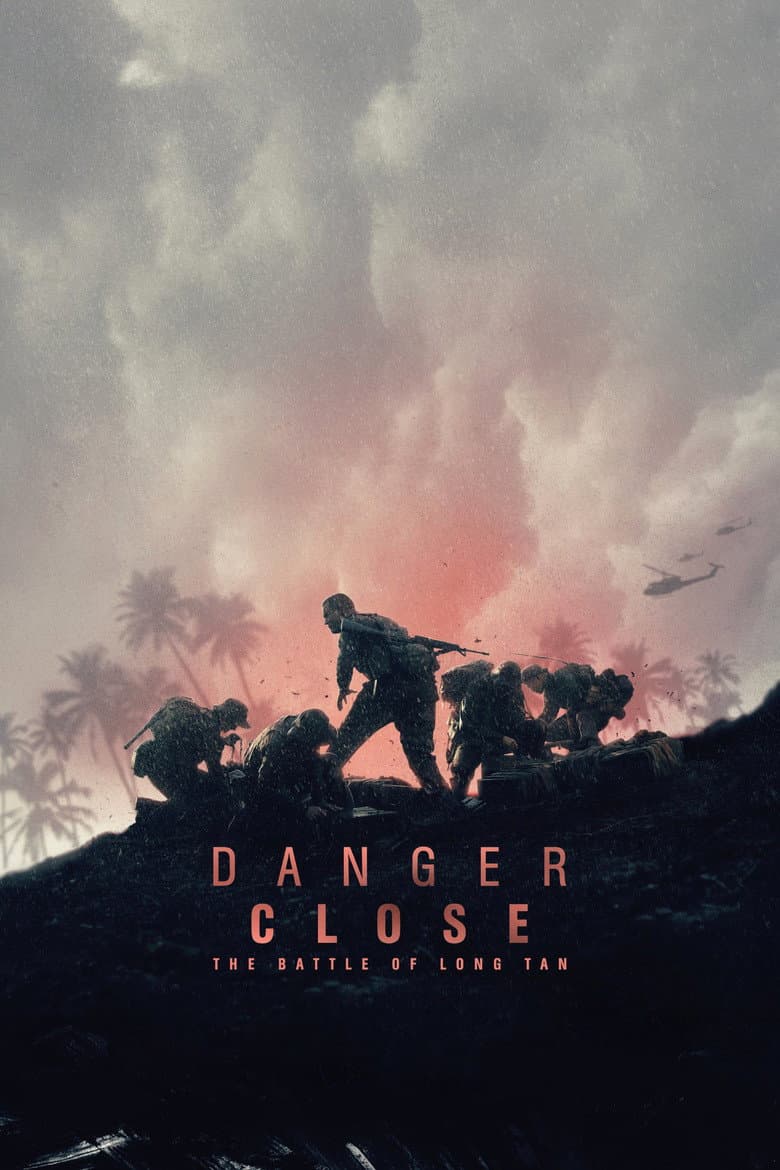
Major Harry Smith commands Delta Company, a small group of Australian and New Zealand soldiers in South Vietnam in 1966. The young men enter a rubber plantation to find the source of a mortar attack near their base. A much larger Viet Cong and North Vietnamese force surrounds them during a long stormy battle. The film is tense, violent, and focused on survival, duty, courage, and loyalty.
The story gives most of its attention to military decisions, radio calls, artillery, ammunition, and the bond between the soldiers. Smith struggles with the pressure of sending fire close to his own men and with the cost of leaving wounded soldiers behind. Private Paul Large changes from an untested conscript into a frightened young fighter, and his death shows the human cost of the battle. The film honors the Australian and New Zealand troops and treats their loyalty as the main emotional message.
Community feedback
Was our 2% Woke rating accurate?
Breakdown
These are the editorial factors and ratings behind our score for Danger Close: The Battle of Long Tan.
Woke representation / casting
Not present. The film mainly shows the all-male Australian and New Zealand company that fought at Long Tan in 1966. It includes the real Indigenous soldier Buddy Lea and a small concert role for singer Little Pattie, but the film does not frame either choice as a diversity program.
0%
Woke political dialogue
Not present. The spoken lines focus on military orders, radio calls, fear, and survival. The film does not use recurring dialogue about modern identity, DEI, gender roles, or activist politics.
0%
Identity-driven story themes
Not present. The story follows soldiers trying to survive a battle and protect their unit. It focuses on duty, courage, loss, and loyalty, not on modern identity politics or representation.
0%
Western institutional / cultural critique
Not present. The film shows hard choices by military commanders and poor treatment of Vietnam veterans. It does not turn those events into a modern attack on capitalism, patriarchy, Christianity, or Western society.
0%
Woke character or canon changes
Not relevant. The film dramatizes a real 1966 battle and uses disputed troop and casualty figures. The story does not recast the historical figures around a modern identity or DEI message.
0%
Anti-woke backlash and complaints
Not present. No qualifying complaints found. X research found no anti-woke reaction or boycott talk. Reviews criticized patriotism, historical blind spots, and the one-sided view of Vietnamese forces, but those were not complaints that the film was woke or pushing DEI.
0%
Creator track record context
Director Kriv Stenders has made some socially aware work about Aboriginal communities and Indigenous history. His career is varied and does not show a steady DEI or identity-politics focus. The other writers and producers have little documented activist history. This gives the title a mild creator-context signal, but that signal does not drive the war story.
11%
Production
Movie · 2020
The incredible true story of Vietnam War hero William H. Pitsenbarger, a U.S. Air Force Pararescuemen medic who personally saved over sixty men.
Movie · 2022
A fictional history of two legendary revolutionaries' journey away from home before they began fighting for their country in the 1920s.
Movie · 2018
A team of special forces head into Afghanistan in the aftermath of the September 11th attacks in an attempt to dismantle the Taliban.
Movie · 2019
Cal is a dedicated cop who also serves as a sergeant in the Marine Corps Reserve. When his reckless half brother lands in jail for accidentally killing a man, Cal and his buddies…
Movie · 2017
May, 1980. Man-seob is a taxi driver in Seoul who lives from hand to mouth, raising his young daughter alone.

Movie · 2019
American car designer Carroll Shelby and the British-born driver Ken Miles work together to battle corporate interference, the laws of physics, and their own personal demons to…
Movie · 2019
Following the roguish terrorist attacks at Uri Army Base camp in Kashmir, India takes the fight to the enemy, in its most successful covert operation till date with one and only…
Movie · 2022
Harry Haft is a boxer who fought fellow prisoners in the concentration camps to survive. Haunted by the memories and his guilt, he attempts to use high-profile fights against…
