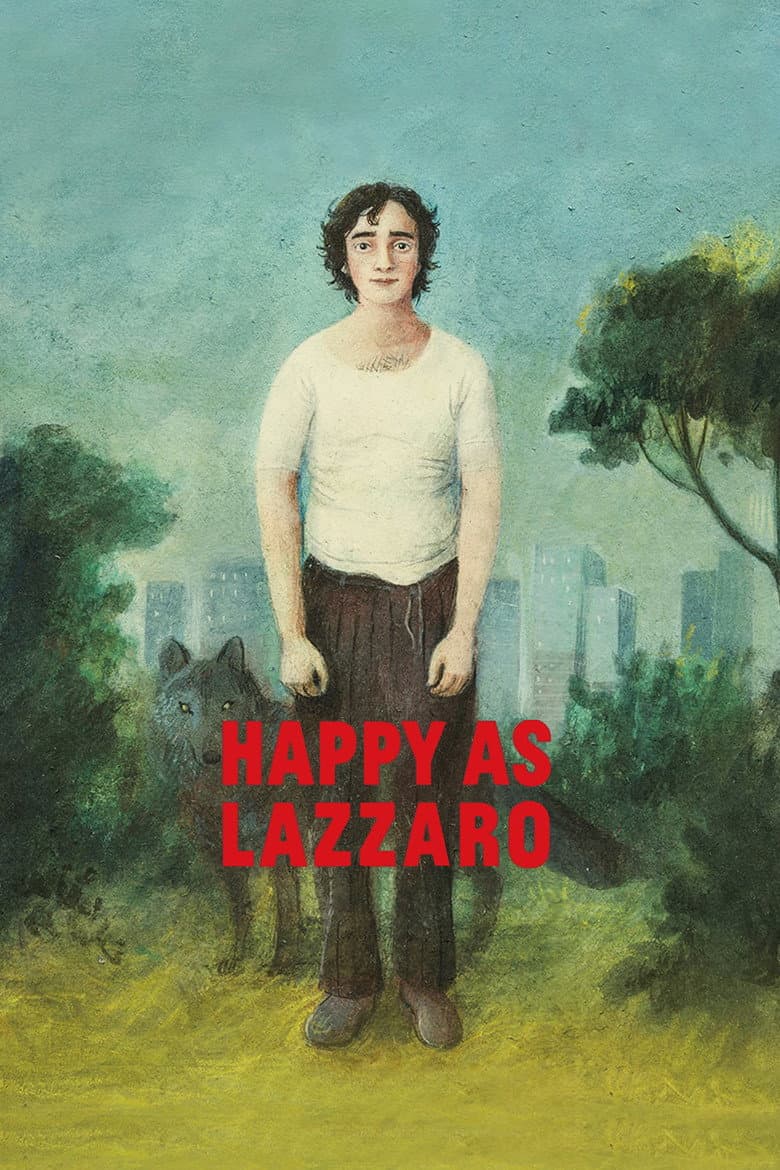
Lazzaro is a kind teenage farm worker who obeys everyone and asks for almost nothing. He lives with other workers on the isolated Inviolata estate, where a rich marchioness keeps them tied to the land and does not pay them. A friendship with Tancredi, the marchioness’s bored son, leads to a fake kidnapping, a police raid, and the loss of their home. After Lazzaro falls from a cliff and wakes years later without aging, he enters a city where the old workers still struggle. The film moves from a bright rural story to a sad city story, with magic, humor, and danger.
The main woke element is a repeated attack on economic power and capitalism. The film treats the estate’s unpaid labor as a form of modern slavery, then links it to banks, poverty, and people left behind by social change. The police and church offer little lasting help, while the bank becomes a symbol of a system that takes wealth and gives no rescue. The story praises kindness and care for the poor, and its social message stays focused on money, work, and class rather than identity politics.
Community feedback
Was our 45% Woke rating accurate?
Breakdown
These are the editorial factors and ratings behind our score for Happy as Lazzaro.
Woke representation / casting
Not present. The Italian and nearby European cast fits the setting and story. The film does not make identity-based casting part of its message.
0%
Woke political dialogue
The police say the farm’s work system is illegal and that the children should go to school. Workers answer that school is only for rich people. The former workers say the bank took the estate’s money and left them with nothing. These lines push a clear social and anti-capitalist view, but the film has no recurring gender, race, DEI, or identity speech.
25%
Identity-driven story themes
Not present. The story focuses on class, labor, poverty, and goodness. It does not build its main conflict around race, gender, sexuality, or DEI identity.
0%
Western institutional / cultural critique
The film shows a marchioness keeping farm workers in debt and hiding the law from them. The police expose the abuse, but the former workers later receive no lasting rescue or payment. A church shuts them out, and a bank becomes the place where Lazzaro is killed. By linking old landowner power with modern banks and poverty, the story makes institutional criticism a central thread.
52%
Woke character or canon changes
Not relevant. The film is an original story, not a remake or adaptation of established characters. Its loose link to a reported sharecropping case does not change any known character or canon.
0%
Anti-woke backlash and complaints
Not present. No sustained anti-woke complaints, boycott, or review campaign was found. Public discussion was mainly positive or focused on class, religion, capitalism, and the film’s unusual style.
0%
Creator track record context
Alice Rohrwacher repeatedly focuses on poverty, labor, exploitation, migration, and people hurt by powerful systems. Her earlier films also question capitalism and the loss of rural life. She has described her work as political, and this film closely follows that pattern. The other producers mostly have film-industry backgrounds, although some have supported social and independent films. The team shows a clear social-critique pattern but not a strong identity-politics pattern.
63%
Production

Movie · 2023
While the Second World War rages, the teenage Mahito, haunted by his mother's tragic death, is relocated from Tokyo to the serene rural home of his new stepmother Natsuko, a woman…
Movie · 2022
Known as America’s Poet, Henry Wadsworth Longfellow leads an idyllic life – until the day his world is shattered by tragedy.

Movie · 2024
Harriet finds art imitating life when she discovers certain songs can transport her back in time – literally.

Movie · 2017
Sophia, a new high school student, tries to make friends with Barbara, who tells her that “she kills giants,” protecting this way her hometown and its inhabitants, who do not…

Movie · 2025
In this extraordinary story of an ordinary man, Charles 'Chuck' Krantz experiences the wonder of love, the heartbreak of loss, and the multitudes contained in all of us.

Movie · 2017
Recently deceased, a white-sheeted ghost returns to his suburban home to console his bereft wife, only to find that in his spectral state he has become unstuck in time, forced to…
Movie · 2021
A bureaucrat interviews five souls to decide which of them will be given a life on Earth. But he soon faces an existential challenge of his own.

Movie · 2018
A murderous, flesh-eating undead young girl haunting the remote stretch of woods where she was murdered decades earlier, discovers a kidnapped and abused boy hiding in the trunk…
