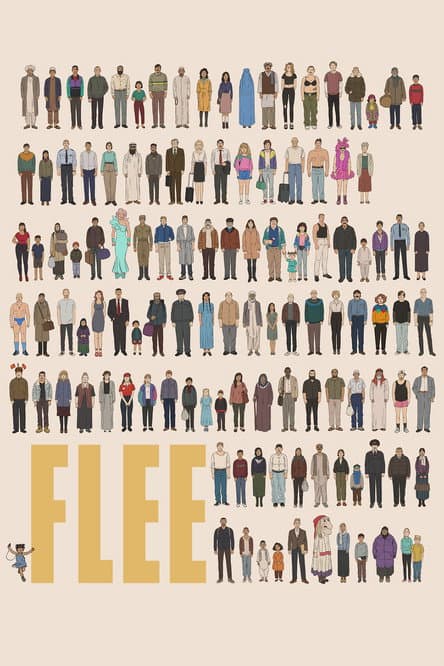
Flee follows Amin, an Afghan man living in Copenhagen who is preparing to marry his partner, Kasper. Through interviews with his old friend Jonas, Amin remembers leaving Kabul as a boy, surviving years in Moscow, and reaching Denmark alone. His family is split apart, traffickers and police put them in danger, and a lie in his asylum story stays hidden for decades. The film moves between warm childhood memories, frightening escapes, quiet sadness, and moments of humor as Amin tries to feel at home.
Amin's gay identity is a major part of the story, not a short side detail. He remembers liking men as a child, fearing shame and rejection, asking for a cure, and later telling his family and partner the truth. The film links his hidden sexuality to the false refugee story he told officials, so both secrets must be faced before he can build a settled life. Its main message supports self-acceptance, honest relationships, and a safe home for a gay refugee, while its criticism of smugglers, police, detention, and asylum rules remains tied to Amin's personal experience.
Community feedback
Was our 71% Woke rating accurate?
Breakdown
These are the editorial factors and ratings behind our score for Flee.
Woke representation / casting
Not present. The film uses animated versions of real people from Amin's life, so the visible identities come from the story. No broader identity-based casting pattern is shown or advertised.
0%
Woke political dialogue
The film has several direct lines about Amin being gay and hiding that fact. Amin says that liking men brought shame on his family. Amin asks for medicine to change. The story connects his later acceptance to living openly with Kasper. The movie has no long activist speech or repeated political slogan.
28%
Identity-driven story themes
Amin's hidden gay identity is one of the movie's two main story lines. The film follows his childhood feelings and fear of rejection. Amin later tells his family and plans a life with Kasper. The film joins his coming-out story to his hidden refugee past. The ending presents self-acceptance, open love, and a safe home as the answer.
88%
Western institutional / cultural critique
The film shows human traffickers treating refugees like cargo. The film shows Russian police abusing people who need help. The asylum process forces Amin to tell a false orphan story that he fears could cost him his right to stay. A detention center and a passing tourist ferry show the gap between comfortable travelers and refugees in danger. The criticism is recurring, but it targets war, police abuse, and asylum systems rather than Christianity or Western family life as a whole.
38%
Woke character or canon changes
Not relevant. Flee is a documentary about a real person, not a new version of an established fictional character. The changed names and animated faces protect privacy rather than swapping identity traits.
0%
Anti-woke backlash and complaints
Armond White called the animated documentary migrant-festival propaganda rather than journalism. One Metacritic user called it woke garbage about Afghanistan. The separate X check found only a few small accounts repeating these complaints and no boycott, review-bombing drive, or large right-leaning campaign. The mostly favorable audience response shows that the backlash stayed fringe.
12%
Creator track record context
The director's wider work repeatedly follows outsiders, hidden identity, trauma, and migration. Several producers have made documentaries about refugees, war, inequality, and human rights. Riz Ahmed also has a strong public focus on representation, Muslim identity, and racial justice. The group gives the film a moderate creator track record signal. The title's own story remains much stronger evidence.
52%
Production
Movie · 2017
An animated telling of Kobe Bryant's titular poem, signaling his retirement from the sport that made his name.
Movie · 2016
Combining archival footage with rotoscopic animation, Tower reveals the action-packed untold stories of the witnesses, heroes and survivors of America's first mass school…

Movie · 2022
Follows the man who survived an assassination attempt by poisoning with a lethal nerve agent in August 2020. During his months-long recovery, he makes shocking discoveries about…
Movie · 2022
Matt Walsh's controversial doc challenges radical gender ideology through provocative interviews and humor.
Movie · 2023
A courageous pastor uses his underground network to rescue and aid North Korean families as they risk their lives to embrace freedom.
Movie · 2017
A young man arrives at the last hometown of painter Vincent van Gogh to deliver the troubled artist's final letter and ends up investigating his final days there.
Movie · 2023
As the Russian invasion begins, a team of Ukrainian journalists trapped in the besieged city of Mariupol struggle to continue their work documenting the war's atrocities.

Movie · 2018
New York, 1980. Three complete strangers accidentally discover that they're identical triplets, separated at birth.
