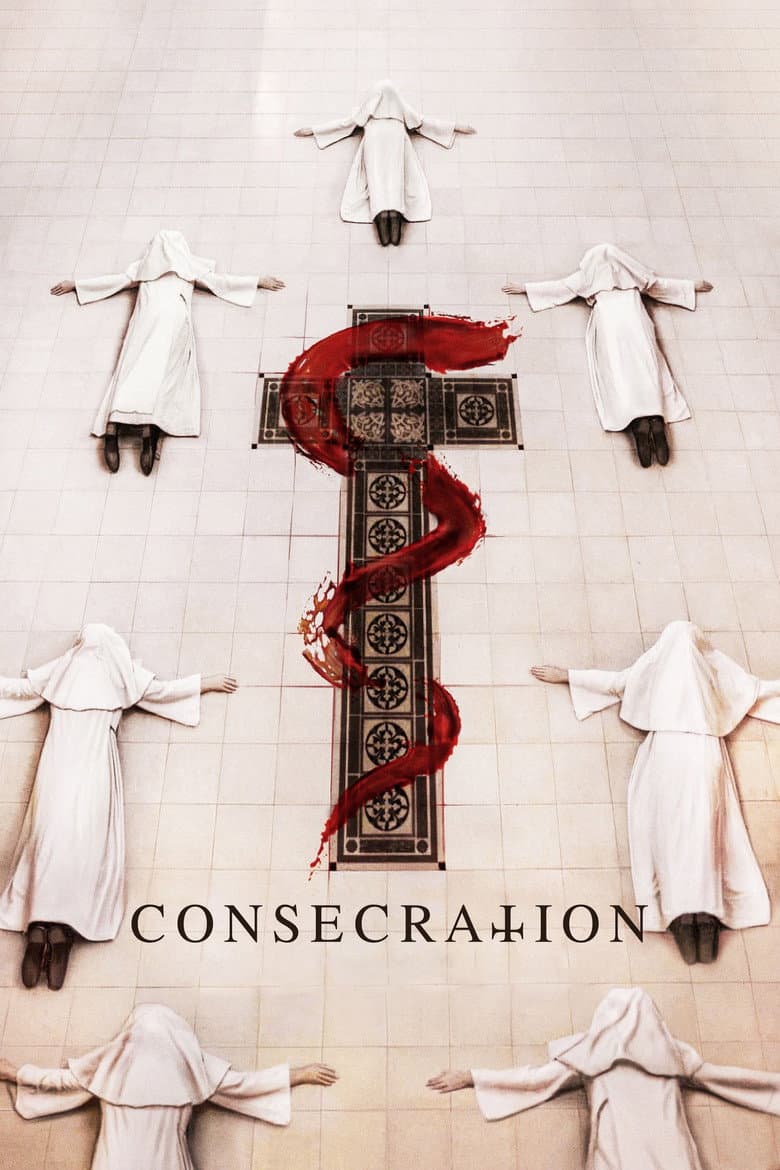
Consecration follows Grace, a science-minded eye doctor who travels from England to a remote convent on Scotland’s Isle of Skye. Her priest brother has died after a murder, and the Church says he killed another priest before taking his own life. Grace does not trust that story, so she searches the convent while strange visions pull her into memories of an abusive childhood. The film uses dark halls, cliffs, nuns, blood, and religious rites to create a grim supernatural mystery.
The main identity idea comes from making a woman the center of a Christian Second Coming story. The nuns and priests try to label, control, or destroy Grace because her power does not fit their religious order. The story also presents the Church as secretive and harmful, while Grace’s science-based view challenges its claims. The film stays focused on religion, family trauma, supernatural horror, and Grace’s changing view of herself.
Community feedback
Was our 44% Woke rating accurate?
Breakdown
These are the editorial factors and ratings behind our score for Consecration.
Woke representation / casting
Grace is an English woman and an eye doctor, which fits the modern setting. The unusual gender choice is making a woman the film’s central supernatural power and possible Second Coming. Smith and Malone described this choice as a female Second Coming and divine feminine idea. The film does not build a diversity-first cast or an engineered group of different identities.
15%
Woke political dialogue
Not present. The film has no modern activist speeches or direct political debate. Its spoken conflict centers on religion, murder, family trauma, and supernatural events.
0%
Identity-driven story themes
Grace learns that her hidden past is tied to a powerful supernatural being and a female version of the Second Coming. The film makes her gender central to the religious mystery. The Church treats her power as a threat and tries to fit her into its own categories. Interviews openly describe the story as the divine feminine and a female Second Coming, which matches the film’s main twist.
58%
Western institutional / cultural critique
The convent hides crimes and uses religious rites to control Grace. The film presents strict nuns, priests, and Church leaders as secretive, violent, or misguided. Grace’s abusive father also links male authority with her childhood trauma. Smith and Malone framed the story as a challenge to older patriarchal religious stories, but the film does not attack capitalism or wider Western society.
42%
Woke character or canon changes
Not relevant. Consecration is an original horror story, so it does not alter a known character, book, legend, or real historical event.
0%
Anti-woke backlash and complaints
Not present. Indexed discussions focus on the plot, the ending, and the film’s quality. No clear anti-woke or DEI complaint was found.
0%
Creator track record context
The available profiles for the listed writers, producers, casting director, and key crew show low scores from 0 to 15/100. Christopher Smith is stored at 15/100 and Laurie Cook at 0/100, with no strong activist pattern in their notes. This gives the title a weak creator track record signal.
8%
Production
Movie · 2023
Father Gabriele Amorth, Chief Exorcist of the Vatican, investigates a young boy's terrifying possession and ends up uncovering a centuries-old conspiracy the Vatican has…
Movie · 2026
College student Lucy and her friends spend their vacation at her family's home in Hawaii, which includes her pet chimpanzee, Ben.
Movie · 2026
After a young couple witnesses a gruesome highway accident, they soon realize they did not leave the crash scene alone, as a demonic presence called the Passenger that won't stop…
Movie · 2021
A young couple is pushed to the limits of sanity as they attempt to be reunited amid the chaos of a pandemic outbreak.

Movie · 2024
Nothing is what it seems when a twisted one-night stand spirals into a serial killer’s vicious murder spree.
Movie · 2016
An evening of drunken prank calls becomes a nightmare for a pair of teenagers when a mysterious stranger turns their own game against them.

Movie · 2025
Four years after defeating The Grabber, Finney Blake is struggling with life after captivity. When his younger sister Gwen begins receiving calls in her dreams from the Black…
Movie · 2024
Patrick, a strange and lonely resident, lives in a mobile home at the back of an isolated caravan park. After a violent thunderstorm erupts, a mysterious young woman appears at…
