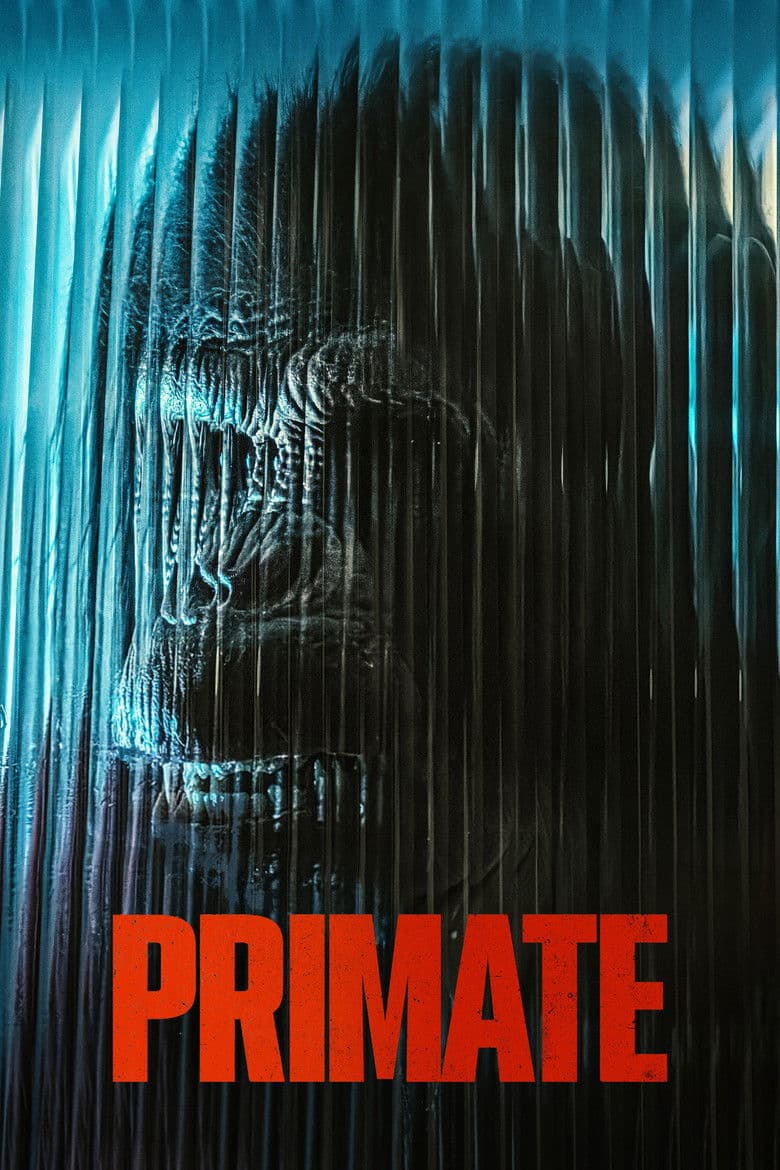
Primate follows Lucy, a college student who returns to her family's cliffside home in Hawaii with friends after time away. Her father Adam is a famous writer, her younger sister Erin is still grieving their mother, and the family keeps Ben, a smart pet chimp. After a rabid mongoose bites Ben, the chimp turns violent and traps the group around the house and pool. The movie is a short, bloody creature feature with dark jokes, loud scares, and practical gore.
The clearest identity element is Adam, a deaf father played by deaf actor Troy Kotsur. Adam and his daughters use American Sign Language, and the film removes sound during some of his scenes to build fear. The story uses his deafness for family communication and horror tension, not as a political lesson. The film's main ideas are grief, growing up, broken family ties, and the danger of treating a wild animal like a pet.
Community feedback
Was our 13% Woke rating accurate?
Breakdown
These are the editorial factors and ratings behind our score for Primate.
Woke representation / casting
Adam is a deaf father played by deaf actor Troy Kotsur, and the film shows him using ASL with his daughters. The director rewrote the role for Kotsur and uses silent scenes from Adam's point of view. Paramount also marketed a short video around his deaf perspective. The choice is a clear representation signal, but the rest of the cast is not framed as a diversity-first group.
22%
Woke political dialogue
Not present. The film contains no activist speeches, identity lectures, or political messaging of any kind.
0%
Identity-driven story themes
Not present. The narrative focuses on grief, family bonds, primal animal instincts versus civilization, and survival horror with no identity politics or social-justice elements.
0%
Western institutional / cultural critique
Not present. No portrayals of toxic masculinity, anti-conservative family structures, or attacks on Western institutions appear; the deaf father is shown as competent and valued.
0%
Woke character or canon changes
Not relevant. This is an original story with no established characters or source material altered for identity reasons.
0%
Anti-woke backlash and complaints
Not present. No anti-woke or right-leaning complaints exist in reviews, social media, or news coverage treating the film as pushing woke or identity-driven content.
0%
Creator track record context
The writers and most producers have commercial horror records without a known activist pattern. Casting director Kharmel Cochrane has publicly stressed fresh and diverse talent. That creates a mild creator-context signal, but no strong activist pattern connects it to this film. Roberts' film interviews focus on grief, growing up, communication, and old-school horror.
12%
Production
Movie · 2017
Two sisters on Mexican vacation are trapped in a shark observation cage at the bottom of the ocean, with oxygen running low and great whites circling nearby, they have less than…
Movie · 2021
The Blind Man has been hiding out for several years in an isolated cabin and has taken in and raised a young girl orphaned from a devastating house fire.
Movie · 2026
After a young couple witnesses a gruesome highway accident, they soon realize they did not leave the crash scene alone, as a demonic presence called the Passenger that won't stop…
Movie · 2023
Recently fired and desperate for work, a troubled young man named Mike agrees to take a position as a night security guard at an abandoned theme restaurant: Freddy Fazbear's…
Movie · 2024
A grieving woman in a secluded forest encounters a killer who injects her with a paralytic drug. As her body shuts down, her fight for survival begins.
Movie · 2017
Though Kevin has evidenced 23 personalities to his trusted psychiatrist, Dr. Fletcher, there remains one still submerged who is set to materialize and dominate all the others.
Movie · 2018
Following the death of the Leigh family matriarch, Annie and her children uncover disturbing secrets about their heritage.
Movie · 2023
Father Gabriele Amorth, Chief Exorcist of the Vatican, investigates a young boy's terrifying possession and ends up uncovering a centuries-old conspiracy the Vatican has…
