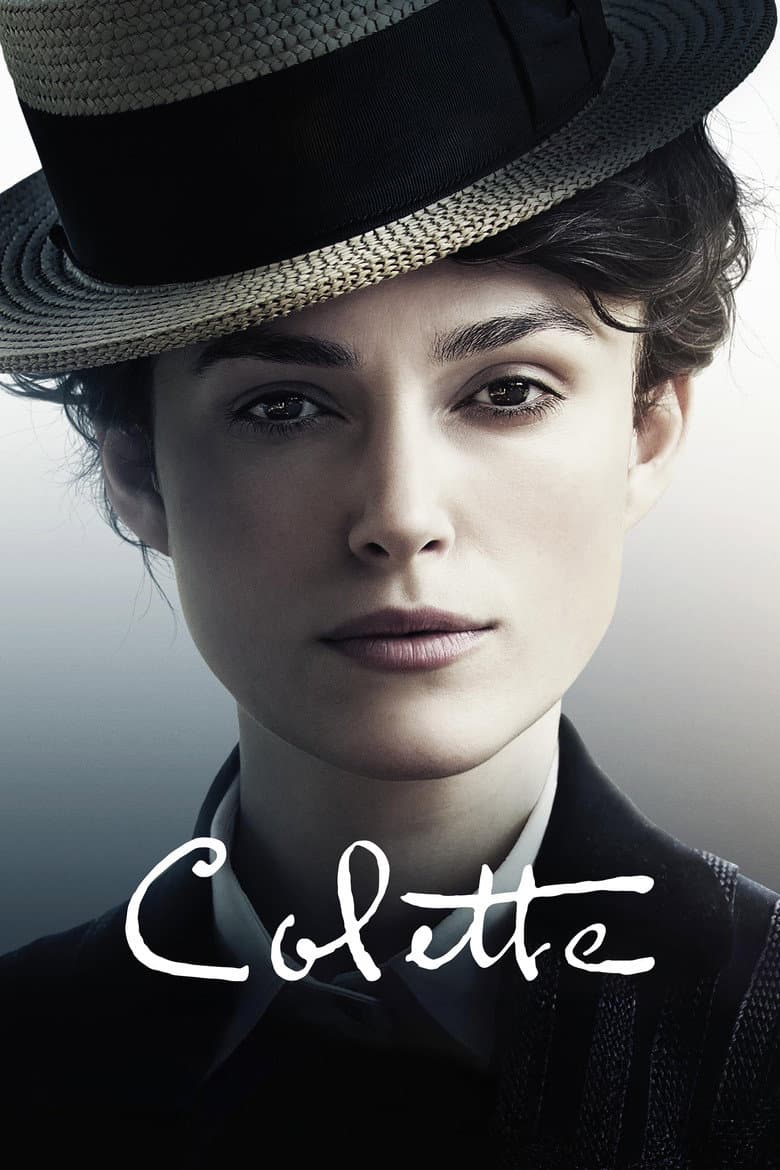
Colette follows Sidonie-Gabrielle Colette, a young woman from rural France who marries the older Paris writer Henry Gauthier-Villars, known as Willy. Willy brings her into Paris society and pushes her to write stories about her school years. The stories become the Claudine books, but Willy publishes them under his own name and spends the money. The film has a bright, playful period-drama tone, while the marriage grows bitter and Colette searches for a life she can control.
Colette’s fight for credit is tied to a strong message about women finding their voice and refusing male control. The film also makes her bisexual relationships a major part of her growth, including her romance with Missy, a noblewoman who dresses and lives in a masculine way. Several scenes present sexual freedom, cross-dressing, and public performance as ways to challenge old gender rules. The story treats Colette’s writing, clothes, and love life as connected parts of her independence.
Community feedback
Was our 84% Woke rating accurate?
Breakdown
These are the editorial factors and ratings behind our score for Colette.
Woke representation / casting
The film uses Ray Panthaki and Johnny K Palmer for historical figures who were white in real life. The film also uses trans actors in cisgender roles, including Jake Graf and Rebecca Root. These are supporting roles rather than the main couple. The director openly framed the choices as inviting more identities into a period film, so casting is part of the film’s identity message.
48%
Woke political dialogue
The characters repeatedly talk about women having a voice and men controlling publishing. Missy says it is a man’s world and hopes all women can wear trousers. Willy says women writers do not sell, and Colette answers that she needs credit for her work. These lines make gender politics clear, but the film does not stop for a long modern activist speech.
40%
Identity-driven story themes
Colette’s bisexuality and relationships with women are a major part of her growth. Missy presents as masculine, and the film treats that identity with respect. The story links sexual freedom, clothes, and public performance to Colette finding her own voice. Colette’s fight to own her writing and reject Willy’s control also gives the film a strong female-empowerment message.
82%
Western institutional / cultural critique
The story repeatedly shows Willy’s male entitlement through cheating, control, and taking credit for Colette’s work. Colette and Missy push back against rigid gender dress and marriage rules. The film presents female independence and sexual freedom as the better path. It does not attack Christianity, capitalism, or broad Western institutions.
52%
Woke character or canon changes
The film presents real historical figure Mathilde de Morny as a masculine person who sometimes uses male pronouns. It also gives Missy a speech about not fitting simple male or female language. That framing is more direct and modern than a plain account of her clothes and relationships. Missy’s real history supports much of the portrayal, so this remains a limited change rather than a major rewrite.
24%
Anti-woke backlash and complaints
A small X account compared the film to the “every movie is woke DEI with a white villain” meme. The post also said the true-biopic basis meant Colette did not really count as that kind of film. The post had about 100 views and no engagement, and no boycott or review bomb was found.
8%
Creator track record context
Wash Westmoreland and Richard Glatzer have strong records of queer-centered stories, with stored scores of 66 and 74. Rebecca Lenkiewicz has a milder record tied to women’s rights and abuse reporting, with a stored score of 45. Christine Vachon and Pamela Koffler have long records of queer and identity-focused films, with stored scores of 72 and 64. This background matches Colette’s focus on a woman owning her work, sexual freedom, and a lover who lives in a masculine way.
66%
Production
Movie · 2016
WWII American Army Medic Desmond T. Doss, who served during the Battle of Okinawa, refuses to kill people and becomes the first Conscientious Objector in American history to…

Movie · 2016
After his older brother passes away, Lee Chandler is forced to return home to care for his 16-year-old nephew.
Movie · 2023
The true story of the inseparable Von Erich brothers, who made history in the intensely competitive world of professional wrestling in the early 1980s.
Movie · 2022
London, 1953. Mr. Williams, a veteran civil servant, is an important cog within the city's bureaucracy as it struggles to rebuild in the aftermath of World War II.
Movie · 2020
A man refuses all assistance from his daughter as he ages and, as he tries to make sense of his changing circumstances, he begins to doubt his loved ones, his own mind and even…
Movie · 2024
On the brink of the Second World War, a young Norwegian man's drive to resist the Nazis sets a new course for his future – and the future of his country.
Movie · 2019
Richard Jewell thinks quick, works fast, and saves hundreds, perhaps thousands, of lives after a domestic terrorist plants several pipe bombs and they explode during a concert…
Movie · 2023
The story of J. Robert Oppenheimer's role in the development of the atomic bomb during World War II.
