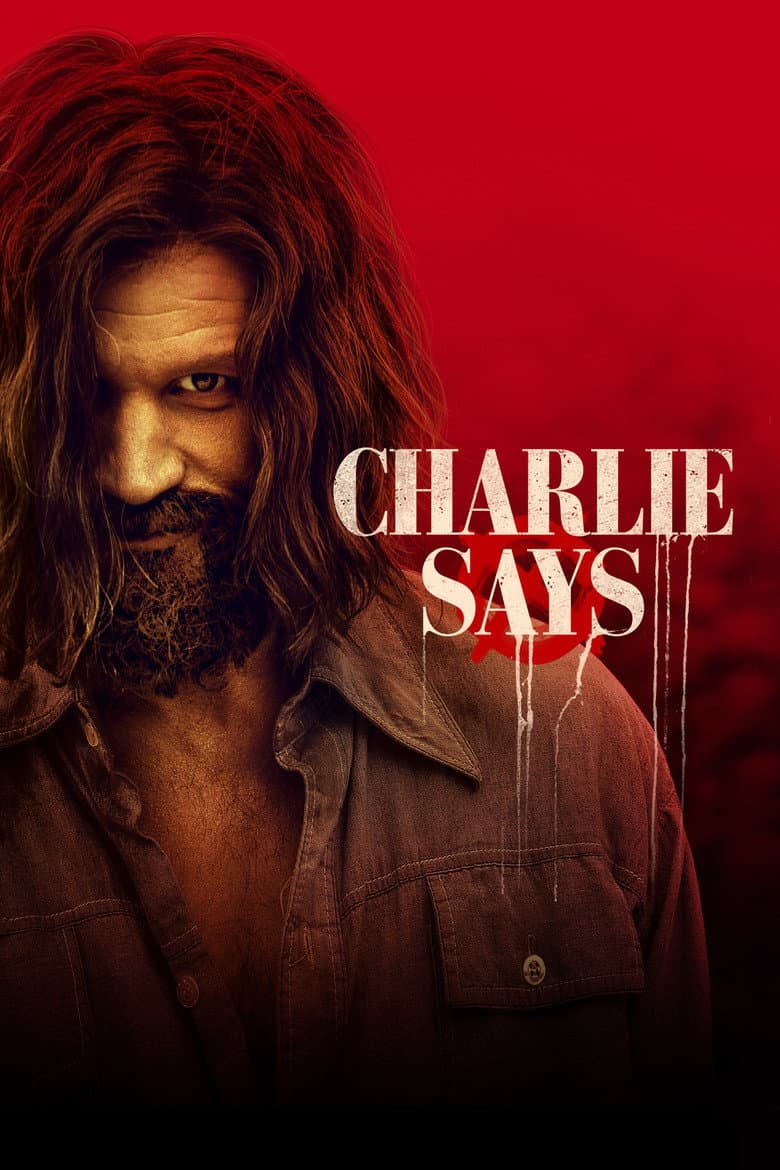
Charlie Says follows Leslie Van Houten, Patricia Krenwinkel, and Susan Atkins after they receive life sentences for taking part in Charles Manson’s California murder spree. Graduate student Karlene Faith teaches them in prison while flashbacks show how Manson drew them into his ranch community. The women must face the crimes they committed and the beliefs that helped them obey him. The film has a grim, tense tone, but it also spends time on empathy, guilt, and the hard work of change.
The movie treats the case through a feminist view by showing Manson’s control of women’s bodies, work, sex, and choices. Karlene uses women’s studies and feminist books to challenge the idea that abuse and obedience are forms of freedom. The story treats the women as responsible killers while also showing them as young people shaped by a cruel man and a closed group. This viewpoint is central to the prison scenes and flashbacks, but the film does not build its message around race, LGBTQ identity, or diversity casting.
Community feedback
Was our 67% Woke rating accurate?
Breakdown
These are the editorial factors and ratings behind our score for Charlie Says.
Woke representation / casting
Not present. The film uses mainly white historical people in 1960s California and does not show a diversity-first casting pattern. The cast does not turn race, sexuality, or identity into a major part of the story.
0%
Woke political dialogue
Karlene teaches women’s studies to female prisoners and uses feminist books in her lessons. Karlene challenges the women’s ideas about obedience, abuse, and male control. Manson and his followers repeat claims about women serving men, and the film presents those claims as harmful. These ideas recur in the prison and ranch scenes.
45%
Identity-driven story themes
The film makes the loss and recovery of female identity its central story. Manson controls the women’s sex, work, names, and choices, while Karlene helps them see that control as abuse. The story shows that the women were manipulated while still holding them responsible for brutal murders. The feminist focus runs through the prison lessons, flashbacks, and ending.
67%
Western institutional / cultural critique
The film shows Manson’s commune as a false escape from normal society that still puts men first. The men control money, food, sex, and the rules, while the women are expected to serve them and obey Charlie. The prison story also questions whether punishment alone can help people change. These points criticize male power and parts of the prison system, but they mostly grow from this real case.
47%
Woke character or canon changes
Not relevant. The movie keeps the known historical people’s race, sex, and main roles. It dramatizes events and leaves out details, but it does not make an identity or hero-role swap.
0%
Anti-woke backlash and complaints
An isolated Reddit thread called the film’s feminist reading “propaganda” and objected to treating the women as victims of male abuse. The discussion first misnamed the film and offered no detailed scene-by-scene case. The supplied X pass found no anti-woke posts, and no larger anti-woke news or review campaign was found. The complaint is real but very weak.
6%
Creator track record context
Guinevere Turner has a strong queer and feminist record, and she wrote this film. Karlene Faith’s source work centers feminist prison research and human rights. Mary Harron has a milder feminist and politically engaged pattern. The other named producers and casting directors have little public identity-politics record.
68%
Production

Movie · 2017
After seven months have passed without a culprit in her daughter's murder case, Mildred Hayes makes a bold move, painting three signs leading into her town with a controversial…
Movie · 2025
Two of New York's most notorious organized crime bosses, Frank Costello and Vito Genovese, vie for control of the city's streets.
Movie · 2022
In the 1980s, a team of lawyers takes on the heads of Argentina's bloody military dictatorship in a battle against odds and a race against time.
Movie · 2019
A chronicle of the crimes of Ted Bundy, from the perspective of his longtime girlfriend, Elizabeth Kloepfer, who refused to believe the truth about him for years.
Movie · 2025
Amid the glittering casinos of Macau, a gambler running from his past—and his debts—becomes fascinated by an enigmatic woman at the baccarat table.
Movie · 2017
Henri “Papillon” Charrière, a safecracker from the Parisian underworld, is wrongfully convicted and sentenced to life imprisonment in the penal colony of French Guiana, where he…
Movie · 2016
Nate Foster, a young, idealistic FBI agent, goes undercover to take down a radical white supremacy terrorist group.
Movie · 2016
As a math savant uncooks the books for a new client, the Treasury Department closes in on his activities and the body count starts to rise.
