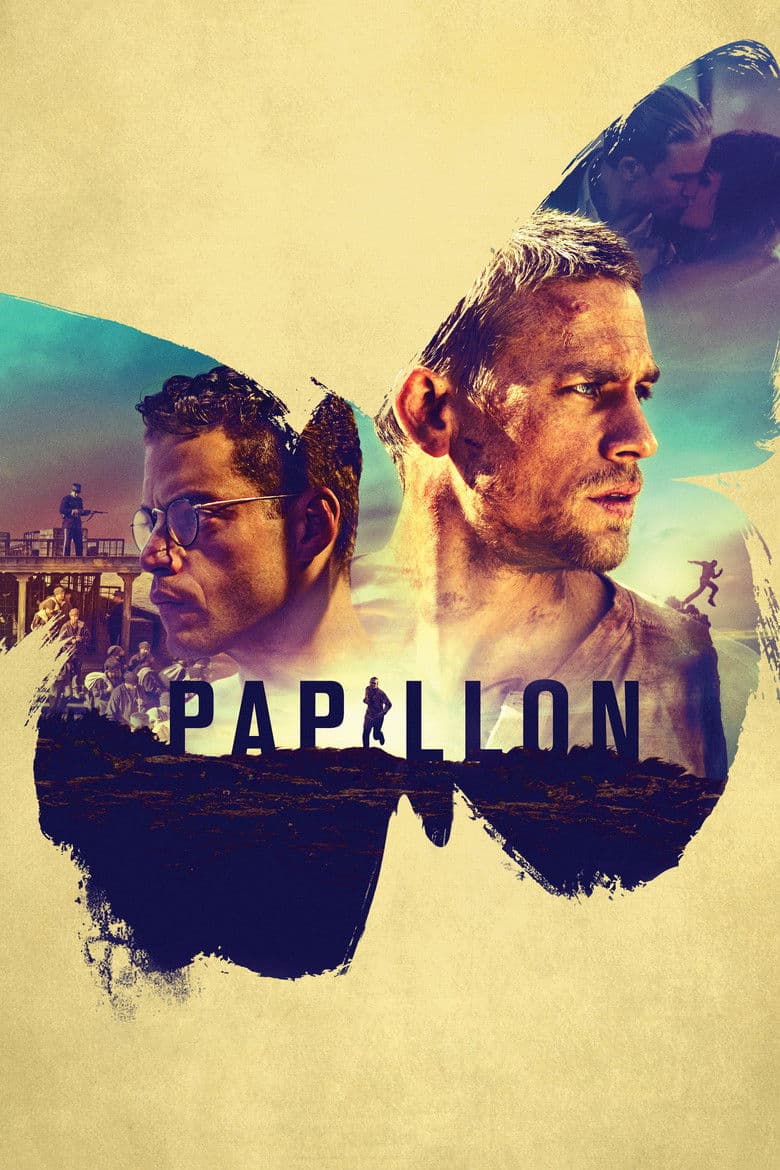
The 2017 film Papillon retells Henri Charriere’s Devil’s Island story for a new audience. Charlie Hunnam plays Papillon, a safecracker who is framed and sent to a brutal French Guiana penal colony. He forms a deep bond with counterfeiter Louis Dega, played by Rami Malek, as both men face cruelty, solitary confinement, and the drive to escape. The plot follows friendship, survival, wrongful conviction, and the fight for freedom under a harsh historical prison system. The movie stays a period prison drama about endurance and loyalty rather than a modern social message film.
Audience-facing identity politics are limited and not the main engine of the story. Press and the creative team framed the Papillon and Dega bond as a love story of unlikely soulmates while stressing it is not a queer romance. Coverage also notes sex and affection among male convicts and Maturette as a sexually abused escapee in the escape plot. The film attacks the historical French colonial penal system, with only mild resonance around prison hardness and reform. Those elements can register for some viewers, but they sit in the background of a survival and escape story.
Community feedback
Was our 17% Woke rating accurate?
Breakdown
These are the editorial factors and ratings behind our score for Papillon.
Woke representation / casting
Not present. Cast fits a 1930s French underworld and colonial penal colony with European-majority male prisoners and officials, without diversity-first marketing.
0%
Woke political dialogue
Not present. No reported modern activist dialogue on race, gender identity, DEI, or present-day identity politics. Speech stays in period prison-drama territory.
0%
Identity-driven story themes
The story center is male friendship, endurance, and freedom under a hellish prison. Press and creatives framed Papillon and Dega as a love story of unlikely soulmates while saying it is not a queer romance. Coverage notes sex and affection between male convicts and Maturette as a sexually abused escapee. That is background queer-adjacent content that can register for some viewers, not a representation-first or identity-politics plot.
22%
Western institutional / cultural critique
The film targets the historical French colonial penal system of solitary, the guillotine, and Devil’s Island. One line ironically nods at French expansion. Hunnam also linked the film to modern prison privatization. That is mild liberal prison-reform resonance and period anti-tyranny, not modern activist framing about whiteness, patriarchy, or systemic identity guilt.
12%
Woke character or canon changes
Not relevant. Remake and adaptation choices track the memoir and 1973 film structure. There is no audience-visible race, gender, or identity rewrite of Charriere, Dega, or history as an ideological project.
0%
Anti-woke backlash and complaints
There was no mainstream too-woke or DEI controversy. Isolated online notes, such as Reddit talk of a gay undertone being typical on current productions, exist. Nothing like a sustained anti-woke campaign appeared.
5%
Creator track record context
Cached creatives are mostly non-activist for this film. Milder notes only include Trumbo’s classical mid-century left credit on the earlier adaptation and Mary Vernieu’s general representation comments. Interviews for this film stress character, bromance, and prison hardship over DEI messaging.
10%
Production
