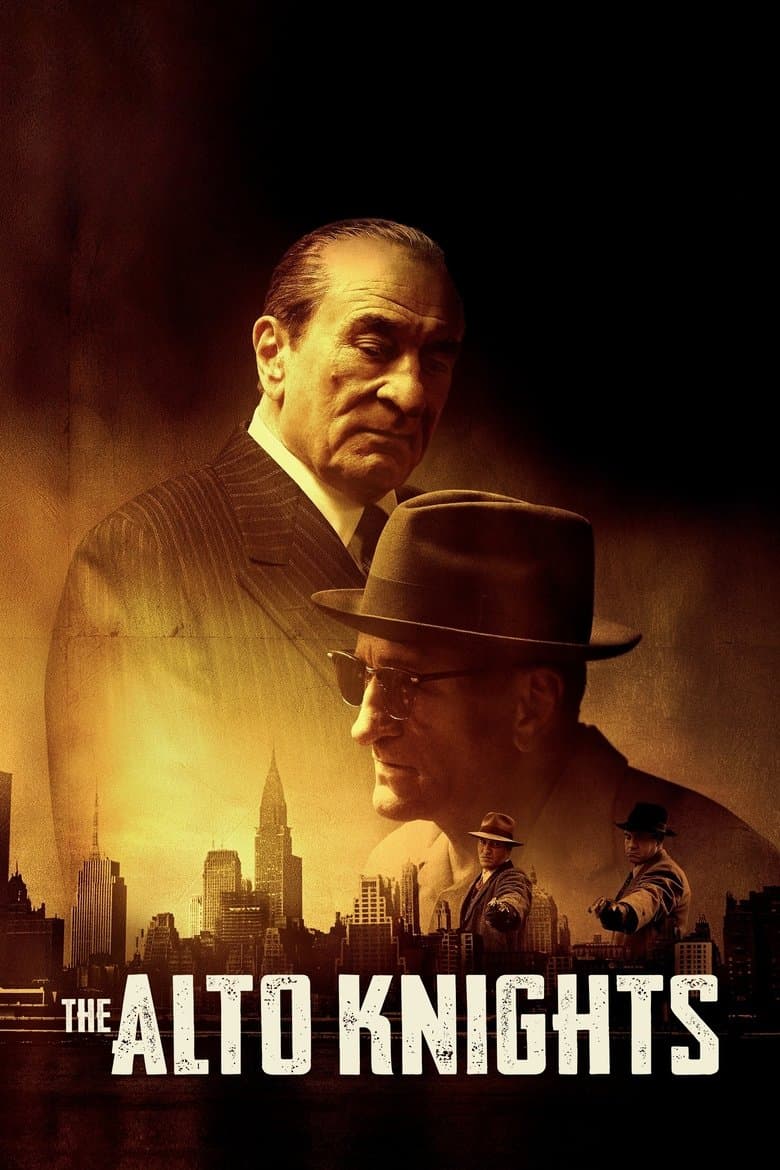
The Alto Knights follows Frank Costello and Vito Genovese, two Italian American mob bosses in New York. The men begin as close friends, but power, jealousy, and betrayal turn them into deadly rivals. The story moves through the 1930s, 1940s, and 1950s, with a failed 1957 attack on Costello driving the plot. The tone is dark and serious, but it also uses dry jokes and a strange double role for Robert De Niro.
Frank tries to rule through deals, political contacts, and a quieter home life, while Vito trusts fear, drugs, and violence. The film presents their clash as a fight between two kinds of criminal power rather than a struggle between good and evil. Wives Bobbie and Anna show how the two men treat family and marriage in very different ways. The story also looks at police pressure, Senate hearings, and the mob's loss of power as America changes.
Community feedback
Was our 4% Woke rating accurate?
Breakdown
These are the editorial factors and ratings behind our score for The Alto Knights.
Woke representation / casting
Not present. The major roles are Italian American mob figures in a mid-century New York crime story. The cast choices follow the setting and the film does not present diversity or identity as a goal.
0%
Woke political dialogue
Not present. The film includes mob talk about corrupt politicians and a Senate hearing about organized crime. These scenes stay inside the period crime story and do not use current identity politics or activist language.
0%
Identity-driven story themes
Not present. The story centers on friendship, power, betrayal, marriage, and organized crime. It does not make race, gender, sexuality, or group identity a message or a main story problem.
0%
Western institutional / cultural critique
Not present. The film shows payoffs and weak public institutions as part of its historical mob story. It does not turn those events into a modern attack on capitalism, patriarchy, Christianity, or Western culture.
0%
Woke character or canon changes
Not relevant. The film changes or compresses parts of the real history for drama, including its version of the rural mob meeting. It does not make a woke or identity-driven change to a known person or event.
0%
Anti-woke backlash and complaints
A few small right-leaning accounts called the film “woke garbage” or used “go woke go broke.” The only specific link they gave was De Niro's anti-Trump politics, which they treated as a reason to avoid his films. They did not name a race, gender, sexuality, DEI, or activist choice in this film. No sustained boycott, review-bombing campaign, or film-specific woke complaint appeared in the supplied X pass.
8%
Creator track record context
Barry Levinson has a mild political and institutional critique record. Nicholas Pileggi has no high-confidence record of DEI or activist work. Producer Mike Drake has supported inclusion-minded hiring and racial-justice stories, while most other listed creators have little such record. This gives the title a low supporting signal.
12%
Production
Movie · 2017
A look behind the scenes at Bernie Madoff's massive Ponzi scheme, how it was perpetrated on the public and the trail of destruction it left in its wake, both for the victims and…
Movie · 2024
After a chance encounter, headstrong Kathy is drawn to Benny, member of Midwestern motorcycle club the Vandals.

Movie · 2026
After his estranged son gets embroiled in a Nazi plot, self-exiled gangster Tommy Shelby must return to Birmingham to save his family — and his nation.
Movie · 2021
A cold and mysterious new security guard for a Los Angeles cash truck company surprises his co-workers when he unleashes precision skills during a heist.

Movie · 2019
A charismatic New York City jeweler always on the lookout for the next big score makes a series of high-stakes bets that could lead to the windfall of a lifetime.
Movie · 1994
Imprisoned in the 1940s for the double murder of his wife and her lover, upstanding banker Andy Dufresne begins a new life at the Shawshank prison, where he puts his accounting…

Movie · 2019
Ulrich Mott is an eccentric and versatile social climber with grandiose plans to affect United States foreign policy.
Movie · 2022
In the 1980s, a team of lawyers takes on the heads of Argentina's bloody military dictatorship in a battle against odds and a race against time.
