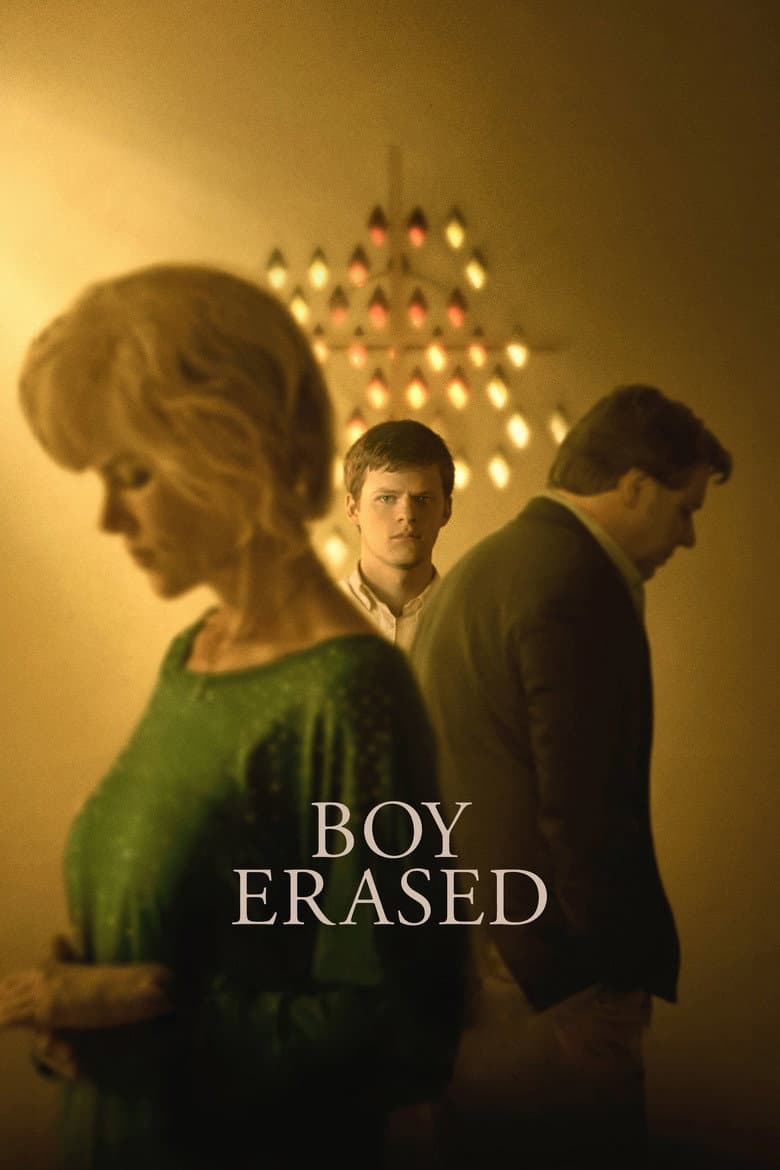
Jared is a 19-year-old college student in Arkansas who is outed as gay after a college friend sexually assaults him. His Baptist parents love him, but his father sends him to a program that claims it can change his sexuality. The program uses prayer, shame, strict rules, and group pressure to control the young men. The film moves between Jared’s home, college memories, and the program in Memphis, and its tone is serious, sad, and tense.
Jared’s identity is the center of the story, so the film strongly affirms gay self-acceptance. The plot presents conversion therapy as harmful and shows how it can damage a young person’s mind, family ties, and faith. The program also links manhood with control and treats same-sex desire as a moral failure. Jared’s parents must choose between their church’s rules and their son’s safety, and the story ends with a move toward acceptance.
Community feedback
Was our 81% Woke rating accurate?
Breakdown
These are the editorial factors and ratings behind our score for Boy Erased.
Woke representation / casting
Focus Features marketed the supporting cast as diverse and highlighted LGBTQ actors and LGBTQ stories. The gay young men in the program fit the story, and most of the main cast is white. The film has no broad race or gender pattern in its lead roles. The identity-based casting message is noticeable but limited.
18%
Woke political dialogue
The program’s leaders repeatedly say that same-sex desire is a choice, a sin, and a result of bad parenting. Jared and the other students argue about whether they can or should change. The family’s later talks reject shame and support Jared’s right to live as gay. These talks fill the main conflict, although the film has little party politics or campaign language.
47%
Identity-driven story themes
Jared’s gay identity drives the entire conflict and his main choices. The story follows his fear, shame, and growing refusal to let others define him. The film treats self-acceptance and family acceptance as the healthy path. It presents conversion therapy as abuse and asks viewers to side with the young people who resist it.
92%
Western institutional / cultural critique
The conversion program uses conservative Christian beliefs as a tool for shame and control. The leaders teach young men to copy a narrow idea of manhood and call same-sex desire a moral failure. Jared’s father and church community put social respect and church rules above his safety. The film still shows his parents as loving people who can change, so the critique targets harmful practices more than all Christianity.
48%
Woke character or canon changes
Not relevant. The film is based on Garrard Conley’s memoir and uses changed names. It does not make an identity-based change to an established character, canon, or historical figure.
0%
Anti-woke backlash and complaints
ChristianAnswers called the film an agenda-driven gay advocacy drama and said it unfairly attacks Christians. Movieguide described the film as carrying anti-Christian and anti-biblical messages. These complaints were clear but came from a small number of religious review sites. The supplied X search found no anti-woke posts, boycott calls, or review-bombing.
18%
Creator track record context
Garrard Conley wrote the true-life book and has a strong LGBTQ advocacy record. Joel Edgerton’s public record is mostly drama and thriller work, with no clear activist profile. The producers have mixed links to LGBTQ or women-centered projects, but most have no broad activist profile. The team has a clear queer-content connection without a uniform activist record.
55%
Production
Movie · 2019
Richard Jewell thinks quick, works fast, and saves hundreds, perhaps thousands, of lives after a domestic terrorist plants several pipe bombs and they explode during a concert…

Movie · 2023
The story of J. Robert Oppenheimer's role in the development of the atomic bomb during World War II.

Movie · 2023
The true story of the inseparable Von Erich brothers, who made history in the intensely competitive world of professional wrestling in the early 1980s.

Movie · 2016
After his older brother passes away, Lee Chandler is forced to return home to care for his 16-year-old nephew.

Movie · 2016
WWII American Army Medic Desmond T. Doss, who served during the Battle of Okinawa, refuses to kill people and becomes the first Conscientious Objector in American history to…

Movie · 2024
On the brink of the Second World War, a young Norwegian man's drive to resist the Nazis sets a new course for his future – and the future of his country.
Movie · 2020
A man refuses all assistance from his daughter as he ages and, as he tries to make sense of his changing circumstances, he begins to doubt his loved ones, his own mind and even…
Movie · 2016
On 15 January 2009, the world witnessed the 'Miracle on the Hudson' when Captain 'Sully' Sullenberger glided his disabled plane onto the Hudson River, saving the lives of all 155…
