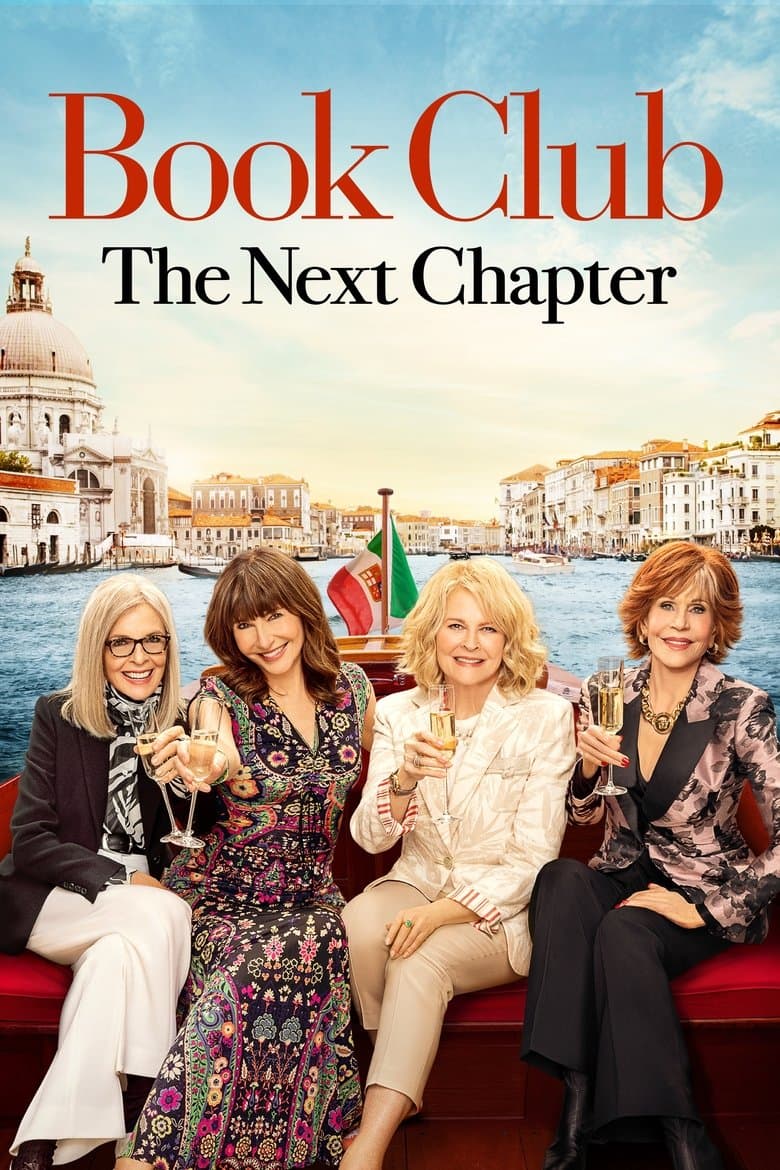
Vivian, Diane, Sharon, and Carol are four longtime friends who have stayed close through marriage, widowhood, work, and retirement. After the pandemic, Vivian tells the group that she is engaged to Arthur, the man she once did not want to marry. The friends travel from Rome to Venice and Tuscany for a bachelorette trip before the wedding. Lost luggage, jail time, old fears, and family worries turn the holiday into a bright but silly romantic comedy.
The film puts older women at the center of romance, sex jokes, friendship, and major choices. Vivian questions whether marriage will shrink her freedom, while Carol fears that her husband’s heart attack will end their shared life and Diane faces love after loss. Sharon enjoys dating and sexual freedom without needing a husband, and the friends repeatedly tell one another to take chances at any age. This message about older women staying desirable, active, and independent is central to the movie, but it is presented as light entertainment rather than a detailed political argument.
Community feedback
Was our 37% Woke rating accurate?
Breakdown
These are the editorial factors and ratings behind our score for Book Club: The Next Chapter.
Woke representation / casting
The four central heroes are older white women, and the movie makes their age a visible part of their appeal. The film gives them the main romance, the trip, the jokes, and the final choices while men stay mostly in supporting roles. Interviews and marketing describe the group as women over 60 living full romantic and sexual lives. This is a clear age and gender representation choice, but it is not a broad race, queer, or diversity-first casting program.
32%
Woke political dialogue
Not present. The dialogue does not contain a sustained political or activist debate. The characters talk about love, sex, friendship, aging, travel, and marriage.
0%
Identity-driven story themes
The story centers the idea that women over 70 can still want sex, romance, travel, and new chances. Vivian questions whether marriage will limit her, Sharon treats dating as a choice, and the friends support one another through these worries. The movie treats age-based limits on women’s lives as wrong and presents female friendship as a source of strength. These themes shape the whole plot, but the film does not expand them into a wider race, queer, or activist program.
43%
Western institutional / cultural critique
The film pushes back against the idea that women lose romance or sexual appeal as they grow older. It makes the four women drive the trip and decide what they want from love, while their male partners mostly support them. It also includes one crude joke about Mother Teresa, but it does not build a wider attack on Christianity or other Western institutions. The critique of age and gender expectations is recurring but light.
24%
Woke character or canon changes
Not relevant. The sequel keeps the same fictional characters and adds an Italy trip. No established source character or real historical figure is changed for identity reasons.
0%
Anti-woke backlash and complaints
Not present. The reviewed audience posts and news coverage focus on the weak plot, thin jokes, sex content, and appeal of older women. No meaningful anti-woke or anti-DEI backlash was found.
0%
Creator track record context
Bill Holderman and Erin Simms have a narrow record of centering women over 60 in romantic and sexual stories. Their stored creator scores are 20 and 18, with no clear record of broad activism or DEI advocacy. The other stored producers and casting directors have mainly standard commercial or production profiles. Andrew Duncan’s stored work shows liberal democracy advocacy, but it is not an identity-politics pattern.
20%
Production

Movie · 2023
Michelle and Allen, who have reached the point in their relationship where they are considering next steps, decide to invite their parents to finally meet and to offer some…

Movie · 2018
A quirky couple spends their three-year dating anniversary looking back at their relationship and contemplating whether they should break up.
Movie · 2022
Two strangers believe in love but never seem to be able to find its true meaning. In a wild twist of events, fate puts each in the other's path on one stormy New Year's Eve.
Movie · 2019
Two young people arrive in New York to spend a weekend, but once they arrive they're met with bad weather and a series of adventures.
Movie · 2023
Mira Ray, dealing with the loss of her fiancé, John, sends a series of romantic texts to his old cell phone number… not realizing the number was reassigned to Rob Burns' new work…
Movie · 2018
Lara Jean's love life goes from imaginary to out of control when her secret letters to every boy she's ever fallen for are mysteriously mailed out.

Movie · 2024
Fresh off an almost career-ending accident, stuntman Colt Seavers has to track down a missing movie star, solve a conspiracy and try to win back the love of his life while still…
Movie · 2019
Standing on the precipice of adulthood, a group of friends navigate new relationships, while reexamining others, during their final summer before college.
