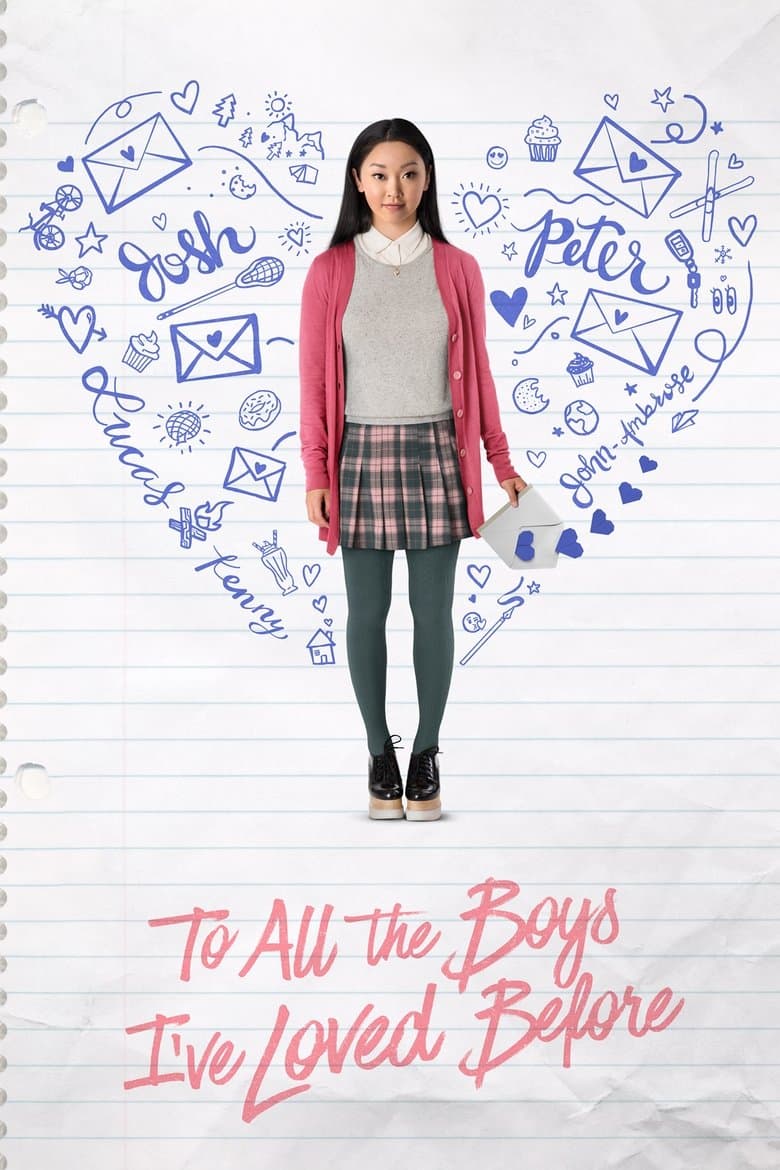
Sixteen-year-old Lara Jean Covey is a shy, book-loving girl who lives with her father and two sisters in Portland, Oregon. She writes private love letters to five boys because imagining romance feels safer than facing it. Her younger sister sends the letters, and Lara Jean must deal with the boys, her sister’s former boyfriend, and a fake relationship with Peter. The story uses gentle humor, sweet romance, school drama, family love, and grief over Lara Jean’s late mother.
The film makes Lara Jean’s half-Korean American family a clear part of its everyday world, while the main plot stays focused on romance and growing up. The movie also gives Lucas, a black classmate, a short scene where he says he is gay and not ashamed. A later scene points out that girls can face harsher blame than boys when a private video spreads. These choices make representation visible, but they do not turn the romance into a political story. The film presents identity as part of ordinary teen life rather than as the main problem Lara Jean must solve.
Community feedback
Was our 27% Woke rating accurate?
Breakdown
These are the editorial factors and ratings behind our score for To All the Boys I've Loved Before.
Woke representation / casting
The film centers Lara Jean, a half-Korean American girl, and gives her two sisters and their Korean heritage a large place on screen. The movie also includes Lucas, a black classmate who says he is gay, though he has a small role. Jenny Han and Lana Condor publicly presented the lead casting as important Asian-American representation. The story treats their identity as normal, even while the casting makes it visible.
34%
Woke political dialogue
Not present. No activist language, political debates, or ideological messaging appears in any scenes or character arcs.
0%
Identity-driven story themes
The film gives Lara Jean a Korean-American family background, but romance, grief, and self-confidence drive her choices. Lucas has a brief coming-out exchange in which he says he is gay and not ashamed. That moment adds a clear queer identity element, but it does not shape the main conflict or ending.
15%
Western institutional / cultural critique
The film briefly points to a gender double standard after a hot-tub video makes people think Lara Jean had sex. Lara Jean says the situation is never worse for the boys, and the story shows that gossip harms her more. The scene challenges unequal blame between girls and boys, but it stays inside a school problem and does not attack men, family, or Western institutions.
12%
Woke character or canon changes
Not relevant. the film is a mostly faithful adaptation of the novel with standard screenplay adjustments for pacing, none of which involve ideological shifts.
0%
Anti-woke backlash and complaints
Not present. No significant complaints exist that the film pushes woke, DEI, or identity politics messaging; available discussions focused on calls for stronger Asian representation rather than objections to agenda.
0%
Creator track record context
Jenny Han’s work often centers Asian-American teen leads, and she has spoken about faithful casting for them. Susan Johnson has expressed support for inclusive casting but has no strong activist record. Other listed creatives have little public record of identity-driven or political work. The project therefore has a mild creator track record signal rather than a broad activist pattern.
18%
Production
Movie · 2021
Senior year of high school takes center stage as Lara Jean returns from a family trip to Korea and considers her college plans — with and without Peter.

Movie · 2019
Standing on the precipice of adulthood, a group of friends navigate new relationships, while reexamining others, during their final summer before college.
Movie · 2016
A boy growing up in Dublin during the 1980s escapes his strained family life by starting a band to impress the mysterious girl he likes.
Movie · 2019
Two young people arrive in New York to spend a weekend, but once they arrive they're met with bad weather and a series of adventures.
Movie · 2016
Mia, an aspiring actress, serves lattes to movie stars in between auditions and Sebastian, a jazz musician, scrapes by playing cocktail party gigs in dingy bars, but as success…
Movie · 2022
Two strangers believe in love but never seem to be able to find its true meaning. In a wild twist of events, fate puts each in the other's path on one stormy New Year's Eve.
Movie · 2024
Fran likes to think about dying. It brings sensation to her quiet life. When she makes the new guy at work laugh, it leads to more: a date, a slice of pie, a conversation, a…
Movie · 2018
When teenager Elle's first kiss leads to a forbidden romance with the hottest boy in high school, she risks her relationship with her best friend.
