Movie review
March 24, 2022 · 97 min · PG-13 · Animation · Comedy · Drama
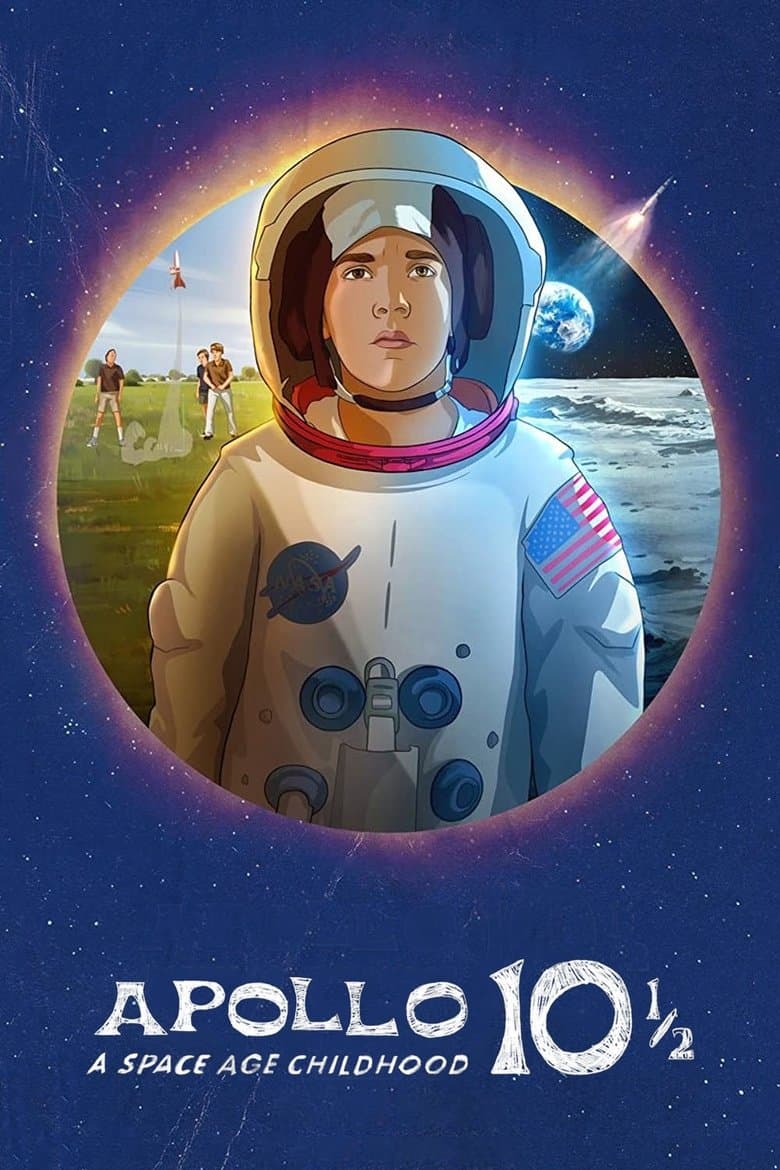
Stan is a 10-year-old boy living near NASA in Houston in 1969. His dad works a plain office job at the space center, and the whole town is crazy about the race to the moon. Adult Stan looks back on that summer and tells two stories at once: everyday kid life with a big family, and a wild daydream that NASA secretly picked him to fly a tiny moon ship. The tone is warm, funny, and full of old TV, games, and free-range childhood fun.
The movie is mostly nostalgia and memory, not a modern politics lecture. A normal viewer will notice short notes about the hard side of the 1960s: the Vietnam War on TV, civil rights news, nuclear drills, and that NASA and Stan’s suburb were almost all white. The adult narrator also mentions people who said moon money should have gone to problems on Earth, and that his middle-class life felt cut off from bigger trouble. Those bits sit in the background. The main focus stays on family, school, pop culture, and the thrill of Apollo 11. There is no strong girl-boss plot, race or gender swap of famous heroes, queer storyline, or constant activist messaging.
Community feedback
Was our 26% Woke rating accurate?
Breakdown
These are the editorial factors and ratings behind our score for Apollo 10½: A Space Age Childhood.
Woke representation / casting
Lead and family roles match a 1960s white Houston suburb and NASA office world. Casting does not push modern diversity quotas or identity-first “brilliant minority leader” patterns in big roles. Mentions of few black people at NASA and school describe the time period; they are not used to rewrite the cast into present-day representation.
0%
Woke political dialogue
Adult narration and TV clips briefly cover Vietnam, civil rights, nuclear drills, space spending fights, and NASA being almost all white. A viewer can hear mild privilege and social-problem notes. These lines are short and set dressing for childhood memory, not long activist speeches or modern identity slogans.
24%
Identity-driven story themes
Core story is kid life, family, memory, and moon fever. Side themes note that Stan’s safe white suburb was not the whole country and that some people saw the space program as unfair spending. That awareness is light. Identity is not the engine of the plot, romance, or character arcs.
18%
Western institutional / cultural critique
The film shows rough school paddling, unsafe free-range play, war on TV, and questions about money for the moon versus poverty at home. Some reviews call this a soft “check privilege” beat. Still, NASA and the moon landing are treated with pride and wonder, not as a long attack on America, men, faith, or Western life as systems of pure harm.
26%
Woke character or canon changes
Not relevant. This is an original semi-personal story with a kid fantasy moon mission. It does not race-swap or gender-swap real Apollo heroes or rewrite famous historical people for DEI reasons.
0%
Anti-woke backlash and complaints
Searches of news and social talk did not turn up serious right-leaning or anti-woke claims that the film pushes DEI, queer activism, or identity propaganda. Public heat was about animation awards eligibility, not politics.
0%
Creator track record context
Linklater, the main creative force, scores very low on activist filmmaking. A few producers have moderate social-issue or diversity-hiring histories (Cobb, Wolting, Blizzard, Felix), but many others are craft-focused near zero. For this title, creator context supports mild progressive-adjacent production links, not a hard activist brand.
18%
Production
Movie · 2017
A young man arrives at the last hometown of painter Vincent van Gogh to deliver the troubled artist's final letter and ends up investigating his final days there.

Movie · 2023
After it's discovered that a teacher at South Park Elementary has an OnlyFans page, Randy is compelled to take a closer look at the seedy underbelly of the world of online…
Movie · 2024
Popular, outgoing Fujino is celebrated by her classmates for her funny comics in the class newspaper. One day, her teacher asks her to share the space with Kyomoto, a truant…
Movie · 2019
When a hulking monster arrives on Earth and begins a mindless rampage, the Justice League is quickly called in to stop it.
Movie · 2023
While the Second World War rages, the teenage Mahito, haunted by his mother's tragic death, is relocated from Tokyo to the serene rural home of his new stepmother Natsuko, a woman…
Movie · 2019
Batman, Batgirl, and Robin forge an alliance with the Teenage Mutant Ninja Turtles to fight against the Turtles' sworn enemy, The Shredder, who has apparently teamed up with Ra's…
Movie · 2019
The summer of his high school freshman year, Hodaka runs away from his remote island home to Tokyo, and quickly finds himself pushed to his financial and personal limits.
Movie · 2024
A colossal-sized omnibus film bringing together the last two episodes of Attack on Titan in the franchise's first-ever theatrical experience.
