Movie review
July 19, 2019 · 112 min · PG-13 · Japanese · Fantasy · Animation · Romance · Drama
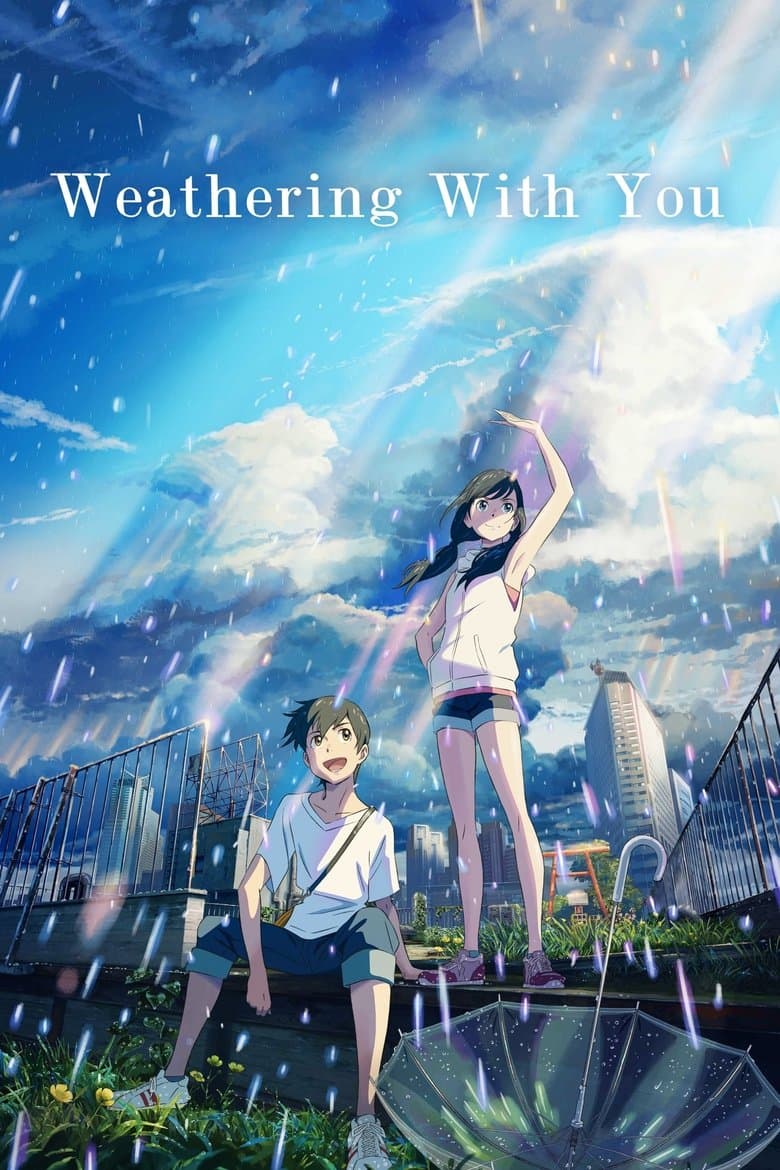
Weathering with You follows Hodaka Morishima, a high school boy who leaves his remote island and runs away to rainy Tokyo. He struggles to find money before a writer gives him a small job at an occult magazine. Hodaka meets Hina Amano, a girl who can pray for sunshine, and the two start a small weather service to help people. The gentle romance becomes a tense fantasy story when Hina learns that her power may require her to disappear.
The film makes extreme weather, rising water, and the price of saving a city part of its main conflict. Hina is treated as a weather maiden whose young life must serve the public, but the story rejects that sacrifice and lets Hodaka choose her life. The ending favors personal love over the safety of Tokyo, which can feel like a mild challenge to duty and group responsibility. The story ties this choice to climate fear, childhood hardship, and the wish to live freely.
Community feedback
Was our 16% Woke rating accurate?
Breakdown
These are the editorial factors and ratings behind our score for Weathering with You.
Woke representation / casting
Not present. The film shows Japanese characters in modern Tokyo and does not use a diversity-first cast. Hina’s strong role comes from the fantasy plot, not an identity message.
0%
Woke political dialogue
Not present. The dialogue discusses strange weather, sacrifice, and whether humans can control nature. It does not deliver modern identity, DEI, or activist lines.
0%
Identity-driven story themes
The film makes Hina’s role as a young weather maiden the center of the main conflict. The story says that her life may be used as a sacrifice so the city can return to normal. Hodaka rejects that demand and chooses Hina even when Tokyo floods. This creates a noticeable message about personal choice, the burden placed on the young, and resistance to forced sacrifice, but it stays inside a fantasy romance and climate story.
28%
Western institutional / cultural critique
Not present. The police, social services, and adult rules pressure the teens, but those conflicts serve the runaway plot. The film does not turn them into a modern attack on patriarchy, capitalism, Christianity, or Western institutions.
0%
Woke character or canon changes
Not relevant. The film is an original story, and its brief Your Name cameos do not change the race, gender, sexuality, or hero role of an established character.
0%
Anti-woke backlash and complaints
Not present. Public complaints focus on the selfish ending, flooding, and the film’s mixed climate message. The reviewed complaints do not frame the movie as pushing DEI, identity politics, or woke activism.
0%
Creator track record context
Makoto Shinkai has a modest pattern of weather, disasters, youth pressure, and climate anxiety, but the stored context gives him 14/100 and finds no activist or DEI persona. The listed producers have stored scores from 3/100 to 11/100 and are mainly commercial Japanese studio figures. Shinkai said climate change inspired this film, but he also said he removed obvious climate language and did not want a political message. This supports a low creator track record context score of 10/100.
10%
Production
Movie · 2016
Lucinda Price is sent to a reform academy under the assumption that she has killed a boy. There, she meets two mysterious boys, Cam and Daniel, to whom she feels drawn to both.

Movie · 2017
A young man arrives at the last hometown of painter Vincent van Gogh to deliver the troubled artist's final letter and ends up investigating his final days there.
Movie · 2024
Popular, outgoing Fujino is celebrated by her classmates for her funny comics in the class newspaper. One day, her teacher asks her to share the space with Kyomoto, a truant…

Movie · 2025
Based on a true story, two down-on-their-luck musicians form a joyous Neil Diamond tribute band, proving it's never too late to find love and follow your dreams.

Movie · 2020
Tanjiro Kamado, joined with Inosuke Hashibira, a boy raised by boars who wears a boar's head, and Zenitsu Agatsuma, a scared boy who reveals his true power when he sleeps, boards…

Movie · 2020
Young musician Zach Sobiech discovers his cancer has spread, leaving him just a few months to live. With limited time, he follows his dream and makes an album, unaware that it…

Movie · 2022
Known as America’s Poet, Henry Wadsworth Longfellow leads an idyllic life – until the day his world is shattered by tragedy.

Movie · 2022
The vicious, power-mad Kano is determined to take over Earthrealm, one soul at a time. Assisted by a trio of cold Black Dragon mercenaries, he embarks on a brutal assault from…
