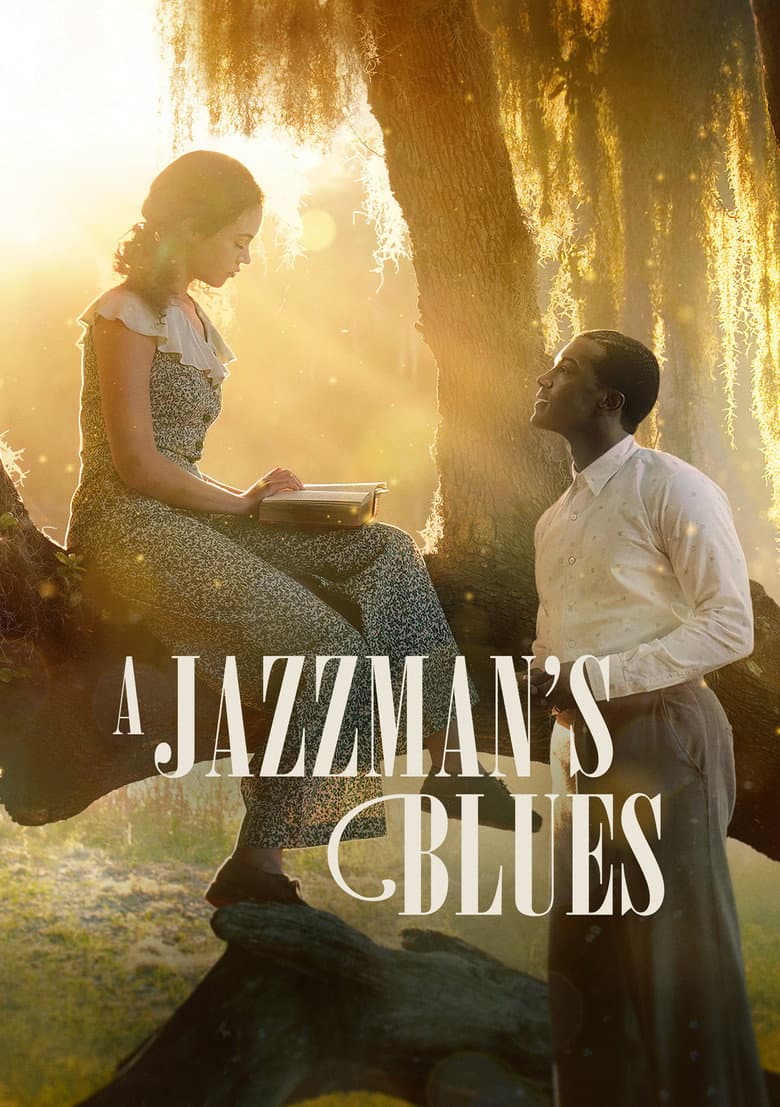
A Jazzman’s Blues follows Bayou, a shy black singer from rural Georgia whose voice takes him from his mother’s juke joint to a Chicago club. He loves Leanne, a light-skinned black woman who is forced to live as white and marry a white man. Their secret relationship is blocked by family abuse, addiction, lies, and the violent rules of the segregated South. The story moves between the late 1930s, the 1940s, and 1987, and the mood is romantic, tragic, and heavy.
Race and skin color drive nearly every major turn in the story. Leanne hides her black identity, Bayou faces segregation and racist violence, and a white mob kills him after a false charge. The film also shows male abuse and a political system that protects white power, but it presents these mainly as parts of its period setting. The movie has clear identity-driven themes and a short political scene about affirmative action, while its main focus remains a tragic love story, family damage, and music.
Community feedback
Was our 44% Woke rating accurate?
Breakdown
These are the editorial factors and ratings behind our score for A Jazzman's Blues.
Woke representation / casting
Not present. The main cast is black because the film follows a black family in the segregated South. The cast choices fit the story’s setting and are not shown as a diversity-first statement.
0%
Woke political dialogue
The opening TV interview has a candidate attack affirmative action and call it welfare. Hattie answers him by calling him a white man. The scene presents the candidate as racist and makes race and government policy part of the film’s frame. Later dialogue focuses on family, love, and survival instead of modern political debate.
27%
Identity-driven story themes
The film centers on race, skin-color bias, and passing. Leanne hides her black identity to survive in a white world, while Bayou faces segregation, threats, and a lynch mob. The story also links male control and family abuse to Leanne’s lack of freedom. The film treats these events as period drama rather than a broad modern campaign, but identity conflict drives the romance and the mystery.
44%
Western institutional / cultural critique
The film shows a white political family, sheriff, mail system, businesses, and hospital limiting black characters. Abusive men control Leanne and attack Bayou’s family. The 1987 election scene adds a short modern echo through an anti-affirmative-action speech. Most criticism stays tied to the segregated setting instead of attacking Western culture, capitalism, or Christianity as a whole.
32%
Woke character or canon changes
Not relevant. The film is an original Tyler Perry story, not a remake or adaptation with established characters. The film does not change a known character or real historical figure’s identity.
0%
Anti-woke backlash and complaints
Not present. The provided X pass found no anti-woke reaction, and reviewed news and audience posts did not show a clear anti-woke campaign. Public comments mostly discussed the film’s melodrama, skin-color bias, historical racism, violence, and plot quality.
0%
Creator track record context
Tyler Perry has backed Democratic candidates and has spoken publicly about racism, black history, voting, and book bans. His work also often stresses faith, family, and personal choices, so his record is mixed rather than fully activist. Casting director Kim Taylor-Coleman has supported diverse casting and stories about race and social life. This context supports a moderate score because it matches the film’s focus on black history and identity.
50%
Production

Movie · 2018
Over the course of 12 years, and three stages of life, Sidney Hall falls in love, writes the book of a generation and then disappears without a trace.

Movie · 2018
A man and a woman meet in the ruins of post-war Poland. With vastly different backgrounds and temperaments, they are fatally mismatched and yet drawn to each other.

Movie · 2026
Through unlikely bonds formed during night shifts at a local aquarium, Tova, an elderly widow, learns of a life-changing discovery that may bring her joy and wonder once again.

Movie · 2025
Laura and Simon have been best friends since college. Over the years, they've realized their bond is more than platonic.
Movie · 2023
Set in 1889 France, Dodin Bouffant is a chef living with his personal cook and lover Eugénie. They share a long history of gastronomy and love but Eugénie refuses to marry Dodin…
Movie · 2021
A truffle hunter who lives alone in the Oregon wilderness must visit Portland to find the mysterious person who stole his beloved foraging pig.
Movie · 2018
German artist Kurt Barnert has escaped East Germany and now lives in West Germany, but is tormented by his childhood under the Nazis and the GDR regime.

Movie · 2018
After David Kim's 16-year-old daughter goes missing, a local investigation is opened and a detective is assigned to the case.
