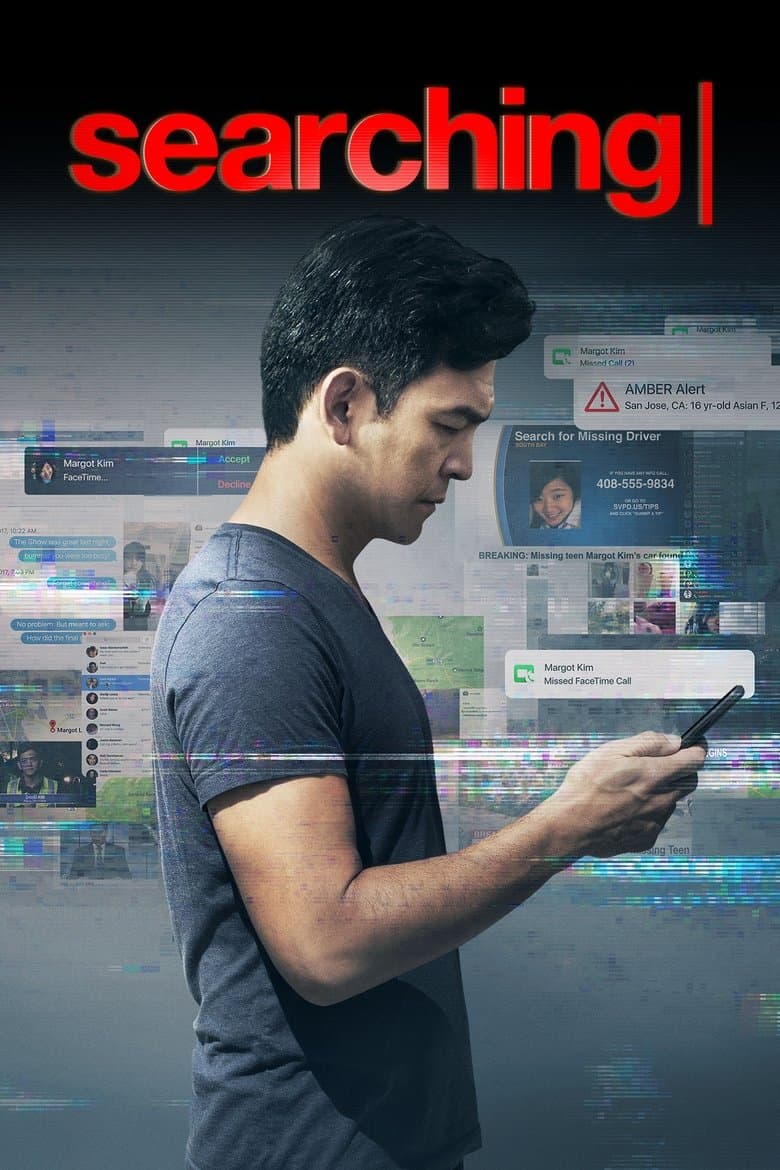
David Kim is a widowed father living in San Jose with his 16-year-old daughter, Margot. After Margot disappears, David searches her laptop and online accounts because the police have no useful lead. The whole mystery unfolds through the screens and devices that connect the family to the outside world. The tone is tense and sad, but it also has warmth as the search forces David to face how far he has drifted from his daughter.
The film's main audience-visible identity signal is its Korean-American father and daughter at the center of a mainstream thriller. Their family life shows food, shared memories, grief, and normal American routines, so the identity feels tied to the setting instead of being a slogan. A woman detective has a major part in the case, but the story presents her as a police worker rather than an empowerment symbol. The film instead spends most of its time on grief, trust, parenting, and the danger of hidden online lives.
Community feedback
Was our 7% Woke rating accurate?
Breakdown
These are the editorial factors and ratings behind our score for Searching.
Woke representation / casting
Searching places a Korean-American father and daughter at the center of a mainstream thriller. John Cho’s lead role and the full family cast became a clear public representation point. The family fits the San Jose setting. The story does not present race as a problem to solve. The casting signal stays light because the characters are written as ordinary people, not as spokespeople.
10%
Woke political dialogue
Not present. No political speeches, activist lines, or ideological arguments appear; all conversations stay personal and plot-driven.
0%
Identity-driven story themes
Searching makes a Korean-American family the emotional center of a mainstream thriller. The film treats that identity as normal instead of making the family defend or explain it. Chaganty called this approach the film’s most progressive part, so it carries a small identity-driven message even though the plot stays about grief and a missing child.
5%
Western institutional / cultural critique
Not present. The film avoids modern activist framings such as toxic masculinity, patriarchy, or systemic critiques; it presents family and technology issues in straightforward personal terms.
0%
Woke character or canon changes
Not present in this title.
0%
Anti-woke backlash and complaints
Not present. No right-leaning or anti-woke complaints exist in coverage or social media; the film drew no accusations of DEI or identity politics.
0%
Creator track record context
The cached creator notes give Aneesh Chaganty a 6/100 and Sev Ohanian an 11/100. The producers and listed crew are all scored between 5 and 6/100. Their records show no repeated activist or identity-driven work. Title interviews focus on family emotion, technology, and story design, while representation comments stay tied to the cast rather than a wider political campaign.
7%
Production
Movie · 2023
When her mother disappears while on vacation in Colombia with her new boyfriend, June’s search for answers is hindered by international red tape.
Movie · 2017
Barcelona, Spain. Adrián Doria, a young and successful businessman accused of murder, meets one night with Virginia Goodman, an expert interrogation lawyer, in order to devise a…

Movie · 2017
Verena is a nurse who arrives at an old mansion in Italy to help a young boy who has fallen silent since the sudden passing of his mother.

Movie · 2017
Susan, a single mother of two, works as a waitress in a small town. Her son, Henry, is an 11-year-old genius who not only manages the family finances but acts as emotional support…

Movie · 2026
Through unlikely bonds formed during night shifts at a local aquarium, Tova, an elderly widow, learns of a life-changing discovery that may bring her joy and wonder once again.

Movie · 2017
Paul is a down-on-his-luck screenwriter who picks up a drifter and offers him a place to stay. However, when the deranged stranger takes Paul hostage and forces him to write…

Movie · 2020
A professional cellist has an encounter with a stranger on the subway which has unexpected and far-reaching ramifications on his life.
Movie · 2019
Professor James Murray begins work compiling words for the first edition of the Oxford English Dictionary in the mid 19th century, and receives over 10,000 entries from a patient…
