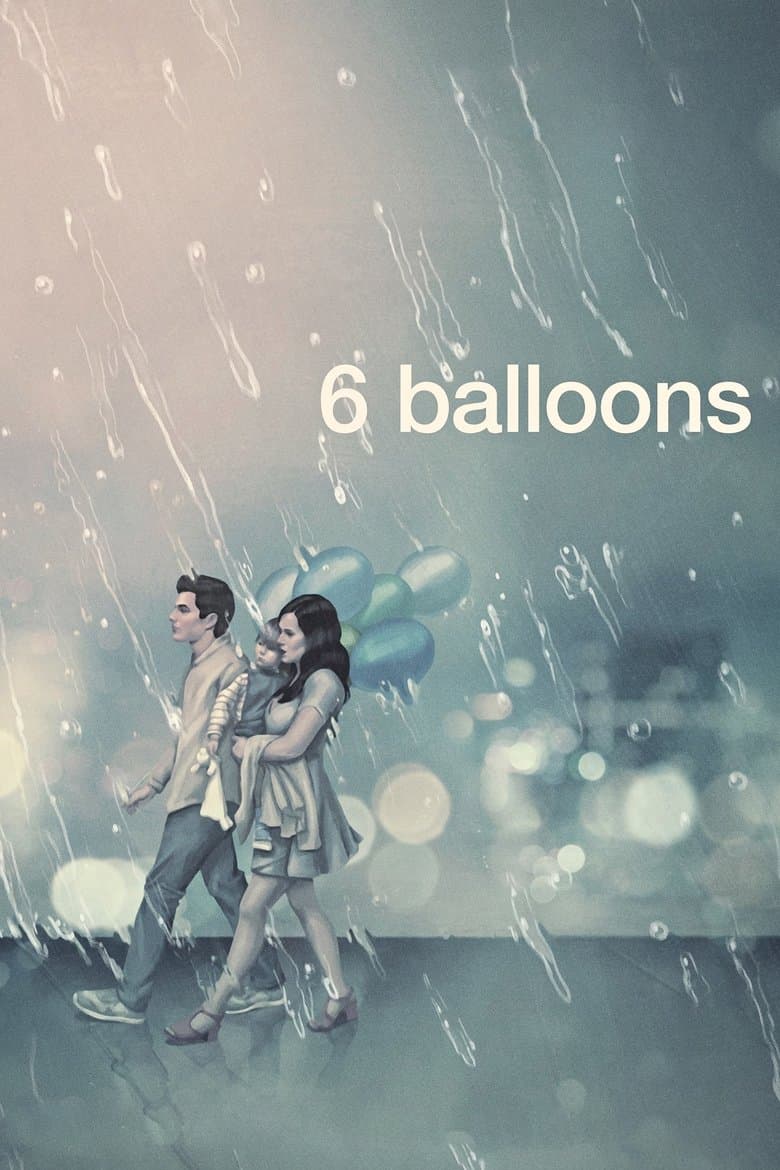
6 Balloons follows Katie, a careful Los Angeles woman who is preparing a surprise birthday party for her boyfriend. She leaves the party work when she finds her brother Seth in heroin withdrawal with his young daughter, Ella. Katie drives across the city to find a detox center, but each failed stop pulls her deeper into Seth’s crisis. The film has a tense and sad tone, with dark jokes and strange images of water rising around the car.
The story focuses on addiction, family love, and the danger of helping someone so much that the help keeps the problem going. Katie buys heroin for Seth when no detox center will take him, and she lets him use it in a pharmacy bathroom while Ella is nearby. The story follows Katie’s guilt and her growing need to set a boundary, while Seth keeps breaking promises and using again. Katie’s final choice gives her a painful form of relief, but it leaves Seth and Ella in an uncertain place.
Community feedback
Was our 28% Woke rating accurate?
Breakdown
These are the editorial factors and ratings behind our score for 6 Balloons.
Woke representation / casting
Not present. The film shows a mixed group of family and friends in modern Los Angeles, including Katie’s Black boyfriend Jack. The story does not frame these choices as a diversity statement or build a representation-first group.
0%
Woke political dialogue
Not present. The spoken conflict is about heroin, detox, money, family pressure, and codependence. The film has no clear identity, DEI, or activist political lines.
0%
Identity-driven story themes
Katie is a woman whom her family expects to manage her brother’s crisis. The ending asks Katie to stop sacrificing her own life to keep Seth stable. The message is a mild gender-role theme, but the story keeps it tied to addiction and a pattern where Katie keeps rescuing Seth.
16%
Western institutional / cultural critique
The detox center turns Seth away because it does not take his insurance and asks for $5,000 in cash. The pharmacist treats the family with suspicion when Seth needs to use the bathroom. These scenes show a harsh care system, but the film does not turn that problem into a broad attack on capitalism, religion, or Western institutions.
12%
Woke character or canon changes
Not relevant. The film is an original drama based on a producer’s real experience. It does not change a known character, canon, or historical figure.
0%
Anti-woke backlash and complaints
Not present. The separate X research found no anti-woke posts or specific complaints. Reviews and public discussion focus on addiction, family choices, acting, and tone instead.
0%
Creator track record context
Ryan is the writer-director and has a strong public history of queer and DEI-focused work. Ryan has spoken about a queer woman’s point of view, women in film crews, and the #TimesUp push for equality. Ryan’s title interviews focus on addiction, empathy, and the gendered burden placed on the sister rather than on identity politics. The other listed producers mostly have mainstream or low-activism profiles, so this context comes mainly from Ryan.
85%
Production

Movie · 2024
On the brink of the Second World War, a young Norwegian man's drive to resist the Nazis sets a new course for his future – and the future of his country.
Movie · 2016
WWII American Army Medic Desmond T. Doss, who served during the Battle of Okinawa, refuses to kill people and becomes the first Conscientious Objector in American history to…
Movie · 2019
Richard Jewell thinks quick, works fast, and saves hundreds, perhaps thousands, of lives after a domestic terrorist plants several pipe bombs and they explode during a concert…
Movie · 2017
Members of the Granite Mountain Hotshots battle deadly wildfires to save an Arizona town.
Movie · 2025
A logger leads a life of quiet grace as he experiences love and loss during an era of monumental change in early 20th-century America.
Movie · 2026
While people across 1990s Iraq struggle to survive the war and food shortages, Saddam Hussein requires each school in the country to prepare a cake to celebrate his birthday.
Movie · 2022
Based on a true tragedy, the emotionally triggering film sheds light on the plight of Kashmiri Pandits (Hindus), a religious minority in the 1990s Kashmir valley, who were…
Movie · 2023
The true story of the inseparable Von Erich brothers, who made history in the intensely competitive world of professional wrestling in the early 1980s.
