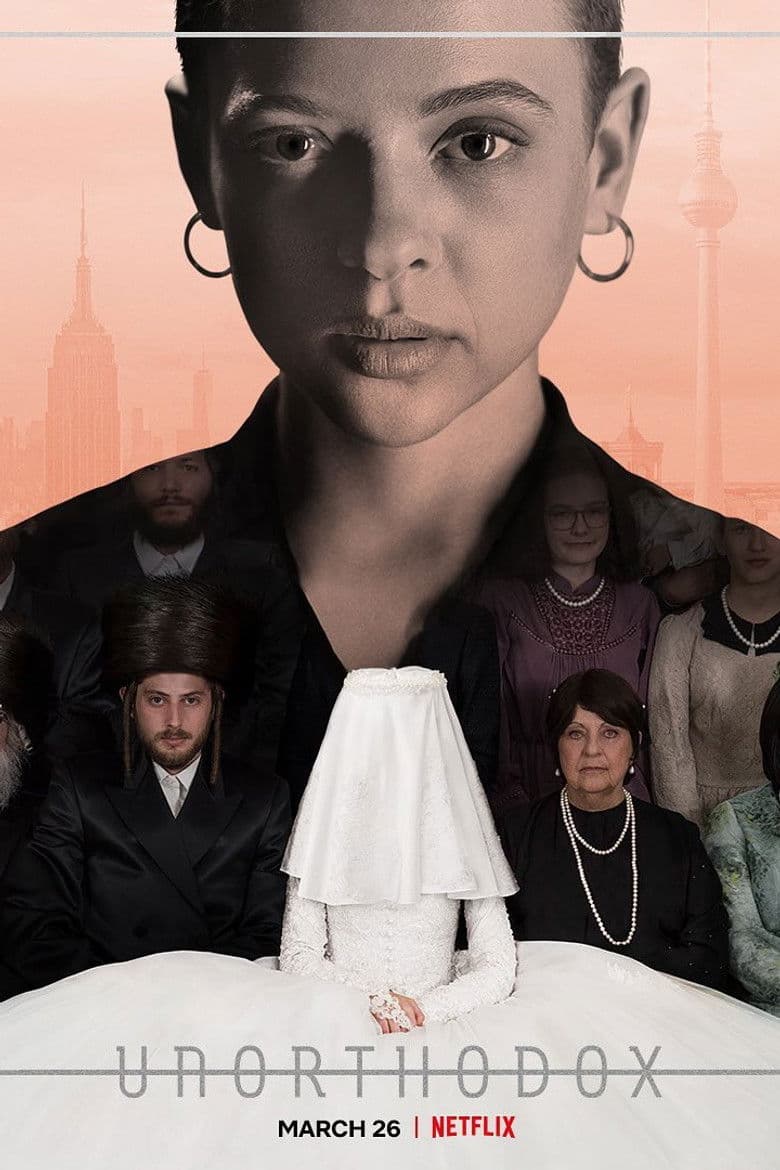
Started March 26, 2020 · Ended · Based on 1 season, 4 episodes through March 26, 2020 · TV-MA · German
Esty Shapiro is a nineteen-year-old woman living in a strict Hasidic Jewish community in Brooklyn. After an arranged marriage brings painful sex, pressure to have a baby, and little room for her own wishes, Esty secretly leaves for Berlin. She hopes to find her estranged mother and enter a music school, but her husband and cousin follow her and try to bring her back. The four-part drama moves between her unhappy marriage and her uncertain new life, with a serious and emotional tone.
Esty's escape is the show's main message about a woman's right to choose her body, education, faith, and home. The Brooklyn world ties female worth to marriage and children, while Berlin gives Esty friends, music, new clothes, and a chance to sing in public. Esty's mother has also left the community, and a gay friend and a same-sex couple add smaller identity stories. The show presents personal freedom as more important than staying inside rules that silence women, even though it also shows love, grief, and family ties within the old world.
Community feedback
Was our 79% Woke rating accurate?
Breakdown
These are the editorial factors and ratings behind our score for Unorthodox.
Woke representation / casting
The Berlin music group is openly built as an international mix. The show names students from Yemen, Israel, Nigeria, Poland, and Germany, and one student is gay. The casting team said it wanted diversity and a picture of young people living freely despite their origins and sexual attitudes. The Williamsburg cast is mostly Jewish because those characters belong to the Satmar community, so the score stays below the top range.
48%
Woke political dialogue
Esty says her old community treats women as baby machines and does not let women sing in public. Leah says she thanks God for her freedom and says Brooklyn caused damage in God's name. Other characters discuss arranged marriage, pregnancy, women's pleasure, and rules that control sex. These ideas appear in several episodes, but the show does not stop for long modern political speeches.
42%
Identity-driven story themes
Esty's main arc is about leaving an arranged marriage and a community that measures a wife's worth by sex and children. The story treats control of her body, education, music, clothing, and home as major parts of her struggle. Berlin gives her a chance to study, make friends, sing, and choose her future. Esty's mother has also left, and the show adds a gay friend and a same-sex couple as smaller identity threads. The story clearly favors personal freedom over the old community's strict gender rules.
71%
Western institutional / cultural critique
The show presents Satmar leaders and family elders as enforcing a system that gives women little choice. The community treats a new wife's pregnancy as a public duty and uses shame when Esty cannot have sex. Esty's husband and cousin try to bring her back instead of accepting her choice, and Berlin is shown as a more open alternative. The story also gives some warmth to family and tradition, so it is a focused critique of one strict religious world.
58%
Woke character or canon changes
Not relevant. The show adapts a memoir and invents parts of Esty's Berlin story, but it does not swap the race, gender, sexuality, or hero role of an established character or historical figure.
0%
Anti-woke backlash and complaints
Some Orthodox and conservative writers said the show treats traditional Jewish life as dark and Berlin as a better, freer world. One Jewish Journal opinion said the show mocks traditional values, while The American Interest described complaints that it turns Hasidic life into a feminist escape story and a harmful sexual stereotype. The supplied X reaction was limited to small accounts, with no boycott, review-bomb, or major right-wing push. The wider response was mostly praise and debate about accuracy.
31%
Creator track record context
Deborah Feldman's work centers on escaping religious patriarchy and strict gender roles. Maria Schrader often directs stories about women's autonomy and power over women. Anna Winger speaks about diversity in writers' rooms and female leadership, and Alexa Karolinski often works with Jewish identity and minority representation. The producers and casting directors have little public activist profile, so the context is strong but not uniform.
60%
Production

TV Show · 2023
The story of Bass Reeves, the legendary lawman of the wild West, is brought to life. Reeves worked in the post-Reconstruction era as a federal peace officer in the Indian…

TV Show · 2019
The true story of one of the worst man-made catastrophes in history: the catastrophic nuclear accident at Chernobyl.

TV Show · 2024
Fascinated by cars since childhood, Brazilian racer Ayrton Senna became a sports legend — until tragedy struck, changing Formula 1 forever.
TV Show · 2024
The powerful real-life story of Lali Sokolov, a Jewish prisoner who was tasked with tattooing ID numbers on prisoners' arms in the Auschwitz-Birkenau concentration camp during…
TV Show · 2024
The true story of one Jewish family separated at the start of World War II, determined to survive—and to reunite.
TV Show · 2019
In the 1960s, Israeli clerk-turned-secret agent Eli Cohen goes deep undercover inside Syria on a perilous, years-long mission to spy for Mossad.

TV Show · 2020
A wary CIA officer investigates a charismatic man who sparks a spiritual movement and stirs political unrest. Who exactly is he? And what does he want?
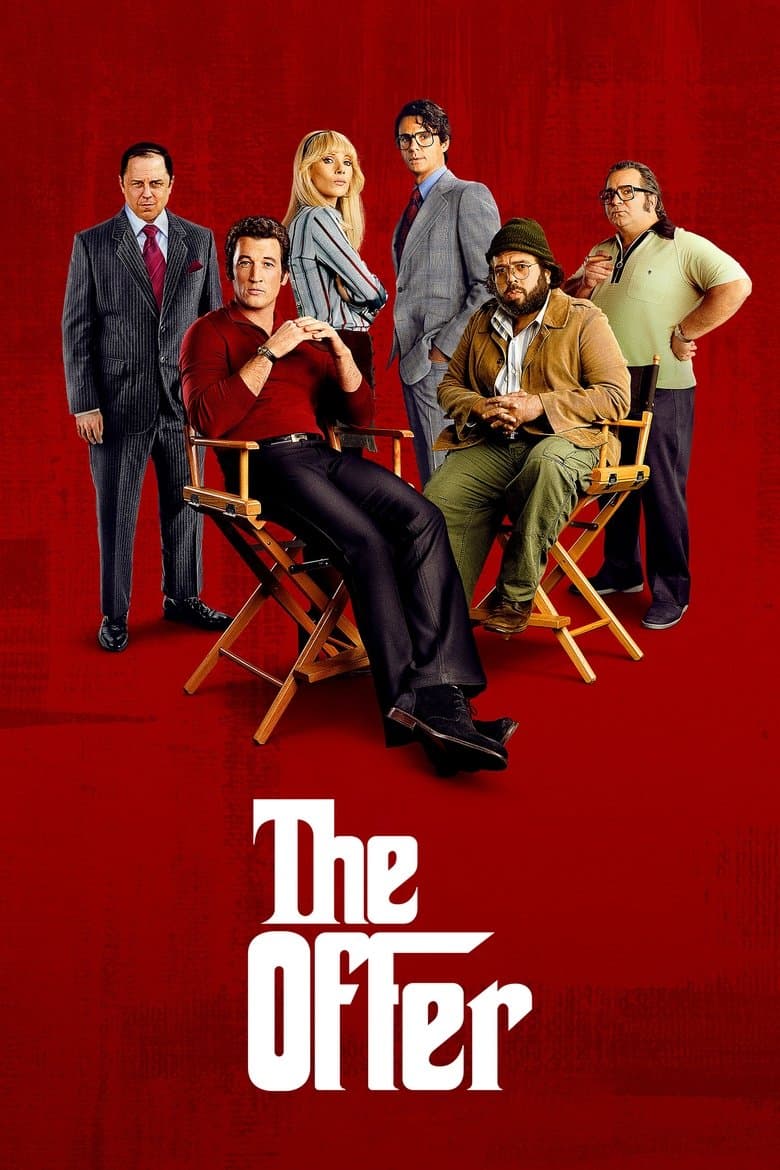
TV Show · 2022
Oscar-winning producer Al Ruddy’s never before revealed experiences of making the iconic 1972 film The Godfather that Francis Ford Coppola directed and adapted with Mario Puzo.
