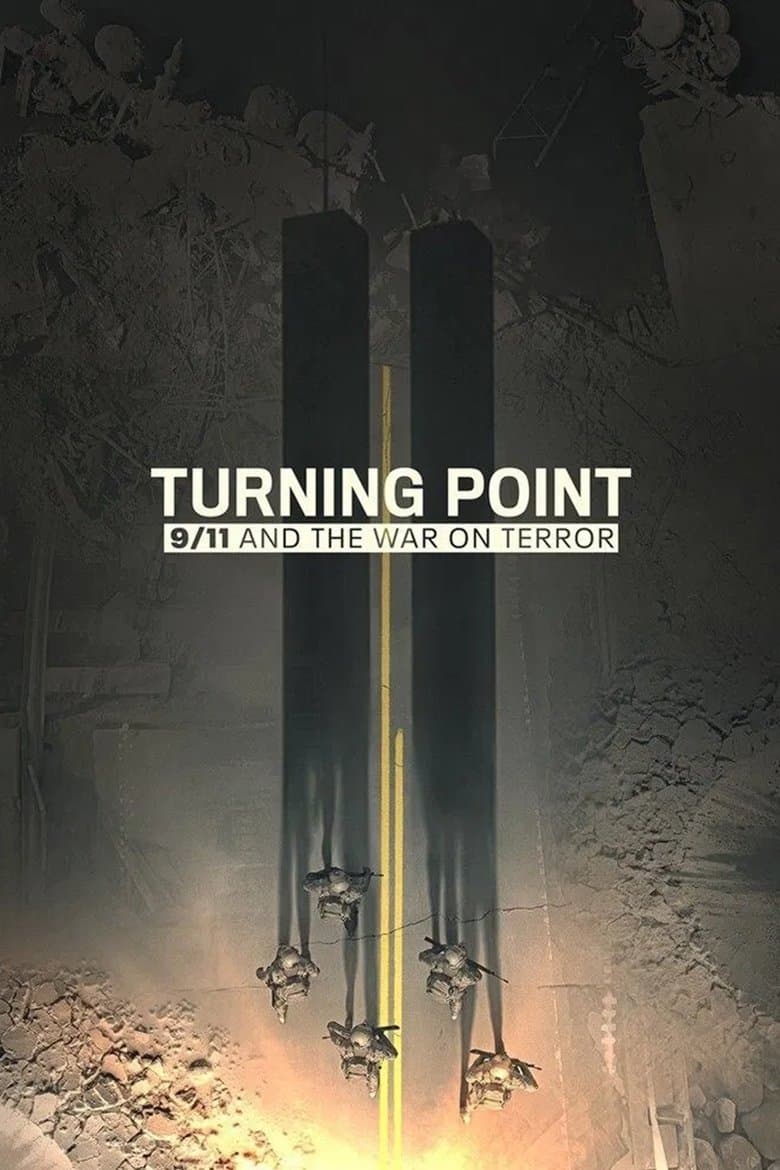
Started September 1, 2021 · Ended · Based on 1 season, 5 episodes through September 1, 2021 · TV-14 · 60 min
Turning Point: 9/11 and the War on Terror follows survivors, first responders, soldiers, officials, and Afghan civilians rather than one main character. The five-part documentary moves from the Soviet invasion of Afghanistan in 1979 to the attacks on New York and Washington and the U.S. war that followed. Its main conflict is the struggle to understand how al-Qaeda grew, why warnings were missed, and why the war lasted so long. The tone is grim, detailed, and often angry as real recordings and personal memories show the human cost.
The show repeatedly questions U.S. leaders and agencies over the Patriot Act, secret surveillance, torture, the Iraq invasion, and the failed Afghan campaign. It also discusses anti-Muslim discrimination in America and the harm caused by treating a whole faith or population as a threat. The final episode gives positive attention to Afghan girls' education and women working as leaders, while also showing the return of Taliban rule. These identity and rights themes are visible, but they support the wider story about war, government power, and its results instead of replacing it.
Community feedback
Was our 39% Woke rating accurate?
Breakdown
These are the editorial factors and ratings behind our score for Turning Point: 9/11 and the War on Terror.
Woke representation / casting
Not present. The show uses real interview subjects tied to the events, including survivors, officials, veterans, Afghan civilians, and Taliban figures. It does not present the mix as a diversity campaign.
0%
Woke political dialogue
The series repeatedly questions the Patriot Act, secret surveillance, torture, the Iraq invasion, and the long Afghanistan war. The interviews also discuss anti-Muslim discrimination and the danger of acting from revenge. These points are political and often critical of U.S. leaders, but the show mainly presents them as history and policy failures rather than a modern identity campaign.
34%
Identity-driven story themes
The series shows how Muslims in America faced racial suspicion after 9/11. The final episode gives positive attention to Afghan girls' schooling and women working as leaders. These themes are visible, but the main story remains the attacks, U.S. policy, and the war's results.
28%
Western institutional / cultural critique
The show repeatedly criticizes U.S. intelligence failures, secret surveillance, torture, and the long wars in Iraq and Afghanistan. It also points to anti-Muslim discrimination and the harm done by fear-based policy. This is a clear critique of government and security institutions, but it is mostly a historical anti-war argument rather than a broad attack on Western culture.
30%
Woke character or canon changes
Not relevant. The series presents real historical events and real people. It does not rewrite fictional characters, source material, or historical figures to make an identity point.
0%
Anti-woke backlash and complaints
One Criticker review called the series “feminist woke” because minority women were shown as voices of reason. Another IMDb review questioned its positive focus on Afghan women's education and women leaders. The comments are isolated, and no X campaign, boycott, or review-bombing was found, so the backlash score stays low.
15%
Creator track record context
Brian Knappenberger has a record of work about internet activists, digital freedom, and political dissent. Mohammed Naqvi has focused on human rights, social justice, and Muslim and South Asian identity. Lowell Bergman and Eve Marson add antiwar, civil-rights, labor, or social-action work. This supports a moderate score, but the series is mainly a history documentary.
35%
Production

TV Show · 2022
When a 20-year-old attempts to win a fighter jet in a Pepsi sweepstakes, he sets the stage for a David versus Goliath court battle for the history books.

TV Show · 2019
These blockbusters brought us together and gave us the time of our lives. Meet the actors, directors and industry insiders who made them happen.
TV Show · 2017
A four-part documentary series that tells the stories of Jimmy Iovine and Dr. Dre -- one the son of a Brooklyn longshoreman, the other straight out of Compton - -- and their…
TV Show · 2023
This intimate docuseries follows Arnold Schwarzenegger's multifaceted life and career, from bodybuilding champ to Hollywood icon to politician.
TV Show · 2017
An immersive 360-degree narrative telling the epic story of the Vietnam War as it has never before been told on film.

TV Show · 2020
Engineers, officials and the crew members' families provide their perspective on the 1986 Space Shuttle Challenger disaster and its aftermath.
TV Show · 2020
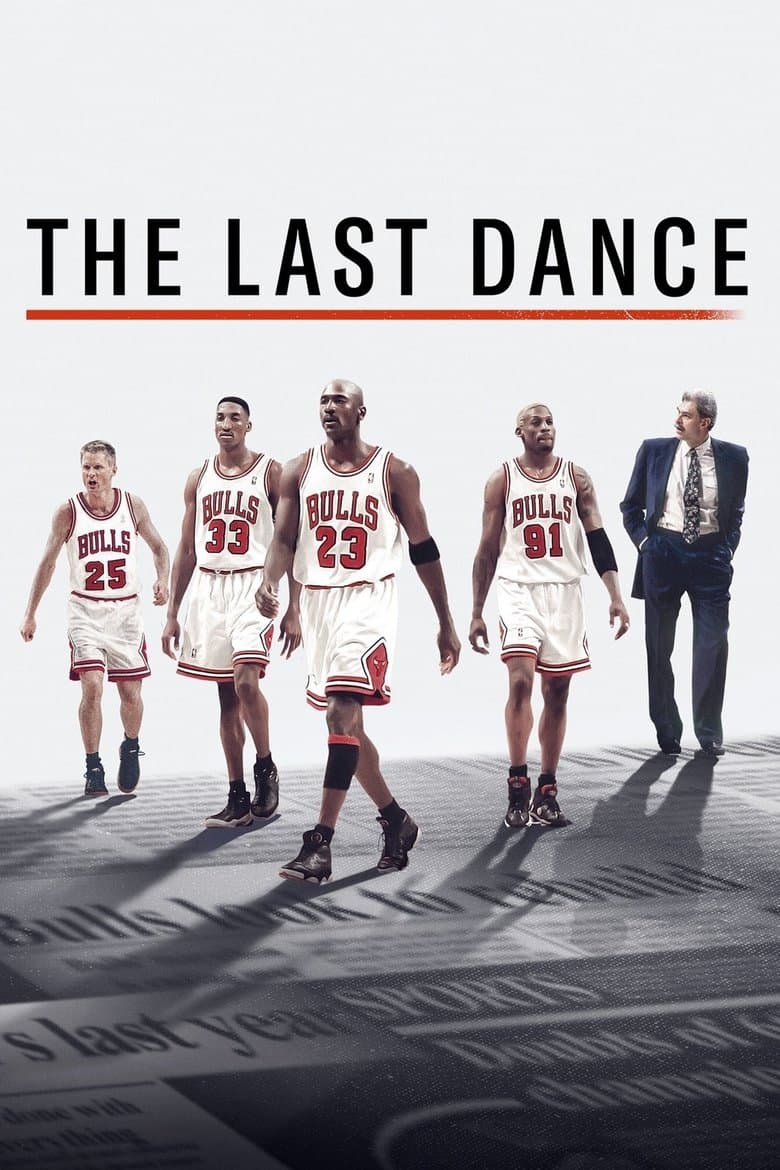
A 10-part documentary chronicling the untold story of Michael Jordan and the Chicago Bulls dynasty with rare, never-before-seen footage and sound from the 1997-98 championship…

TV Show · 2020
A fly-on-the-wall inside look at the goings-on of Tottenham Hotspur during the 2019-20 football season.
