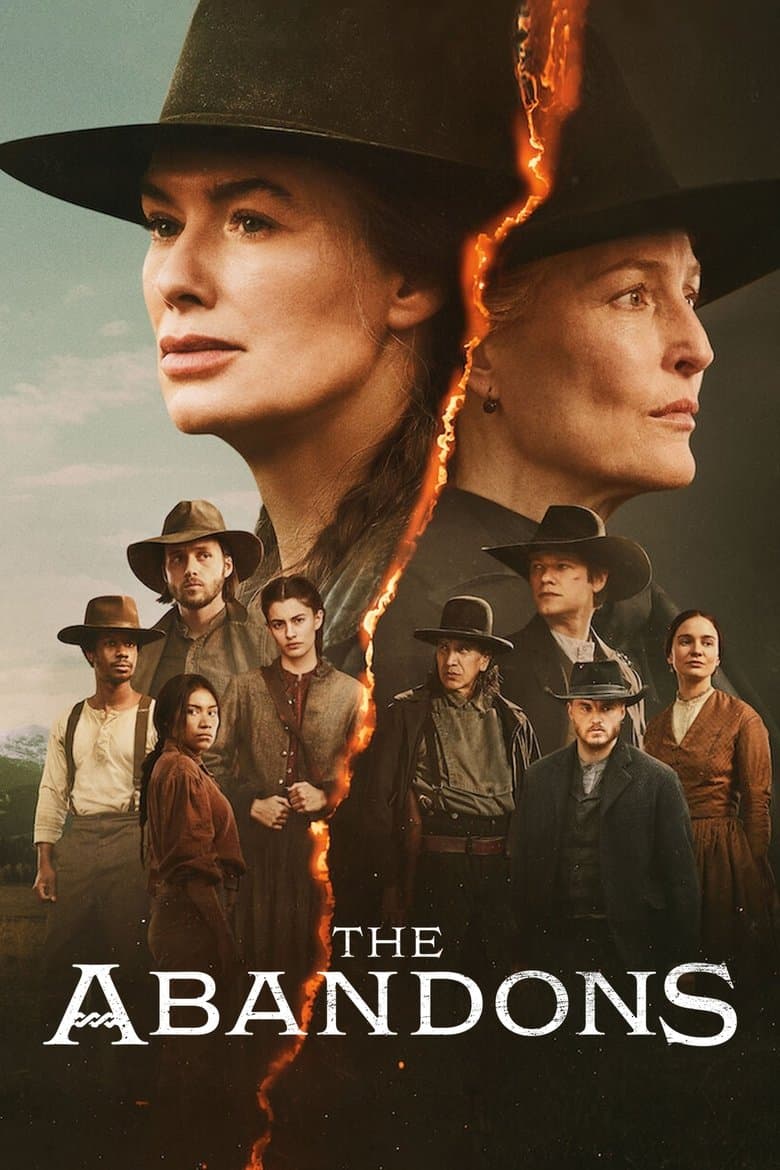
Started December 4, 2025 · Canceled · Based on 1 season, 7 episodes through December 4, 2025 · TV-MA
Fiona Nolan leads a found family of four abandoned children on a cattle ranch in Washington Territory in 1854. She faces Constance Van Ness, a wealthy widow who wants the silver under the ranch and uses money, hired killers, and town power to force a sale. The feud grows after Constance's son Willem sexually assaults Fiona's adopted daughter Dahlia, and the family kills him to protect her. The seven episodes form a grim and violent western about land, family loyalty, faith, revenge, and the cost of hiding a crime.
The show makes its two women the main power holders in a genre usually led by men, and both women run their families, make plans, and fight directly. Fiona's adopted family includes a free black teacher, an Indigenous girl, and other outsiders, while the story gives them plots about race, belonging, and loyalty. Albert faces open hostility when he becomes the town teacher, and Lilla struggles over whether helping Fiona means leaving her own people behind. The show also presents rich mining power, land seizure, and the treatment of the Cayuse as part of its conflict, but these ideas remain tied to the period story instead of becoming constant modern political speeches.
Community feedback
Was our 49% Woke rating accurate?
Breakdown
These are the editorial factors and ratings behind our score for The Abandons.
Woke representation / casting
Fiona and Constance are the two central power holders, and both run land, money, and armed conflict in a genre usually built around men. Fiona's adopted family includes a free black man who becomes the town teacher and an Indigenous girl who fights beside her. The show also gives major roles to native characters from different groups and to a Caribbean woman. The frontier setting and found-family plot give some story reasons for the casting, but the repeated identity and gender focus is clear.
44%
Woke political dialogue
Characters repeatedly discuss race, tribal treaties, land power, and who gets to make the rules. Albert's school appointment leads to an open argument about race, and a local parent reacts with fear and anger. Lilla says she is torn between her people and the family that raised her. Constance plans to blame Cayuse rebels for her attack, so political dialogue recurs across the season but stays tied to the period story.
31%
Identity-driven story themes
The story keeps returning to found family, blood family, race, belonging, and the power of women. Fiona's family treats adopted children as equal kin, while Constance says a true mother is tied to blood and uses that belief to justify hurting Dahlia. Albert's fight to teach and Lilla's struggle between her own people and Fiona's family make identity part of the main plot. Murder, land, and family survival remain the larger engine.
47%
Western institutional / cultural critique
Constance controls the town through a mine, money, the mayor, the sheriff, and hired gangs. The show presents her demand for land as a threat from wealth and business growth, and it shows her using racist fear of the Cayuse to protect that power. Fiona's side also breaks the law, so the show attacks corrupt power more than it attacks every Western institution. The conflict is tied to a period land war, which keeps this factor moderate.
30%
Woke character or canon changes
Not relevant. The show is an original Western with fictional families and no earlier canon to rewrite. Its use of historical names does not change an established character or story.
0%
Anti-woke backlash and complaints
A few small X accounts called the show a “DEI western” and said episode one put a message ahead of the story. Other small accounts complained about a “bad white people” versus “good people of color” view and called the show propaganda. The posts had almost no engagement, and no large boycott, review-bomb push, or major right-leaning campaign was found. The backlash is fringe, so this factor stays low.
13%
Creator track record context
Kurt Sutter has spoken about liberal or centrist views and animal-rights activism, but he has said he avoids putting personal politics into his shows. Otto Bathurst, Stephen Surjik, and Emmy Grinwis have no reported activist or identity-focused record in the available background. The creator context is mild and does not point to a strong activist pattern.
24%
Production
TV Show · 2023
The story of Bass Reeves, the legendary lawman of the wild West, is brought to life. Reeves worked in the post-Reconstruction era as a federal peace officer in the Indian…
TV Show · 2024
The true story of one Jewish family separated at the start of World War II, determined to survive—and to reunite.
TV Show · 2020
A wary CIA officer investigates a charismatic man who sparks a spiritual movement and stirs political unrest. Who exactly is he? And what does he want?
TV Show · 2026
Rip Wheeler and Beth Dutton gamble everything on a new life in South Texas, but the promise of building a future far from the ghosts of Yellowstone quickly collides with brutal…
TV Show · 2021
Follow the Dutton family as they embark on a journey west through the Great Plains toward the last bastion of untamed America.
TV Show · 2022
This sweeping saga chronicles the hopes and dreams of a Korean immigrant family across four generations as they leave their homeland in an indomitable quest to survive and thrive.
TV Show · 2026
The Clyburns uproot their comfortable New York City lives to the wild, untamed beauty of Montana's Madison River Valley on a search for connection.
TV Show · 2019
In the 1960s, Israeli clerk-turned-secret agent Eli Cohen goes deep undercover inside Syria on a perilous, years-long mission to spy for Mossad.
