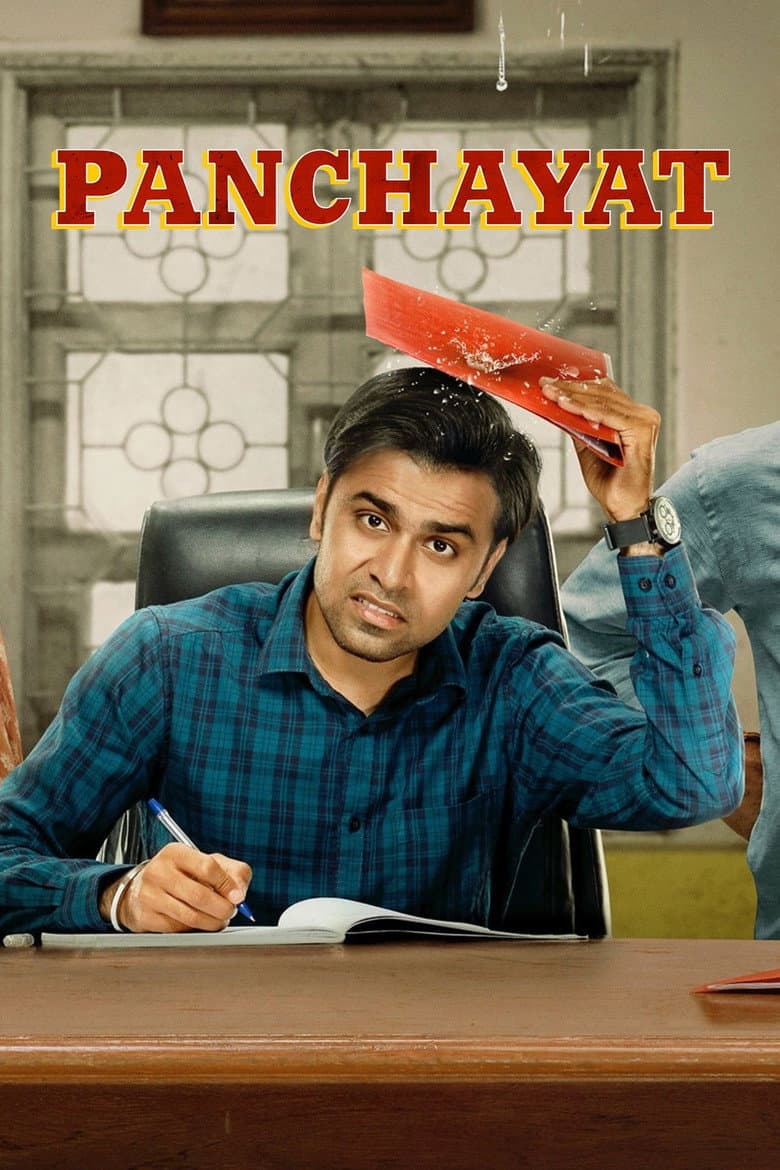
Started March 5, 2020 · Returning Series · Based on 4 seasons, 32 episodes through June 24, 2025 · TV-14 · 30 min · Hindi
Panchayat follows Abhishek Tripathi, an engineering graduate who takes a government job as secretary of a village council in Phulera, Uttar Pradesh. He plans to leave quickly and studies for the CAT entrance exam, but daily work and friendships slowly pull him into village life. The office is run by elected head Manju Devi’s husband, Brij Bhushan, while local rivals, officials, and politicians create fresh problems. The show begins as quiet, dry comedy about small jobs and village habits. It becomes more serious when village elections bring painful choices and new risks.
The clearest identity-driven material is the long-running story of women’s political power. Manju Devi first holds the office only in name because her husband speaks and acts for her, but she gradually challenges him and joins the election fight in Season 4. Kranti Devi follows a similar path and becomes her rival, while the story openly treats male control of elected women as a social problem. These ideas recur across the show, but they remain part of a local village story rather than its only subject.
Community feedback
Was our 41% Woke rating accurate?
Breakdown
These are the editorial factors and ratings behind our score for Panchayat.
Woke representation / casting
The main cast matches the North Indian village setting, and it is not built as an artificial mix of identities. Manju Devi and Kranti Devi receive prominent political roles as elected or would-be village heads. Their roles come from the local women’s seat system, so the casting adds only a small representation focus.
16%
Woke political dialogue
The show repeatedly jokes about Manju Devi being elected while her husband acts as head. The women’s election fight in Season 4 brings more lines about women using their own voice and entering politics. Season 2 includes a brief joke about two men being gay and mentions the end of Section 377. These lines stay inside local scenes and do not become long activist speeches.
32%
Identity-driven story themes
Manju Devi begins as the official head whose husband does the public work. She slowly learns to speak for herself and challenge him, especially during the Season 4 election. Kranti Devi also moves from a housewife role into an active political rival. The story treats male control of elected women as a problem, but the women remain part of ordinary family and village life.
41%
Western institutional / cultural critique
Many episodes show the pradhan-pati system as a way for men to control seats held by women. The story lets Manju Devi challenge her husband and treats women’s exclusion from public decisions as unfair. This critique stays inside rural Indian politics and does not attack Western institutions, Christianity, or capitalism.
25%
Woke character or canon changes
Not relevant. The show is an original story about Phulera and Abhishek. It does not alter a known character, canon, or historical event.
0%
Anti-woke backlash and complaints
Not present. Right-leaning viewers mostly defend the show for avoiding LGBT or propaganda beats. The search found no sustained claim that Panchayat itself pushes woke content.
0%
Creator track record context
Chandan Kumar and Deepak Kumar Mishra often center rural lives, overlooked places, and women with limited power. Their work is socially observant and has a representation-first pattern, but it is usually not activist or partisan. Arunabh Kumar mainly built TVF around relatable middle-class and regional stories. The wider team has little evidence of a strong identity-politics or DEI public record.
34%
Production
TV Show · 2019
In a city of coaching centers known to train India’s finest collegiate minds, an earnest but unexceptional student and his friends navigate campus life.

TV Show · 2020
After being bullied and discriminated because of her ugly looks, a high school girl transforms herself into a gorgeous "goddess" and quickly rises to fame after mastering the art…

TV Show · 2018
When his secretary unexpectedly quits, an arrogant executive will do anything to bring her back.

TV Show · 2018
Puberty Syndrome—a rumored, mysterious syndrome that only affects those in their puberty. For example, a bunny girl suddenly appeared in front of Sakuta Azusagawa.

TV Show · 2020
The heartwarming and humorous adventures of a young country vet in the Yorkshire Dales in the 1930s. A remake of the 1978 series.

TV Show · 2019
Following an emotional breakup, tough but tender FBI super-agent Will Chase (codename: “Whiskey Cavalier”) is assigned to work with badass CIA operative Frankie Trowbridge…

TV Show · 2016
In his funky California beach enclave, Chip's the go-to guy for personal insights. But he isn't quite as enlightened when it comes to his own baggage.

TV Show · 2019
A group of working-class friends finding unconventional ways to win at life in suburban northern England. These lads have dealt, scammed, bribed and conned their way through…
