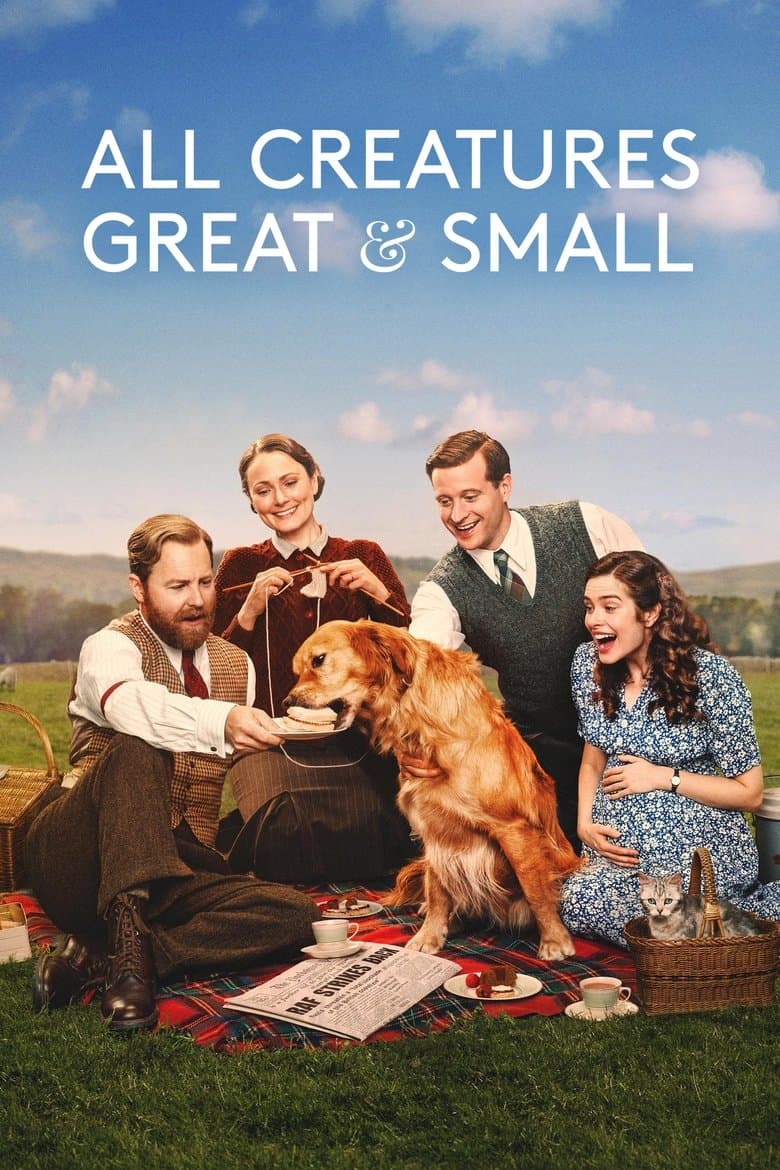
Started September 1, 2020 · Returning Series · Based on 6 seasons, 42 episodes through December 24, 2025 · TV-14 · 50 min
James Herriot is a young Scottish vet who leaves Glasgow in 1937 and joins Siegfried Farnon’s busy practice in the Yorkshire Dales. He learns the work from Siegfried, Tristan, and Mrs. Hall while caring for farm animals and their owners. James builds a life with Helen Alderson, and the story follows their marriage, children, friends, and community through World War II. Later seasons add grief, wartime duty, injury, and the difficult work of returning home.
The show gives Mrs. Hall, Helen, and Jenny larger roles than they have in the books. Women take on wartime duties, and these characters often support men who are proud, troubled, or reckless. The story includes the black Chapman family, South Asian characters, and Richard Carmody, a black student vet whose social difficulty and neurodivergent traits shape a major season four story. These elements add race, gender, and disability themes, but the main story remains about animals, marriage, family, friendship, community, and recovery after war.
Community feedback
Was our 23% Woke rating accurate?
Breakdown
These are the editorial factors and ratings behind our score for All Creatures Great & Small.
Woke representation / casting
The main cast is mostly white British, which fits the rural Yorkshire setting. The show also uses the black Chapman family, South Asian vet George Pandhi and his family, and black student vet Richard Carmody in recurring story roles. These roles create repeated visible diversity beyond the white local core, and Carmody appears as a capable trainee. The series does not present this casting as a diversity campaign.
24%
Woke political dialogue
Not present. Stories center on vet work, animal care, romance, and community life without activist language or modern identity messaging.
0%
Identity-driven story themes
The show gives Mrs. Hall, Helen, and Jenny larger story arcs than the books do. Women take on work and wartime duties. The Chapman family story shows racist treatment of an interracial couple and treats their marriage as worthy of respect. Richard Carmody’s social difficulty and neurodivergent traits shape a continuing season four story before he leaves for research. These themes remain within family, romance, work, and war stories instead of becoming the show’s main purpose.
26%
Western institutional / cultural critique
Not present. The show presents historical life and community positively without reframing events through modern activist lenses.
0%
Woke character or canon changes
Not relevant. Female supporting roles like Mrs Hall and Helen were expanded for more screen time and romance. These are standard adaptation choices, not identity-driven alterations to canon or historical figures.
0%
Anti-woke backlash and complaints
Some online viewers call the remake woke because of its diverse casting and stronger female characters. A few small X accounts complain about later-season diversity, “girlboss” material, or a “woke remake” compared with the 1978 show. Other right-leaning viewers praise it as clean, wholesome, or unlike “woke crap.” The reaction is fringe, with no boycott, review-bombing push, or organized campaign.
15%
Creator track record context
Colin Callender has publicly supported BBC funding against government cuts, which is a mild left-of-center signal. Most listed writers, producers, and directors have low cached scores and mainstream drama records. No strong pattern of activist, identity-driven, or queer work appears in the cached context.
6%
Production
TV Show · 2019
Burned out on life, Miles undergoes a strange procedure at a strip mall spa -- and wakes to find he's been replaced by a better version of himself.
TV Show · 2019
Tony had a perfect life. But after his wife Lisa suddenly dies, Tony changes. After contemplating taking his own life, he decides instead to live long enough to punish the world…

TV Show · 2022
In disguise as her friend, Ha-ri shows up to a blind date to scare him away. But plans go awry when he turns out to be her CEO — and makes a proposal.
TV Show · 2026
The mayor of a New England town resolves to turn it into the next tourist hot spot, despite local warnings that it's cursed.
TV Show · 2021
A secret life is the one thing they have in common. At school, Hori is a prim and perfect social butterfly, but the truth is she's a brash homebody.
TV Show · 2016
In his funky California beach enclave, Chip's the go-to guy for personal insights. But he isn't quite as enlightened when it comes to his own baggage.

TV Show · 2020
New passions. New fashions. New Emily? A plucky American marketing whiz spreads her wings in life and love after landing her dream job in Paris.

TV Show · 2016
Rebellious Mickey and good-natured Gus navigate the thrills and agonies of modern relationships.
