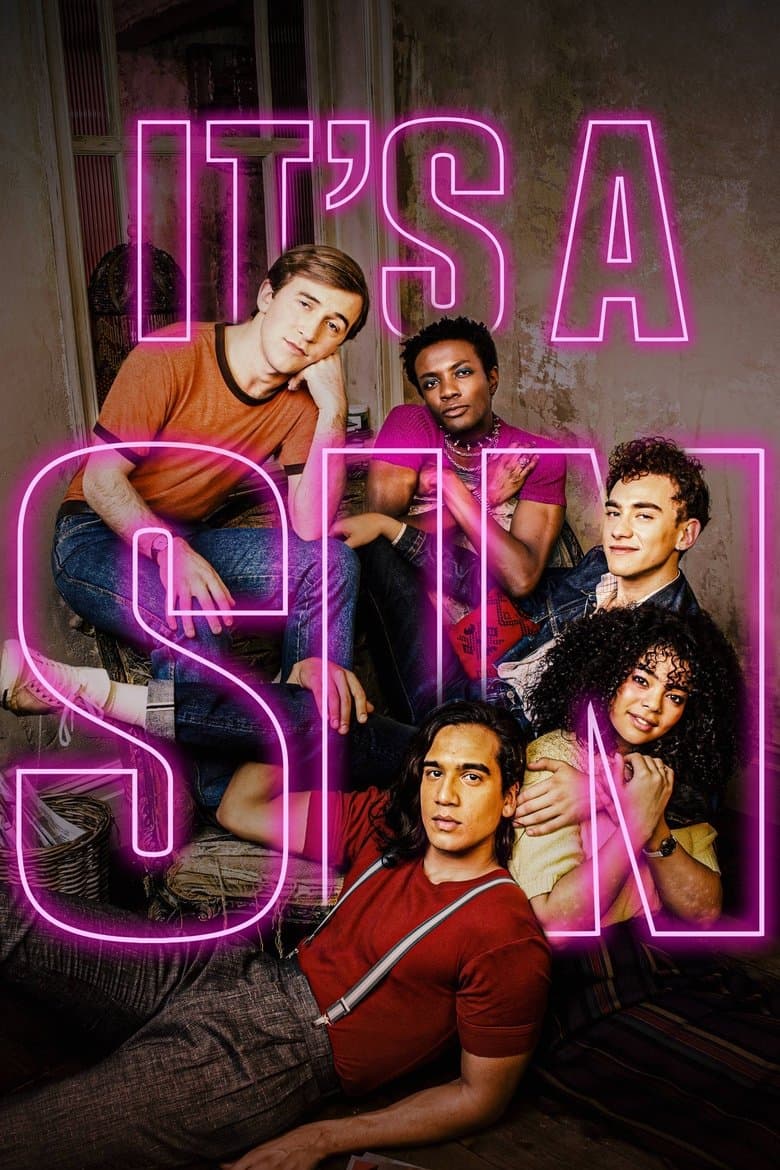
Started January 22, 2021 · Ended · Based on 1 season, 5 episodes through February 19, 2021 · TV-MA · 48 min
It's a Sin follows Ritchie Tozer and four close friends who move through young adult life in London from 1981 to 1991. Ritchie wants freedom, sex, and a career on the stage, while Roscoe, Colin, Ash, and Jill build a chosen family around him. Their parties, romances, jobs, and family fights change as HIV and AIDS spread through their community. The tone begins as bright and funny, then becomes painful and angry as fear, illness, and loss take over.
Queer identity is the show's main subject, not a side detail. Four of the five central friends are gay or bisexual men, and their relationships, sex lives, coming out, and fear of shame shape every episode. The story shows hostile news reports, family rejection, public silence, and government failure during the AIDS crisis, while Jill becomes a carer and speaks up for her friends. It presents friendship, open love, and the fight against homophobia as answers to that pressure. These themes drive the plot from the first episode to the ending.
Community feedback
Was our 89% Woke rating accurate?
Breakdown
These are the editorial factors and ratings behind our score for It's a Sin.
Woke representation / casting
Four of the five central friends are gay or bisexual men, and the story stays close to their love, sex, and coming out. Russell T Davies said the production sought gay actors for gay roles, and Olly Alexander backed that choice in interviews. The main group also includes a Black Nigerian man, a British Indian man, and a black woman friend. The London setting makes the ethnic mix possible, so the strong score mainly comes from the repeated queer casting choice and its public identity framing.
85%
Woke political dialogue
Characters repeatedly discuss the new illness, public lies, and the lack of useful information about HIV. Jill learns the facts, joins AIDS protests, and argues that people must act. Ash faces the school impact of Section 28, while Roscoe's affair with a Conservative MP links the group to Margaret Thatcher's government. The dialogue is openly political, but it is mainly about the real 1980s crisis rather than a present-day party message.
30%
Identity-driven story themes
The show is built around gay identity, chosen family, and the pressure to hide who you are. Four central men are gay or bisexual, and their sex lives, love, shame, illness, and fear of public judgment shape the whole story. The series shows homophobia and AIDS stigma as forces that harm the group. It presents friendship, care, and open queer life as the answer to that pressure. HIV and queer life drive every episode and the final outcome.
95%
Western institutional / cultural critique
The show presents British newspapers, hospitals, schools, and parts of the government as failing gay men during the AIDS crisis. It shows a Nigerian father and Ritchie's mother treating gay identity as shameful, while Roscoe's family uses religion to reject him. It shows Section 28 removing gay material from a school library and links public silence to deaths. These are strong criticisms of institutions and family rules, but they remain tied to the 1980s history rather than a broad attack on all Western institutions.
39%
Woke character or canon changes
Not relevant. The show is an original drama with fictional main characters. Margaret Thatcher appears as a real historical figure, but the series does not rewrite an established story or change her identity.
0%
Anti-woke backlash and complaints
Not present. The supplied X research found no anti-woke campaign, boycott, review-bombing, or specific complaint about the series. Wider coverage found praise and a dispute over The Sun's treatment of gay sex scenes, but that was criticism from viewers who saw the coverage as homophobic, not anti-woke criticism.
0%
Creator track record context
Russell T Davies has a recorded 90/100 creator score and a long record of queer-centered shows. He wrote all five episodes and has called this series part of his queer body of work. Peter Hoar, Andy Pryor, and Nicola Shindler have recorded scores of 50/100, 67/100, and 64/100, with stored records linked to inclusive or queer-themed work. Laurie Kirkham has a recorded score of 15/100, but the main creative voice remains strongly identity-focused.
85%
Production

TV Show · 2016
Rebellious Mickey and good-natured Gus navigate the thrills and agonies of modern relationships.

TV Show · 2020
After being bullied and discriminated because of her ugly looks, a high school girl transforms herself into a gorgeous "goddess" and quickly rises to fame after mastering the art…

TV Show · 2018
When his secretary unexpectedly quits, an arrogant executive will do anything to bring her back.
TV Show · 2019
Tony had a perfect life. But after his wife Lisa suddenly dies, Tony changes. After contemplating taking his own life, he decides instead to live long enough to punish the world…
TV Show · 2019
In a city of coaching centers known to train India’s finest collegiate minds, an earnest but unexceptional student and his friends navigate campus life.
TV Show · 2019
Burned out on life, Miles undergoes a strange procedure at a strip mall spa -- and wakes to find he's been replaced by a better version of himself.

TV Show · 2019
To win back his ex-girlfriend, a nerdy teen starts selling ecstasy online out of his bedroom -- and becomes one of Europe's biggest dealers.
TV Show · 2020
The heartwarming and humorous adventures of a young country vet in the Yorkshire Dales in the 1930s. A remake of the 1978 series.
