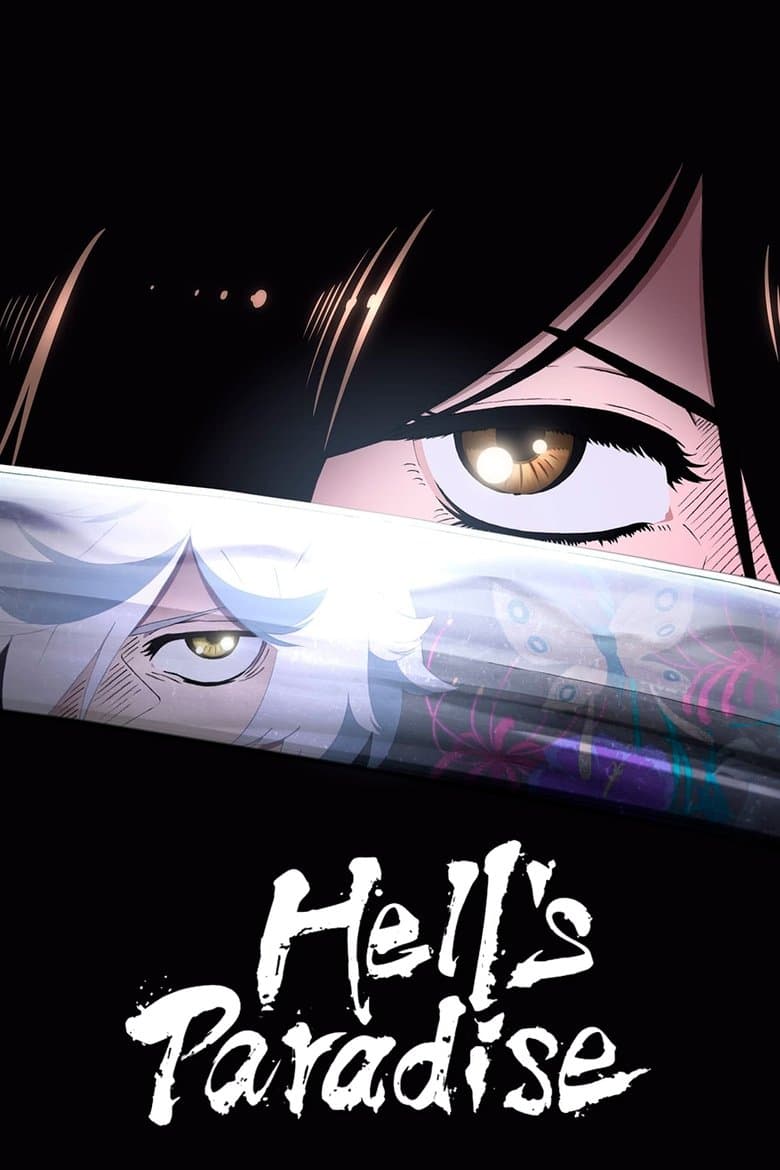
Started April 1, 2023 · Ended · Based on 1 season, 25 episodes through March 29, 2026 · TV-14 · 25 min · Japanese
Gabimaru is a feared ninja who has been sentenced to death, but no execution can kill him. Sagiri, a young executioner, offers him a pardon if he brings back an immortality potion from a strange island. Other condemned criminals and their guards join the search, while monsters, living plants, and immortal beings turn the island into a deadly trap. The show mixes bloody action, body horror, spiritual mystery, and a steady story about love, guilt, survival, and change.
The clearest woke elements come from Sagiri's struggle against men who say a woman should be a wife and mother instead of a fighter. The story makes her a major co-lead who earns respect through skill, courage, and emotional strength. The Tensen shift between male and female bodies, and their yin and yang power system links sex, balance, and strength across many episodes. Those ideas become more visible in season two, but the show still spends most of its time on battles, monsters, spiritual rules, and the criminals' search for freedom.
Community feedback
Was our 52% Woke rating accurate?
Breakdown
These are the editorial factors and ratings behind our score for Hell's Paradise.
Woke representation / casting
Sagiri is a prominent female executioner, and Yuzuriha is a prominent female ninja. Their roles are unusual for the Edo setting, but the show explains them through their clan and criminal careers. The rest of the group is Japanese and mostly male, with no Western one-of-each casting pattern. This makes the gender pattern noticeable but limited.
18%
Woke political dialogue
The show gives direct lines to men who say Sagiri should not wield a sword because she is a woman. The same conflict returns when she is told to leave the island and become a wife and mother. The Tensen also speak about preferring male or female bodies, but those lines explain their Tao powers rather than modern politics. The dialogue is clear and repeated, but it is not a frequent part of most episodes.
34%
Identity-driven story themes
The show repeatedly makes Sagiri's fight against male limits part of her growth. It treats her as a central fighter whose fear and skill both matter. The Tensen switch between male and female bodies, and their Tao training connects sex, yin and yang, pleasure, and power. Season 2 returns to this idea through the Tensen's bodies and relationships, but the larger plot remains a monster hunt and survival battle.
64%
Western institutional / cultural critique
Sagiri is told that a woman's proper place is at home, and the story presents that rule as unfair to her. The show lets her reject that role and prove herself beside male fighters. The conflict stays inside an Edo clan and does not attack Western institutions, capitalism, Christianity, or modern political systems.
31%
Woke character or canon changes
Not relevant. The anime adapts Yuji Kaku's established characters without a race, gender, sexuality, or leadership swap.
0%
Anti-woke backlash and complaints
Not present. Reported complaints focused on uneven animation and MAPPA's work load, not on woke, DEI, identity, or left-wing messaging.
0%
Creator track record context
Yuji Kaku's cached creator score is 44/100 because his work gives women agency and explores gender expectations and modern ethics. His interviews focus on character feelings, moral choices, and relationships, not political activism. Kaori Makita's cached score is 15/100, while the other cached directors, writers, and producers are mostly 0 or near zero. The record supports a mild creator track record signal.
23%
Production
TV Show · 2016
After a traffic accident, Kazuma Sato’s disappointingly brief life was supposed to be over, but he wakes up to see a beautiful girl before him.
TV Show · 2019
One fateful day, all of humanity was petrified by a blinding flash of light. After several millennia, high schooler Taiju awakens and finds himself lost in a world of statues.
TV Show · 2024
They say whatever doesn’t kill you makes you stronger, but that’s not the case for the world’s weakest hunter Sung Jinwoo.
TV Show · 2016
Shigeo Kageyama, a.k.a. "Mob," is a boy who has trouble expressing himself, but who happens to be a powerful esper.
TV Show · 2021
Two siblings - an idealistic teenage boy and his naive younger sister - are forced to pilot an abandoned Jaeger across a hostile landscape in a desperate attempt to find their…
TV Show · 2023
A girl with extraordinary psychic abilities joins two gifted teen boys at a small ghost-hunting agency to fight the many deadly spirits haunting London.
TV Show · 2017
Asta and Yuno are two orphans who want the same thing: to become the Wizard King. Locked in a friendly rivalry, they work hard towards their goal.
TV Show · 2019
During the Warring States period, the young thief Dororo encounters Hyakkimaru, a strange, sightless boy who wields fearsome prosthetics in place of his missing limbs.
