Started October 3, 2017 · Returning Series · Based on 1 season, 170 episodes through March 30, 2021 · TV-MA · 24 min · Japanese
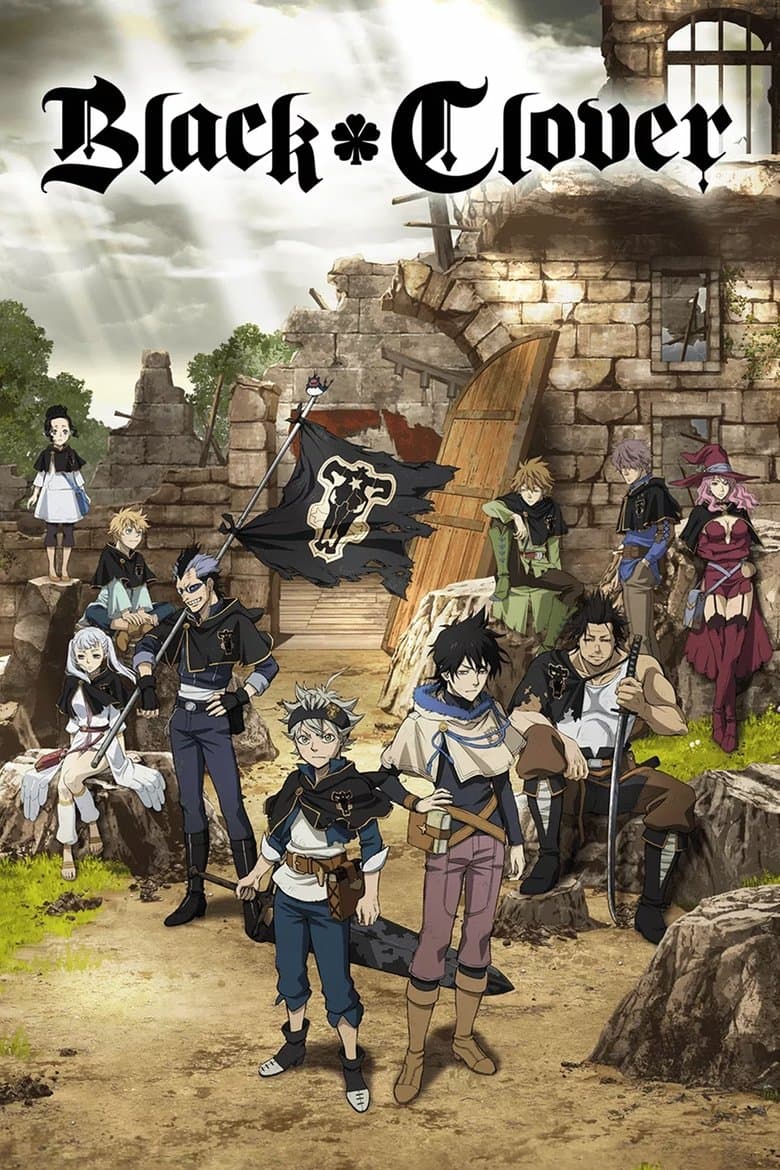
Black Clover follows Asta, an orphan born without magic in a kingdom where magic controls status and power. His rival and childhood friend, Yuno, is a gifted mage, and both boys want to become the Wizard King. Asta joins the rough Black Bulls while Yuno joins the respected Golden Dawn, so their rivalry grows through missions, exams, and wars. The show mixes loud jokes with fantasy battles, training, and strong friendship.
The show repeatedly presents nobles and royals looking down on peasants, commoners, and people with little magic. Asta, Zora, Noelle, and the Black Bulls challenge that rank system, while the elf story connects old violence with present anger and asks former enemies to work together. Episodes 142 through 149 add an anime-only plot about low-magic people who want to escape the kingdom, take devil power, and force change. Dazu and Bow are shown as a close romantic female pair. These ideas are clear and recur in side stories, but hard work, loyalty, rivalry, and magic fights remain much more important than modern political messaging.
Community feedback
Was our 28% Woke rating accurate?
Breakdown
These are the editorial factors and ratings behind our score for Black Clover.
Woke representation / casting
Not present. The show has strong women such as Mereoleona, Noelle, and Charlotte, but men also hold the main hero and captain roles. The story does not frame its gender mix as a diversity or identity message.
0%
Woke political dialogue
Characters repeatedly speak about nobles, commoners, and people with little magic being mocked or ignored. Dazu and Bow say that they want power and revenge because the kingdom left people like them in the shadows. The Blue Rose squad also jokes that women should show courage without men’s help. These lines are clear, but they stay in side plots and do not become modern campaign-style speeches.
25%
Identity-driven story themes
Black Clover repeatedly makes social rank part of its story. Asta, Yuno, Zora, Noelle, and the Black Bulls push back against nobles who treat peasants and commoners as lesser. The elf story links an old massacre to present anger and asks former enemies to work together. Episodes 142 through 149 add a romantic female pair and a low-magic movement that demands change. The show still gives more time to effort, loyalty, rivalry, and battles than to modern identity politics.
42%
Western institutional / cultural critique
Not present. The show criticizes fictional nobles, royal abuse, and a magic-based class system, but it does not attack modern Western institutions. It also does not mock Christianity or treat family and traditional social life as the main problem.
0%
Woke character or canon changes
Not relevant. The anime keeps the established race, gender, sexuality, and hero roles from Yuuki Tabata’s manga. Its anime-only episodes add side characters, but they do not rewrite an established character or real historical figure.
0%
Anti-woke backlash and complaints
Not present. Public complaints focused on Asta’s early yelling, uneven animation, pacing, and the anime-only Devil Believers arc. No major news report or broad fan campaign treated the show as a woke, DEI, or identity-politics production.
0%
Creator track record context
The cached creator records give Yuuki Tabata a score of 0/100. The listed directors, producers, and writers are mostly scored from 0 to 6, with Yuji Tokuno at 15 and Kazuyuki Fudeyasu at 11. Their public work is mainly commercial anime craft, not activist or identity-focused work. This gives Black Clover only a weak creator track record signal.
5%
Production
TV Show · 2019
Year 198 of the Solar Era in Tokyo, special fire brigades are fighting against a phenomenon called spontaneous human combustion where humans beings are turned into living infernos…
TV Show · 2019
After a demon attack leaves his family slain and his sister cursed, Tanjiro embarks upon a perilous journey to find a cure and avenge those he's lost.
TV Show · 2019
Iwatani Naofumi, a run-of-the-mill otaku, finds a book in the library that summons him to another world. He is tasked with joining the sword, spear, and bow as one of the Four…
TV Show · 2021
After encounters with a dragon and a princess on her own mission, a Dragon Knight becomes embroiled in events larger than he could have ever imagined.
TV Show · 2021
Two siblings - an idealistic teenage boy and his naive younger sister - are forced to pilot an abandoned Jaeger across a hostile landscape in a desperate attempt to find their…
TV Show · 2022
High school soccer players from across Japan gather for a controversial project designed to create the best — and most egoistic — striker in the world.
TV Show · 2022
Denji has a simple dream—to live a happy and peaceful life, spending time with a girl he likes. This is a far cry from reality, however, as Denji is forced by the yakuza into…
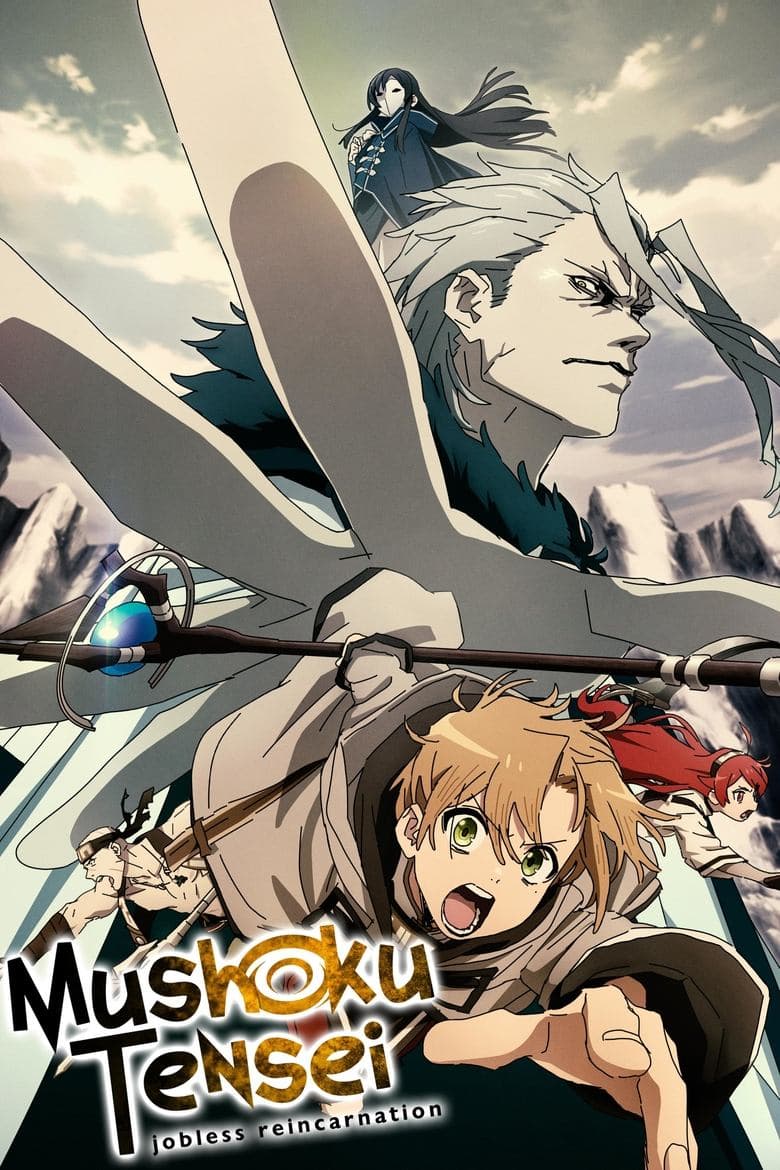
TV Show · 2021
When a 34-year-old underachiever gets run over by a truck, his story doesn't end there. Reincarnated in a new world as an infant, Rudy will seize every opportunity to live the…
