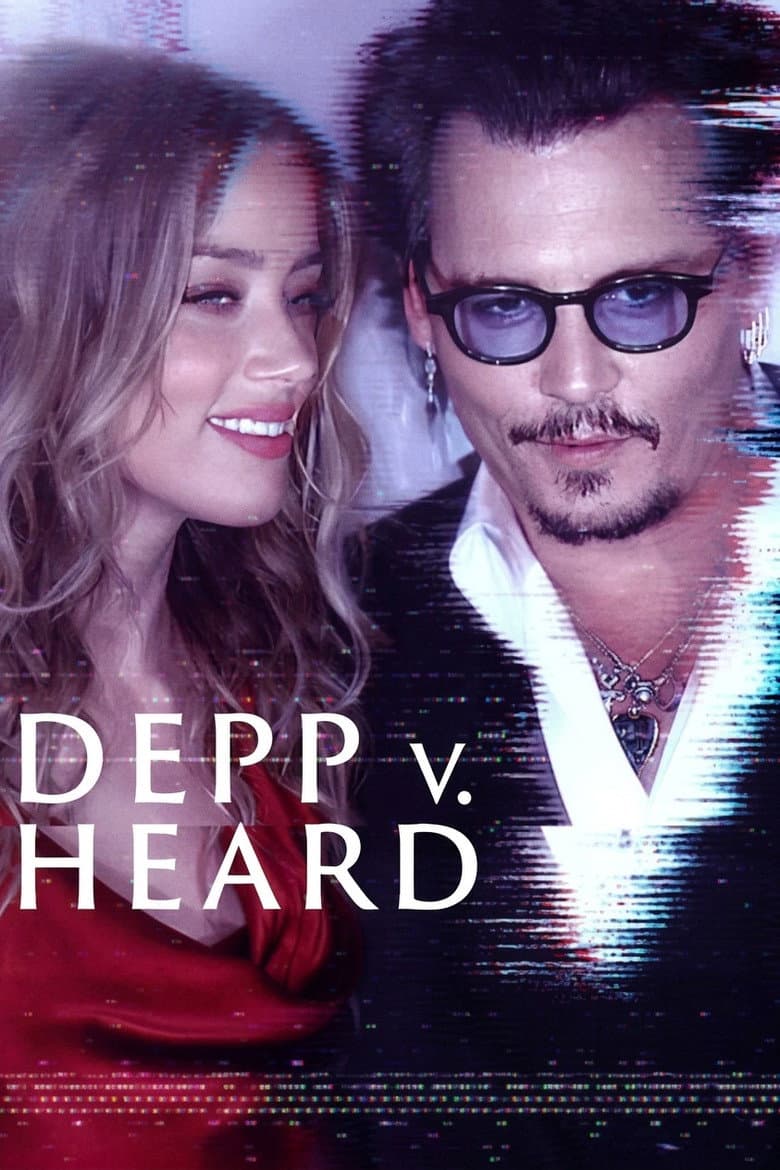
Started May 21, 2023 · Ended · Based on 1 season, 3 episodes through May 23, 2023 · TV-MA · 47 min
Depp V Heard follows Johnny Depp and Amber Heard as they face each other in a court case in Fairfax, Virginia. The case grows out of their marriage, their claims of domestic abuse, and Heard's Washington Post article about being a public figure linked to abuse. The series uses courtroom video, news reports, old interviews, phone clips, and social media videos to show how each side told its story. Its tone is tense and watchful, but it also treats the trial as a strange online show where millions of people pick a side.
The clearest woke material comes from the series' repeated focus on gender, #MeToo, victim blaming, and the fear that public attacks can silence abuse survivors. One commentator calls the online response the patriarchy at work, while later speakers call the verdict a loss for women and a backlash against #MeToo. The series also says male victims of domestic abuse deserve attention, so its message is not only about women. These ideas shape the final episode and return throughout the three episodes, but the series keeps showing both Depp's and Heard's claims and does not give a simple answer about who is telling the truth.
Community feedback
Was our 59% Woke rating accurate?
Breakdown
These are the editorial factors and ratings behind our score for Depp V Heard.
Woke representation / casting
Not present. The series uses real people from the trial, so it adds no identity-first casting pattern.
0%
Woke political dialogue
News and trial clips repeatedly mention the #MeToo movement and cancel culture. Heard's op-ed says institutions protect men accused of abuse. One commentator calls the online response the patriarchy at work and says victim blaming stops people from reporting abuse. The final episode says the case may silence survivors and calls the online reaction a backlash to #MeToo. Other speakers stress that men can be abuse victims, so the message is not one-sided.
52%
Identity-driven story themes
The series builds its main question around how a man and a woman are judged in a public abuse case. It compares the strong support for Depp with attacks on Heard and asks whether women and other survivors will feel unsafe speaking out. The show also gives room to male victims and admits that both people may have acted abusively. The final episode presents the verdict as a possible setback for women and a backlash against #MeToo. The theme is important across the season, but the series keeps presenting competing claims instead of a simple activist answer.
55%
Western institutional / cultural critique
The series shows critics saying institutions and courts can protect powerful men. One commentator calls the public response the patriarchy at work and says Heard is blamed while Depp gets sympathy. The final episode calls the verdict a win for powerful men and says it may put women in their place. Other speakers say the Internet humiliated survivors and pushed a backlash against #MeToo. The work also includes claims about male abuse and does not attack Christianity, family, or capitalism.
50%
Woke character or canon changes
Not relevant. The documentary uses real trial footage and does not change an established character, source story, or historical event.
0%
Anti-woke backlash and complaints
Right-leaning commentators called the series pro-Heard and said it pushed a feminist or #MeToo line. Lauren Chen said the documentary was too biased toward Heard. Evie Magazine described it as a preachy rewrite that favored an Amber Heard white-knight group. Some viewers said the show treated Depp supporters as fanatics while treating Heard's side as truth-tellers. The reaction was notable but mixed, and it did not become a coordinated boycott or review-bombing drive.
48%
Creator track record context
Emma Cooper has a low creator track record score of 5/100. Her public work stresses Australian stories and support for Australian talent. Cooper framed this title around viewing behavior and social-media debate, not a diversity campaign. She chose not to add new interviews with the two stars or outside experts. Her title comments use gender and #MeToo framing, but her wider record shows no strong identity-politics or activist pattern.
5%
Production
TV Show · 2017
A four-part documentary series that tells the stories of Jimmy Iovine and Dr. Dre -- one the son of a Brooklyn longshoreman, the other straight out of Compton - -- and their…
TV Show · 2023
With never-before-seen footage, this docuseries follows David Beckham's meteoric rise from humble beginnings to global football stardom.
TV Show · 2023
Follow the bruised bodies, soul-crushing fumbles, agonizing losses, and pure joy of three NFL quarterbacks during one season.
TV Show · 2020
On the shores of paradise, gorgeous singles meet and mingle. But there’s a twist. To win a $100,000 grand prize, they’ll have to give up sex.
TV Show · 2020
A 10-part documentary chronicling the untold story of Michael Jordan and the Chicago Bulls dynasty with rare, never-before-seen footage and sound from the 1997-98 championship…

TV Show · 2023
Through vividly enhanced archival footage and voices from all sides of the conflict, this docuseries brings WWII to life like never before.
TV Show · 2022
The lives of an emerging superstar and a filmmaker intertwine in this intense, intimate docuseries charting Kanye West's career, filmed over two decades.

TV Show · 2017
An immersive 360-degree narrative telling the epic story of the Vietnam War as it has never before been told on film.
