Started April 17, 2020 · Canceled · Based on 6 seasons, 59 episodes through August 2, 2024 · TV-MA · 40 min
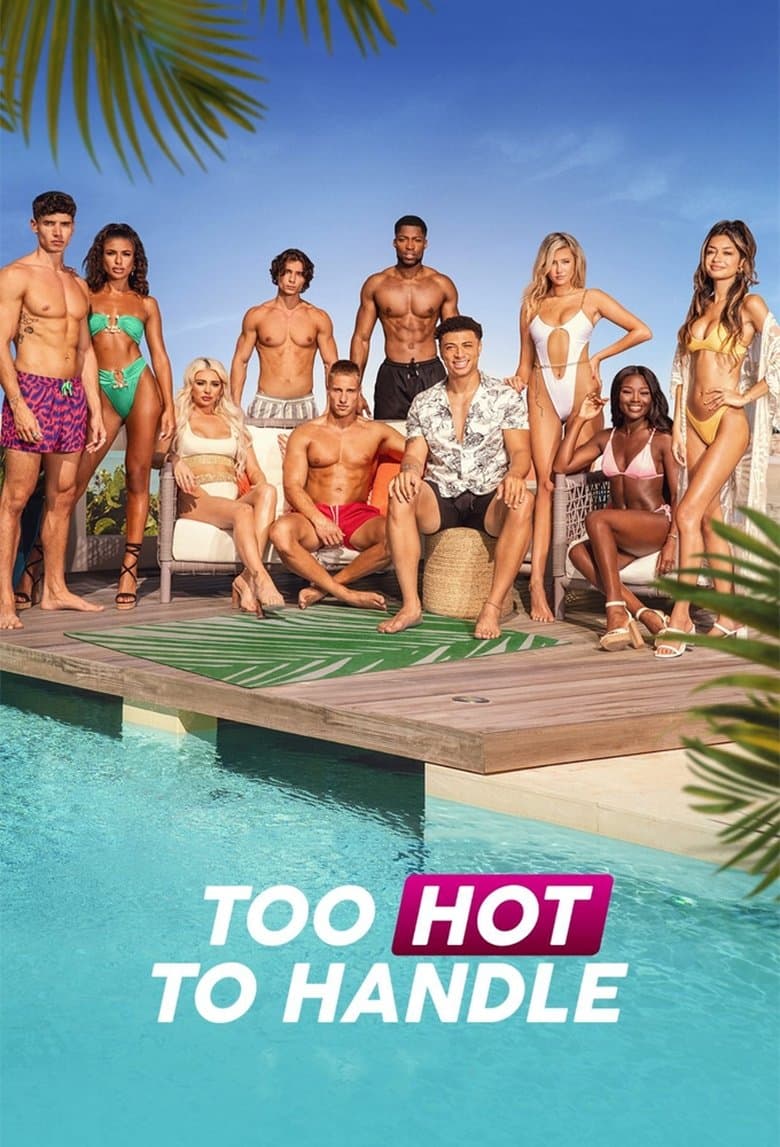
Too Hot to Handle places a group of very attractive young singles in a luxury villa in a tropical location. The singles expect an easy holiday filled with flirting, but a cone-shaped computer named Lana bans kissing, sex, and self-pleasure. The group shares one cash prize, so every rule break costs everyone money. The contestants fight over desire, jealousy, and trust while Lana and the workshops push them toward emotional bonds. The show uses a bright, silly, and often raunchy tone.
Across six seasons, the show presents casual sex and dating-app habits as barriers to deeper relationships. The workshops ask contestants to discuss feelings, self-control, honesty, and how they treat other people. The cast comes from many countries and includes a brief same-sex kiss between Francesca and Haley in season one, but queer relationships do not drive the series. Season six adds Bad Lana and more temptation while keeping the same lesson about restraint and personal growth. These elements are visible, but they stay inside a dating-game story instead of becoming a broad political or identity campaign.
Community feedback
Was our 18% Woke rating accurate?
Breakdown
These are the editorial factors and ratings behind our score for Too Hot to Handle.
Woke representation / casting
The show repeatedly casts attractive singles from many countries, including the United Kingdom, the United States, Australia, South Africa, and France. This creates a visible mix of ethnic backgrounds and nationalities in the villa. The casting is sold mainly through looks, flirting, and entertainment, not through a diversity or representation message.
12%
Woke political dialogue
Not present. Contestants talk about attraction, jealousy, sex, money, and personal feelings. No recurring activist or political language shapes the show.
0%
Identity-driven story themes
The show includes a same-sex kiss between Francesca and Haley in season one. The kiss is a short revenge stunt rather than a lasting queer relationship. Most romances and conflicts involve men and women, and no season centers on queer relationships. The main lesson concerns emotional honesty and self-control rather than identity politics.
15%
Western institutional / cultural critique
Lana and the workshops repeatedly treat casual sex, dating apps, and selfish behavior as blocks to deeper bonds. The show asks contestants to practice honesty, emotional openness, and better treatment of partners. Season six adds a male-only workshop about getting in touch with a feminine side. These lessons target personal behavior in the villa and do not become a wider attack on Western institutions, religion, family, or conservatives.
20%
Woke character or canon changes
Not relevant. The show is an original reality format with no established characters, canon, or historical figures being changed.
0%
Anti-woke backlash and complaints
Not present. Social posts and news coverage focus on cast drama, rule breaks, the narrator, and the show’s sexual premise. The X research pass found no anti-woke complaints aimed at this show.
0%
Creator track record context
The creators and producers come from mainstream British unscripted television and reality entertainment. Laura Gibson’s title-related interviews describe Seinfeld, dating-app culture, and the AI host as inspirations. No documented activist or identity-politics focus appears in the cached creator context.
8%
Production
