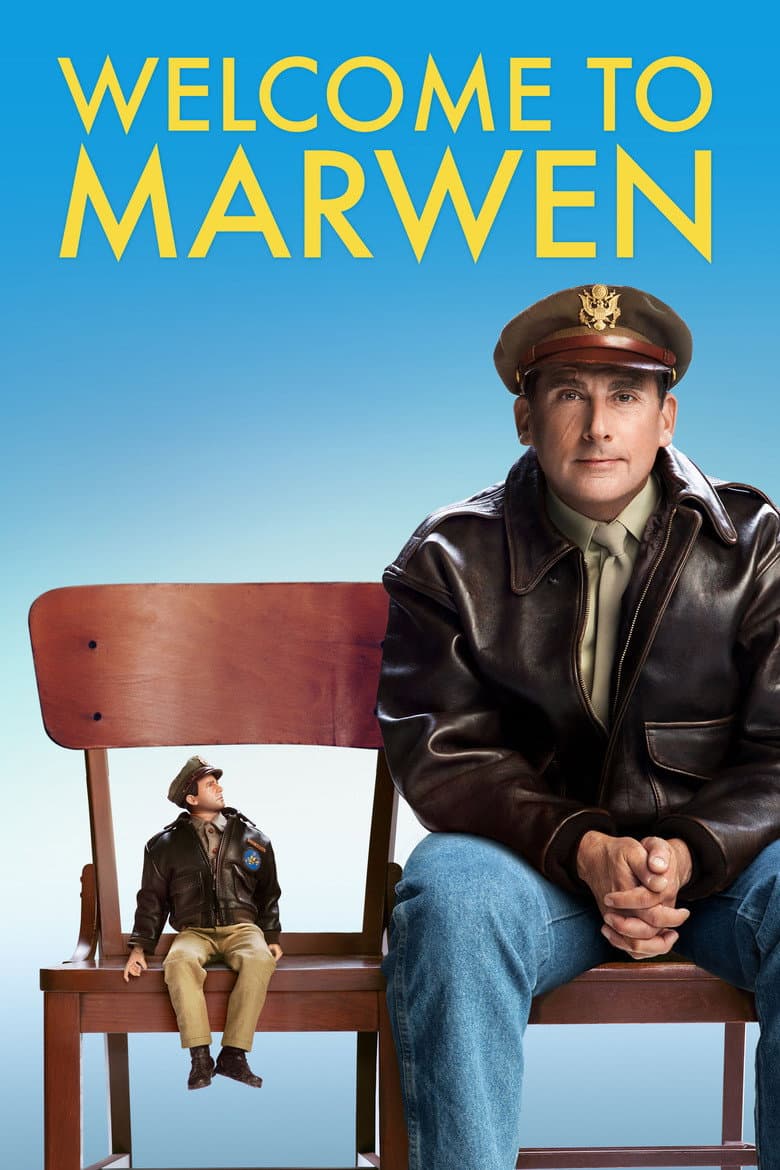
Mark Hogancamp is an artist who loses most of his memory after five men beat him outside a bar. He lives in Kingston, New York, and builds a tiny World War II town called Marwen in his yard. His dolls act out battles that mirror his fear, anger, and wish to be brave. Mark must face his attackers in court, control his pill use, and decide how to live after the attack. The film mixes painful trauma with bright doll battles, odd jokes, romance, and a hopeful ending.
Women make up most of Mark's imagined fighting team, and the story presents them as the people who protect him and push him toward healing. Mark's love of women's shoes and the hate crime against him make his clothing a clear part of the main conflict. The film praises women in broad terms and gives several female characters the strongest action moments. It also shows Mark as a man who likes women but must accept his wish to wear women's shoes, so the identity message stays tied to his personal recovery.
Community feedback
Was our 53% Woke rating accurate?
Breakdown
These are the editorial factors and ratings behind our score for Welcome to Marwen.
Woke representation / casting
The film gives most important supporting roles to women who become a skilled fighting team in Marwen. Janelle Monáe plays a black disabled veteran and physical therapist, while Eiza González plays a Latina cook and Gwendoline Christie plays a Russian caretaker. The story ties these choices to real women who helped Mark, so the group is not presented as a random diversity lineup. The marketing still presents the group as a tribute to the powerful women in his life.
30%
Woke political dialogue
The film gives Mark a direct line that women are the saviors of the world. The movie repeats this idea through scenes where the female team rescues Hogie and helps him face the court. This is clear gender praise, but it appears in only a few moments. Most dialogue concerns trauma, romance, addiction, art, and court.
25%
Identity-driven story themes
The movie makes Mark's choice to wear women's shoes and the homophobic attack against him the main source of his trauma. The story repeatedly returns to his fear of public judgment, his wish to feel a woman's essence, and his need to accept this side of himself. His fantasy world also turns the women who helped him into a tough team that saves him. These ideas shape his recovery and ending, so the identity theme is hard to miss.
70%
Western institutional / cultural critique
The film clearly condemns the homophobic men who beat Mark for wearing women's shoes. It treats their prejudice and strict ideas about male behavior as the main wrong in the real-world plot. It also shows Mark facing judgment because of his clothing and private interests. The story does not attack Christianity, capitalism, or Western institutions in a broad way.
24%
Woke character or canon changes
Not relevant. The film is based on a real artist and a prior documentary. It invents a romance, a pill villain, and court details, but no identity-driven change to an established character or canon is confirmed.
0%
Anti-woke backlash and complaints
Not present. The supplied X pass found no anti-woke posts or campaign. Broader coverage focused on quality, tone, sexualization, and the move from documentary to fiction, not woke complaints.
0%
Creator track record context
Robert Zemeckis has a mild Democratic political record and no clear identity-first pattern. Caroline Thompson has spoken positively about women's creative freedom and attended the 2017 Women's March, but she has no strong activist profile. The supplied producer and casting profiles are also low and mostly professional. This gives mild context rather than a strong creator signal.
18%
Production
Movie · 2016
The story of Florence Foster Jenkins, a New York heiress, who dreamed of becoming an opera singer, despite having a terrible singing voice.
Movie · 2017
Brigsby Bear Adventures is a children's TV show produced for an audience of one: James. When the show abruptly ends, James's life changes forever, and he sets out to finish the…
Movie · 2016
The story of a young man who arrives in Hollywood during the 1930s hoping to work in the film industry, falls in love, and finds himself swept up in the vibrant café society that…

Movie · 2018
An American hypochondriac who is working as a baggage handler is forced to confront his fears when a British teenager with a terminal illness enlists him to help her carry out her…
Movie · 2022
Maurice Flitcroft, a dreamer and unrelenting optimist, managed to gain entry to The British Open Golf Championship qualifying in 1976 and subsequently shot the worst round in Open…
Movie · 2016
A boy growing up in Dublin during the 1980s escapes his strained family life by starting a band to impress the mysterious girl he likes.
Movie · 2023
The true story of how Dave Fishwick, a working class man and self-made millionaire, fought to set up a community bank so that he could help the local businesses of Burnley not…
Movie · 2018
The true story of Forrest Tucker, from his audacious escape from San Quentin at the age of 70 to an unprecedented string of heists that confounded authorities and enchanted the…
